

Maddy summaryHR 5840, the Transportation Security Screening Modernization Act of 2024, simplifies the process for transportation workers to obtain multiple TSA security credentials. It requires the TSA to allow individuals to apply for and renew programs like the TWIC (Transportation Worker Identification Credential) and HAZMAT Endorsement through a single enrollment at any TSA center, with a combined fee lower than separate applications. The bill mandates coordinated expiration dates for all credentials and ensures state-issued commercial driver's licenses reflect the correct HAZMAT endorsement validity. These changes aim to reduce duplication and costs for workers needing multiple security clearances. The TSA must implement these changes within two years and publish details online.
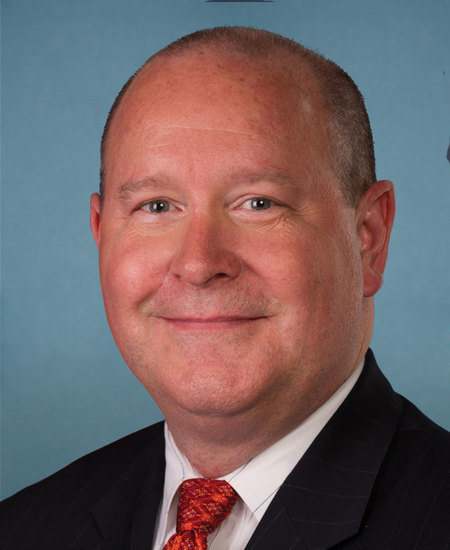
Rep. Larry Bucshon
Sponsored bills
Maddy summaryThe DRA of 2023 adjusts Medicare payment rates for specific durable medical equipment (DME) items that were part of the 2021 competitive bidding program but for which no supplier contracts were finalized. It directly affects DME suppliers and Medicare beneficiaries by establishing a new 2024 payment formula: 90% of the adjusted payment amount plus 10% of the unadjusted fee schedule for eligible items. The bill also extends a temporary transition rule for non-rural areas through December 31, 2024, while delaying a regulatory change until 2025. These provisions aim to stabilize payments for DME items that did not transition to standard pricing under prior rules.
Maddy summaryThe Maintaining Investments in New Innovation Act (HR 5547) extends the exclusivity period for certain advanced drugs from 7 to 11 years. It defines an "advanced drug product" as a drug using genetically targeted technology to change how genes work, such as drugs that suppress or activate gene function. The bill amends the Social Security Act to update the definition of "qualifying single source drug" to include these advanced therapies with the longer exclusivity period. This change directly affects drug manufacturers developing such advanced therapies and influences Medicare's drug coverage rules by delaying generic competition for these specific treatments.
Maddy summaryThe Coverage Determination Clarity Act of 2023 requires the federal government to annually review Medicare's local coverage rules starting in 2024 to ensure they do not restrict access to medical items and services beyond what is covered nationally. If a local rule unnecessarily limits coverage for FDA-approved treatments or devices (such as drugs or medical equipment), the Medicare contractor must revise it within 180 days. This directly affects Medicare beneficiaries by potentially expanding access to covered care and Medicare administrative contractors, who must align local rules with national standards. The law aims to standardize coverage decisions across regions and reduce inconsistent barriers for patients seeking approved medical items and services.
Maddy summaryHR 5208, the Health Care Provider Shortage Minimization Act of 2023, clarifies tax treatment for temporary healthcare workers. It amends the tax code to specify that locum tenens physicians and advanced care practitioners (like nurse practitioners or physician assistants) providing services for up to one year at a single site are not treated as employees for tax purposes. This means the workers themselves, the healthcare facilities hiring them, and payors avoid employer tax obligations related to these temporary services. The bill directly affects temporary healthcare providers and facilities seeking to fill staffing gaps without complex employment tax compliance.
Maddy summaryThis bill simplifies participation in Medicare's Accountable Care Organization (ACO) program by removing distinctions between small and large ACOs and eliminating the requirement for new ACOs to assume financial risk for three years before joining shared savings models. It creates a new "100% shared savings" option where ACOs keep all savings from cost reductions but bear full financial responsibility for losses. The bill also mandates clearer, transparent benchmark calculations for ACO performance, establishes appeal processes for disputed benchmarks, and requires technical assistance for rural and underserved providers. These changes directly affect Medicare ACOs, particularly smaller or newer organizations in rural or safety-net settings, aiming to make value-based care participation more accessible.
Maddy summaryThis bill prohibits Medicare from paying for certain custom-fitted or custom-fabricated orthotic and prosthetic devices delivered via "drop shipment" (direct shipping without in-person training from a qualified provider). It directly affects Medicare beneficiaries who need these devices, ensuring they receive necessary in-person fitting and training. The bill also expands which healthcare professionals (including physical therapists, occupational therapists, orthotists, and prosthetists) can prescribe these devices and updates definitions to clarify terms like "orthoses" and "prostheses." Final regulations implementing these changes must be issued within one year of the bill's enactment.
Maddy summaryThis bill amends Medicare rules to improve access to home infusion therapy, which delivers IV medications at home for conditions like chronic diseases. It adds pharmacy services (including drug preparation and compounding) to covered Medicare benefits and creates a payment rule: if a supplier isn't physically present during therapy, Medicare pays 50% of the full rate instead of denying payment. It also allows nurse practitioners and physician assistants to establish and review home infusion care plans, previously limited to physicians. These changes, effective January 2024, directly affect Medicare beneficiaries requiring home infusion therapy and providers delivering these services.
Maddy summaryThe Leveling the Playing Field 2.0 Act (HR 3882) updates U.S. trade law to better address international trade practices that disadvantage American businesses. It establishes special rules for handling multiple investigations of the same merchandise (called "successive investigations"), requiring the Commerce Department to consider previous injury determinations when making new findings. The bill also creates mechanisms to address market distortions from foreign government subsidies, including currency undervaluation, and strengthens procedures to prevent duty evasion through certification requirements for importers. These changes primarily affect foreign exporters of goods subject to U.S. antidumping and countervailing duty investigations, as well as U.S. importers of those goods.
Maddy summaryHR 3842, the Expanding Access to Diabetes Self-Management Training Act of 2023, would improve Medicare coverage for diabetes self-management training (DSMT) services for beneficiaries with diabetes. The bill expands provider eligibility to include nonphysician practitioners (like nurse practitioners), increases available training hours (initial 10 hours plus up to 2 hours annually), and requires 100% Medicare coverage with no out-of-pocket costs for beneficiaries. It also mandates a new demonstration project starting in 2025 to test virtual DSMT services, evaluating impacts on health outcomes (like A1c levels), hospitalizations, and program costs. This legislation directly affects Medicare beneficiaries with diabetes and healthcare providers offering DSMT services.