

National Discovery Trails Act This bill amends the National Trails System Act to include national discovery trails as part of the national trails system. Such trails (1) shall be extended, continuous, interstate trails located to provide for outstanding outdoor recreation and travel and to connect representative examples of America's trails and communities; (2) shall provide for the conservation and enjoyment of significant natural, cultural, and historic resources and be so located as to represent metropolitan, urban, rural, and back country regions of the Nation; and (3) may be designated on federal lands and, with the owner's consent, on nonfederal lands. The 6,000-mile American Discovery Trail extending from Cape Henlopen State Park in Delaware, to Point Reyes National Seashore in California, splitting into northern and southern routes near Cincinnati, Ohio, and rejoining at Denver, Colorado, is designated as a national discovery trail. The bill sets forth requirements for designation of a trail as a national discovery trail. The appropriate federal department for each national discovery trail shall (1) administer the trail in cooperation with at least one competent trailwide volunteer-based organization; and (2) submit a comprehensive plan for the trail's protection, management, development, and use.
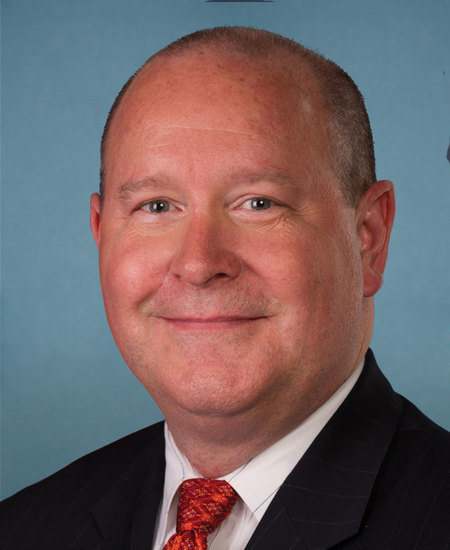
Rep. Larry Bucshon
Sponsored bills
21st Century Dyslexia Act This bill addresses the education of children with disabilities, with a particular focus on children with dyslexia. Currently, dyslexia is listed as one of the disabilities under the definition of specific learning disability in the Individuals with Disabilities Education Act (IDEA). This bill instead removes dyslexia from the definition of specific learning disability and establishes a stand-alone definition for dyslexia within IDEA. Specifically, the bill defines dyslexia for purposes of IDEA as an unexpected difficulty in reading for an individual who has the intelligence to be a much better reader, most commonly caused by a difficulty in the phonological processing (the appreciation of the individual sounds of spoken language), which affects the ability of an individual to speak, read, and spell. Additionally, the bill requires a local educational agency or other agency, in determining eligibility for or providing an accommodation or service under IDEA, to provide equal access to (1) children from low-income families or from families with low socioeconomic status, and (2) other children.
Postal Service Reform Act of 202 2 This bill addresses the finances and operations of the U.S. Postal Service (USPS). The bill requires the Office of Personnel Management (OPM) to establish the Postal Service Health Benefits Program within the Federal Employees Health Benefits Program under which OPM may contract with carriers to offer health benefits plans for USPS employees and retirees. The bill provides for coordinated enrollment of retirees under this program and Medicare. The bill repeals the requirement that the USPS annually prepay future retirement health benefits. Additionally, the USPS may establish a program to enter into agreements with an agency of any state government, local government, or tribal government, and with other government agencies, to provide certain nonpostal products and services that reasonably contribute to the costs of the USPS and meet other specified criteria. The USPS must develop and maintain a publicly available dashboard to track service performance and must report regularly on its operations and financial condition. The Postal Regulatory Commission must annually submit to the USPS a budget of its expenses. It must also conduct a study to identify the causes and effects of postal inefficiencies relating to flats (e.g., large envelopes). The USPS Office of Inspector General shall perform oversight of the Postal Regulatory Commission.
This resolution condemns any calls made by a Member of the House of Representatives to defund the police and expresses the sense of the House of Representatives that any member who advocates for such defunding should not be permitted to use federal funds to contract with a private entity for security personnel support.
Supply Chain Disruptions Relief Act This bill modifies the treatment of liquidations of new motor vehicle inventory as qualified LIFO (last in first out accounting method) inventory. It allows new motor vehicle dealers to elect to wait until the end of 2025 to replace their inventory for purposes of determining income attributable to the sale of such inventory during 2020 and 2021.
This resolution supports the preservation of the stepped-up basis tax rule that allows recipients of inherited assets such as land, equipment, or buildings to adjust the cost basis of the assets to reflect their fair market value. The resolution opposes any efforts to impose new taxes on family farms or small businesses and recognizes the importance of generational transfers of farm and family-owned businesses.
This joint resolution nullifies the rule titled Patient Protection and Affordable Care Act; Updating Payment Parameters, Section 1332 Waiver Implementing Regulations, and Improving Health Insurance Markets for 2022 and Beyond , which was issued by the Centers for Medicare & Medicaid Services and the Department of the Treasury on September 27, 2021. The rule expands the open enrollment period for individual health coverage and rescinds the previous interpretation of certain requirements relating to Section 1332 waivers (also known as State Innovation Waivers or State Relief and Empowerment Waivers).
Equitable Community Access to Pharmacist Services Act This bill expands Medicare coverage to permanently include services provided by a pharmacist, including incidental services and supplies, related to testing, drug regimens, and vaccines for COVID-19, influenza, and certain other illnesses. Specifically, the bill provides for continued coverage of pharmacist services relating to testing and vaccines for COVID-19 and influenza, as well as coverage of testing for respiratory syncytial virus and streptococcal pharyngitis (i.e., strep throat) and the initiation of drug regimens that are used to treat COVID-19, influenza, or strep throat. It also generally provides for coverage of pharmacist services during a public health emergency or to address health equity. A pharmacist, or the facility with which the pharmacist is contracted or employed, may present a claim for reimbursement of 85% (or 100% during a declared emergency) of the applicable amount. A pharmacist may not bill an individual for such a service other than for the applicable deductible or coinsurance amounts.
Dr. Lorna Breen Health Care Provider Protection Act This bill establishes grants and requires other activities to improve mental and behavioral health among health care providers. Specifically, the Department of Health and Human Services (HHS) must award grants to hospitals, medical professional associations, and other health care entities for programs to promote mental health and resiliency among health care providers. In addition, HHS may award grants for relevant mental and behavioral health training for health care students, residents, or professionals. Additionally, HHS must conduct a campaign to (1) encourage health care providers to seek support and treatment for mental and behavioral health concerns, and (2) disseminate best practices to prevent suicide and improve mental health and resiliency among health care providers. HHS must also study and develop policy recommendations on improving mental and behavioral health among health care providers, removing barriers to accessing care and treatment, and identifying strategies to promote resiliency. Furthermore, the Government Accountability Office must report on the extent to which relevant federal grant programs address the prevalence and severity of mental health conditions and substance use disorders among health care providers.
This resolution expresses that the House of Representatives declares its gratitude on behalf of the people of the United States to the journalists and news staff who continue to put themselves in harm's way to report on the humanitarian crisis and ongoing war on the ground in Ukraine following Russian President Vladimir Putin's invasion of Ukraine; and honors the contributions of journalists and news staff reporting from the war in Ukraine as essential in the ongoing struggle for the rights of a free press and free speech internationally, pivotal in pushing back against false propaganda by tyrants, and crucial to informing Americans and the world of the horrors being wrought against the Ukrainian people.