

School Resource Officer Act of 2022 This bill reauthorizes through FY2026 the Community Oriented Policing Services (COPS) program and otherwise revises the program. Specifically, the bill revises the COPS program by restoring authority to make COPS grants for hiring and rehiring additional career law enforcement officers, allowing the federal cost share to be 75% for the duration of such grants, and specifying that at least 30% of the amount made available for such grants must be used for school resource officers.
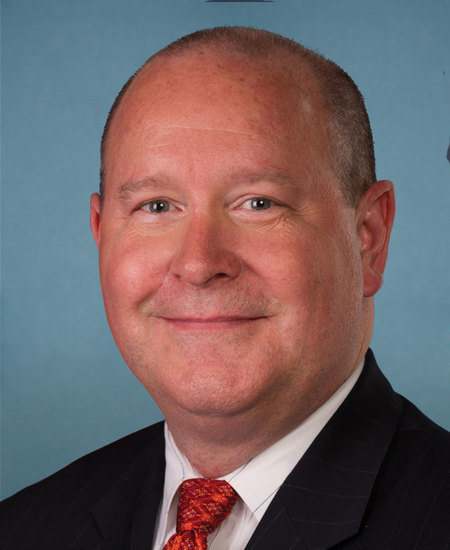
Rep. Larry Bucshon
Sponsored bills
Immigration Transparency and Transit Notification Act of 2022 This bill requires notifications to certain officials before an unaccompanied alien child or a non-U.S. national ( alien under federal law) without lawful immigration status may be placed in or transported to a state or local jurisdiction. The bill also authorizes the office of the governor of the relevant state to prohibit the placement or transportation. At least seven calendar days before taking such an action, the Department of Homeland Security (DHS) or the Department of Health and Human Services (HHS) must notify (1) the relevant state governor's office, (2) the state attorney general's office, (3) the county or municipal government, (4) local law enforcement, and (5) federal and state legislators representing the relevant jurisdiction. The action may not take place if the state governor's office objects no later than three calendar days after receiving the notification. This authority to object shall not apply if the action is to place an unaccompanied child with, or transport the child to, a family member.
Federal Prisons Accountability Act of 2022 This bill modifies the appointment procedures and term of service for the Director of the Bureau of Prisons. Currently, the director is appointed by the Attorney General. This bill requires the director to be appointed by the President and confirmed by the Senate. The bill also limits the director to a single term of 10 years.
Upholding the Law at Our Border Act This bill requires the Office of Inspector General of the Department of Homeland Security (DHS) to periodically investigate and report on certain issues until there have been fewer than 35,000 apprehensions at the southwest border for three consecutive months. When required, the reports must address certain issues, including (1) the vetting procedures applicable to aliens seeking entry into the United States who were apprehended along the southwest border, (2) the total number of individuals not lawfully present who have been processed and released into the United States, (3) the number of such individuals who have received parole, and (4) an audit of the parole applications. The office must submit such reports (and provide briefings on the reports) to the President, Congress, DHS, and the Department of Justice.
Halt All Lethal Trafficking of Fentanyl Act or the HALT Fentanyl Act This bill places fentanyl-related substances as a class into schedule I of the Controlled Substances Act. A schedule I controlled substance is a drug, substance, or chemical that has a high potential for abuse; has no currently accepted medical value; and is subject to regulatory controls and administrative, civil, and criminal penalties under the Controlled Substances Act. Additionally, the bill establishes a new, alternative registration process for schedule I research that is funded by the Department of Health and Human Services or the Department of Veterans Affairs or that is conducted under an investigative new drug exemption from the Food and Drug Administration. The bill also makes several other changes to registration requirements for conducting research with controlled substances, including permitting a single registration for related research sites in certain circumstances, waiving the requirement for a new inspection in certain situations, and allowing a registered researcher to perform certain manufacturing activities with small quantities of a substance without obtaining a manufacturing registration.
Removing Waste and Protecting Medicare Act This bill makes several budgetary changes, including (1) prohibiting sequestration orders in 2022, (2) rescinding certain COVID-19 state and local relief funds, and (3) extending certain adjustments under Medicare with respect to sequestration and payments under the physician fee schedule. It also modifies requirements relating to federal programs and benefits, such as permanently requiring taxpayers to include Social Security numbers on their tax returns in order to qualify for the child tax credit.
Public Safety Enhancement Act of 2021 This bill reauthorizes through FY2026 the Community Oriented Policing Services (COPS) grant program. Additionally, the bill requires a certain amount of funds made available under the COPS grant program to be used for the hiring and retention of law enforcement officers.
Prison Camera Reform Act of 2021 This bill establishes various requirements to ensure that the security camera, radio, and public address systems used by the Bureau of Prisons (BOP) have the capabilities necessary to (1) ensure the health and safety of staff and inmates; and (2) ensure the documentation and accessibility of video evidence pertaining to misconduct, maltreatment, or criminal activity within correctional facilities. Among the requirements, the BOP must evaluate the systems currently in use at its facilities and implement a plan that addresses deficiencies in and makes upgrades to the systems.
Illegal Immigrant Payoff Prohibition Act This bill prohibits the payment of a settlement to an alien for a civil action brought against the United States in connection with the alien's inadmissibility to, or unlawful presence in, the United States.
Good Samaritan Health Professionals Act of 2021 This bill extends liability protection for harm caused by acts or omissions by volunteer health care professionals in the course of providing certain health care services during specified public-health or national emergencies or major disasters. However, such liability protection shall not apply if (1) the harm was caused by willful or criminal misconduct, gross negligence, reckless misconduct, or a conscious flagrant indifference to the rights or safety of the individual harmed; or (2) the health care professional provided services under the influence of alcohol or an intoxicating drug.