

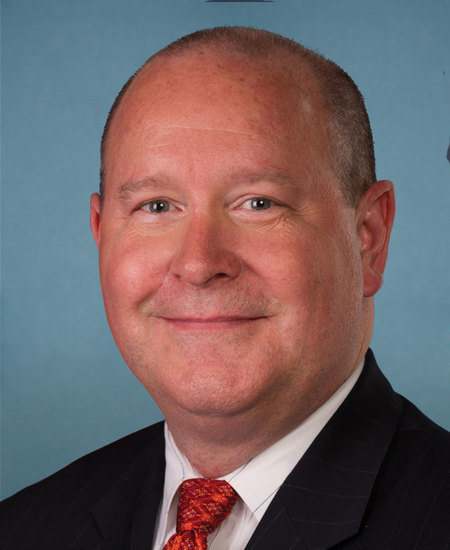
Photo of Larry Bucshon
R United States House · District 8 · Indiana

Rep. Larry Bucshon

Compare
Total votes
2,168
all sessions
Attendance
97%
75 missed
Near the chamber average
With party
91%
of cast votes
Lower than 88% of chamber peers
Bipartisan score
5%
crosses aisle rarely
Higher than 87% of chamber peers
Sponsored
556
bills & resolutions
Near the chamber average
Committees
0
assignments
556 bills and resolutions

Sponsored bills

Total
556
Primary
36
Co-sponsor
520
This page
556
matching current filters
Co-sponsor HR 976
In committee · United States House · Co-sponsor
TCJA Permanency Act

Maddy summaryHR 976, the TCJA Permanency Act, makes permanent many tax provisions from the 2017 Tax Cuts and Jobs Act (TCJA) that were scheduled to expire after 2025. The bill affects individual taxpayers by keeping lower tax rates, higher standard deductions, increased child tax credits, and other key changes permanently. Key provisions include permanent modifications to income tax brackets, repeal of personal exemptions, limits on state and local tax deductions, and increased estate and gift tax exemptions. These changes would prevent the tax code from reverting to pre-TCJA rates and rules for millions of taxpayers.

In committee Feb 10, 2023 1 co-sponsor
Co-sponsor HR 914
In committee · United States House · Co-sponsor
Simplifying Grants Act of 2023

Maddy summaryHR 914, the Simplifying Grants Act of 2023, requires federal agencies to simplify grant application processes for small local governments (defined as those in areas with fewer than 50,000 people, per Census standards). Within 180 days of enactment, agencies must review and simplify complex grant requirements for existing programs and ensure new programs are designed with simplicity from the start. Agencies must also publish public checklists for each grant step and report annually to Congress on implementation progress, including how much technical assistance was provided and how many grants were awarded to small communities versus larger ones. This bill directly affects counties, towns, and other small local governments that receive federal grants but face bureaucratic hurdles.

In committee Feb 9, 2023 1 co-sponsor
Co-sponsor HCONRES 13
In committee · United States House · Co-sponsor
Supporting the Local Radio Freedom Act.

Maddy summaryHCONRES 13 is a concurrent resolution expressing Congress's support for maintaining the current policy that prohibits imposing new fees on local radio stations for playing music. It states that Congress should not impose any performance fee, tax, royalty, or charge on local radio stations for broadcasting sound recordings over the air, or on businesses like bars and restaurants that play music publicly. The resolution argues that such fees would harm local radio stations - critical sources for emergency information and community programming - and jeopardize the economic model that has supported both radio and the music industry for decades. This resolution does not create new law but formally opposes potential legislative changes to the existing fee structure.

In committee Feb 6, 2023 1 co-sponsor
Co-sponsor HR 855
In committee · United States House · Co-sponsor
Independent and Objective Oversight of Ukrainian Assistance Act

Maddy summaryHR 855 establishes an independent Office of the Special Inspector General to oversee U.S. military, economic, and humanitarian aid to Ukraine. This office will conduct audits, investigate waste or fraud, and issue quarterly public reports detailing every dollar spent on projects, including contract costs, project-by-project spending, and how funds were allocated. The oversight office reports directly to Congress and has authority to investigate aid programs without interference from agencies like Defense or State, while requiring transparency in spending details. The bill authorizes $20 million in funding for this oversight from existing aid budgets.

In committee Feb 6, 2023 1 co-sponsor
Co-sponsor HR 743
In committee · United States House · Co-sponsor
Protect and Serve Act of 2023

Maddy summaryThis bill creates a new federal crime for assaulting law enforcement officers causing serious injury or death, with penalties up to 10 years in prison for serious injury and up to life for aggravated cases involving death, kidnapping, or attempted killing. It applies when offenses involve interstate travel, commerce, or target officers engaged in law enforcement duties. Federal prosecution requires Attorney General certification that state authorities cannot or will not handle the case, or that federal action is necessary for public safety. The law covers all law enforcement officers (state, local, and federal) who enforce criminal laws or detain individuals.

In committee Feb 2, 2023 1 co-sponsor
Co-sponsor HR 700
In committee · United States House · Co-sponsor
Supply Chain Disruptions Relief Act

Maddy summaryThis bill helps new car dealers affected by pandemic-era supply chain disruptions by changing tax rules for inventory sales. It allows dealers using LIFO accounting to treat certain sales of unsold vehicles (liquidations) between March 2020 and December 2021 as "qualified" for tax purposes. Dealers can defer recognizing income from these sales and have until 2026 to replace the sold vehicles before potential tax adjustments apply. The provision specifically targets dealers who couldn't replenish inventory during the supply chain crisis.

In committee Feb 1, 2023 1 co-sponsor
Co-sponsor HR 382
Passed · United States House · Co-sponsor
Pandemic is Over Act

Maddy summaryHR 382, the "Pandemic is Over Act," terminates the federal public health emergency declaration for the COVID-19 pandemic. The bill ends the emergency status declared on January 31, 2020, effective upon the bill's enactment. This action directly ends the federal authority tied to the emergency, including related public health measures and funding mechanisms under the Public Health Service Act.

Passed Feb 1, 2023 1 co-sponsor
Co-sponsor HR 21
Passed · United States House · Co-sponsor
Strategic Production Response Act

Maddy summaryThe Strategic Production Response Act (HR 21) requires the Secretary of Energy to develop a plan increasing oil and gas leasing on federal lands (managed by Interior, Agriculture, Energy, and Defense) by the same percentage as any initial drawdown of petroleum from the Strategic Petroleum Reserve. This plan must be created before the first sale, exchange, or loan of reserve oil, and cannot increase leasing on federal lands by more than 10% overall. The bill mandates consultation with the Secretaries of Agriculture, Interior, and Defense during plan development. It directly affects federal land management agencies and future oil/gas leasing decisions on public lands.

Passed Jan 30, 2023 1 co-sponsor
Co-sponsor HR 531
In committee · United States House · Co-sponsor
Educational Choice for Children Act

Maddy summaryThe Educational Choice for Children Act creates tax credits for individuals and corporations that contribute to scholarship granting organizations providing education scholarships. Individuals can claim a credit up to $5,000 or 10% of their income, while corporations can claim up to 5% of taxable income. The scholarships are available to students from households with income up to 300% of the area median income, and can be used for private school tuition, tutoring, and other educational expenses at elementary and secondary schools. The bill includes strict requirements for scholarship organizations to verify income, conduct audits, and prevent misuse of funds, while also prohibiting government control over these organizations and protecting private and religious schools from discrimination in the program. It establishes a $10 billion annual cap on the total tax credits available.

In committee Jan 26, 2023 1 co-sponsor
Co-sponsor HR 496
In committee · United States House · Co-sponsor
PELL Act

Maddy summaryHR 496, the PELL Act, creates "Workforce Pell Grants" to support short-term workforce training programs instead of traditional college degrees. It directly affects students enrolled in qualifying short programs (150-600 hours, 8-15 weeks) that align with in-demand jobs. To qualify, programs must meet strict standards: 70%+ completion rates, 70%+ job placement rates, and demonstrate graduates earn at least 150% above the poverty line within three years. The bill also requires annual public reporting of program outcomes like completion rates, job placement, and graduate earnings to ensure accountability.

In committee Jan 25, 2023 1 co-sponsor
Showing 291 to 300 of 556 bills
Previous 1 … 29 30 31 … 56 Next