

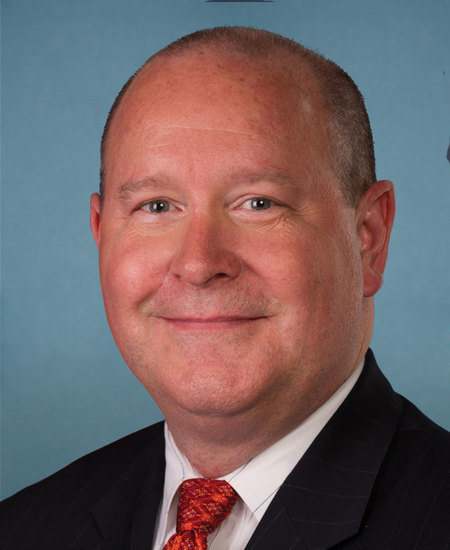
Photo of Larry Bucshon
R United States House · District 8 · Indiana

Rep. Larry Bucshon

Compare
Total votes
2,168
all sessions
Attendance
97%
75 missed
Near the chamber average
With party
91%
of cast votes
Lower than 88% of chamber peers
Bipartisan score
5%
crosses aisle rarely
Higher than 87% of chamber peers
Sponsored
556
bills & resolutions
Near the chamber average
Committees
0
assignments
556 bills and resolutions

Sponsored bills

Total
556
Primary
36
Co-sponsor
520
This page
556
matching current filters
Co-sponsor HR 5074
In committee · United States House · Co-sponsor
Kidney PATIENT Act of 2023

Maddy summaryThis bill delays a Medicare policy that would have restricted coverage to only intravenous drugs for managing phosphate levels in kidney failure patients. It specifically postpones the implementation of the "oral-only" policy under Medicare's ESRD payment system until January 1, 2033, or until an intravenous drug for phosphate control receives FDA approval - whichever comes first. The bill directly affects Medicare beneficiaries with end-stage renal disease (ESRD) who rely on oral medications for phosphate management. It ensures continued Medicare coverage for these oral drugs during the extended timeline, without changing the underlying payment structure.

In committee Jun 11, 2024 1 co-sponsor
Co-sponsor HR 5403
Passed · United States House · Co-sponsor
CBDC Anti-Surveillance State Act

Maddy summaryHR 5403, the CBDC Anti-Surveillance State Act, prohibits the Federal Reserve from issuing or facilitating central bank digital currency (CBDC) directly or indirectly to individuals through financial institutions. It specifically bans Federal Reserve banks from offering digital products to individuals, maintaining individual accounts, or using CBDC for monetary policy implementation. The bill also clarifies that its restrictions do not apply to existing physical cash or private, permissionless digital payment systems. This bill directly affects the Federal Reserve's ability to develop or deploy a government-run digital dollar. The law aims to prevent the Federal Reserve from creating a digital currency that could enable transaction tracking or government oversight of personal financial activity.

Passed Jun 3, 2024 1 co-sponsor
Co-sponsor HJRES 152
In committee · United States House · Co-sponsor
Providing for congressional disapproval under chapter 8 of title 5, United States Code, of the rule submitted by the Environmental Protection Agency relating to "Hazardous and Solid Waste Management System: Disposal of Coal Combustion Residuals From Electric Utilities; Legacy CCR Surface Impoundments".

Maddy summaryHJRES 152 is a congressional resolution seeking to block an Environmental Protection Agency (EPA) rule on managing coal ash waste from power plants, specifically for older disposal ponds (legacy CCR surface impoundments). The rule, published on May 8, 2024, established requirements for electric utilities to handle coal ash, including safety standards for existing disposal sites. If passed, this resolution would prevent the EPA rule from taking effect, removing the compliance requirements for utilities. This directly affects electric utilities that manage coal ash and the EPA's regulatory authority over waste disposal practices.

In committee May 24, 2024 1 co-sponsor
Co-sponsor HR 8545
In committee · United States House · Co-sponsor
Camp Lejeune Justice Act of 2024

Maddy summaryThis bill amends the 2022 Camp Lejeune Justice Act to clarify and correct technical details. It updates eligibility requirements for claimants (requiring 30 days at Camp Lejeune and defining "latent harm" instead of "latent disease"), clarifies court jurisdiction for cases, and specifies attorney fee structures (20% pre-litigation, 25% post-litigation). The changes directly affect individuals who developed health issues due to contaminated water at Camp Lejeune, streamlining their legal process under the existing 2022 law.

In committee May 23, 2024 1 co-sponsor
Co-sponsor HJRES 151
In committee · United States House · Co-sponsor
Providing for congressional disapproval under chapter 8 of title 5, United States Code, of the rule submitted by the Environmental Protection Agency relating to "Supplemental Effluent Limitations Guidelines and Standards for the Steam Electric Power Generating Point Source Category".

Maddy summaryHJRES 151 is a congressional disapproval resolution targeting an Environmental Protection Agency (EPA) rule that would have set new water pollution standards for steam electric power plants, including coal and nuclear facilities. The rule, published in the Federal Register on May 9, 2024, aimed to limit pollutants discharged into waterways from these power plants. If passed, this resolution would block the rule from taking effect under the Congressional Review Act. It directly affects steam electric power plants by preventing the implementation of these new environmental requirements.

In committee May 22, 2024 1 co-sponsor
Primary HR 6572
Passed · United States House · Lead sponsor
Deploying American Blockchains Act of 2023

Maddy summaryThe Deploying American Blockchains Act of 2023 directs the Secretary of Commerce to lead U.S. efforts in blockchain technology, focusing on promoting competitiveness and security. It requires the Department of Commerce to develop and share best practices for blockchain use, cybersecurity, and tokenization, while establishing an advisory committee with industry experts, government agencies, and stakeholders. The bill mandates annual reports to Congress on blockchain adoption, risks, and recommendations, but does not require private entities to adopt any specific practices or share information. This legislation primarily affects federal agencies, private sector developers, and businesses exploring blockchain applications in areas like supply chains, healthcare, and cybersecurity.

Passed May 16, 2024 0 co-sponsors
Primary HR 6571
Passed · United States House · Lead sponsor
Promoting Resilient Supply Chains Act of 2023

Maddy summaryThis bill establishes a Critical Supply Chain Resiliency Program within the Department of Commerce to strengthen U.S. supply chains for critical goods essential to national security and economic security. It directs the Assistant Secretary of Commerce to map critical supply chains, identify vulnerabilities, develop contingency plans for disruptions like pandemics or cyber attacks, and encourage partnerships with domestic manufacturers and allies. The program requires annual reports to Congress on supply chain resilience strategies, promotes use of technologies like blockchain for traceability, and will operate for seven years. The bill directly affects the Department of Commerce, domestic manufacturers of critical goods, and U.S. partnerships with key international allies. It focuses on concrete policy changes to enhance supply chain security without mandating private sector compliance.

Passed May 16, 2024 0 co-sponsors
Co-sponsor HR 1199
In committee · United States House · Co-sponsor
Facilitating Innovative Nuclear Diagnostics Act of 2023

Maddy summaryThis bill requires Medicare to pay separately for certain high-cost diagnostic drugs used in nuclear imaging (like those for cancer detection) starting in 2024. It applies to drugs with a daily cost of $500 or more (adjusted annually), ensuring they are not bundled with other services. Payments will be based on either the drug's average sales price or wholesale cost, with adjustments to keep overall Medicare spending unchanged. This directly affects Medicare Part B providers (hospitals, clinics) and beneficiaries receiving these specific diagnostic treatments.

In committee May 16, 2024 1 co-sponsor
Co-sponsor HR 5390
Passed · United States House · Co-sponsor
Critical Infrastructure Manufacturing Feasibility Act

Maddy summaryHR 5390, the Critical Infrastructure Manufacturing Feasibility Act, directs the Secretary of Commerce to study U.S. manufacturing gaps in critical infrastructure sectors (like energy, water, and transportation). The study must identify imported products due to domestic supply chain constraints, analyze the job and cost impacts of manufacturing them domestically, and assess feasibility in rural areas or industrial parks. The Secretary must submit a public report with findings and recommendations to Congress within 18 months of the bill's enactment. This is a procedural study bill with no funding or mandates; it solely gathers data to inform future policy decisions.

Passed May 15, 2024 1 co-sponsor
Co-sponsor HR 7109
Passed · United States House · Co-sponsor
Equal Representation Act

Maddy summaryHR 7109, the Equal Representation Act, requires the U.S. Census Bureau to add a citizenship status checkbox to the 2030 and future decennial censuses, asking respondents to identify if they are U.S. citizens, U.S. nationals, lawful residents, or unlawful residents. It then mandates excluding noncitizens (both lawful and unlawful residents) from the population count used to determine each state's number of congressional seats and electoral votes starting with the 2030 census. This bill directly affects how states are apportioned representation in Congress and presidential electoral votes, based solely on the citizen population. The key change is shifting the apportionment base from total population to citizen population alone, using the new census data.

Passed May 14, 2024 1 co-sponsor
Showing 101 to 110 of 556 bills
Previous 1 … 10 11 12 … 56 Next