

This resolution expresses the sense of the House of Representatives that the proposed constitutional amendment known as the Equal Rights Amendment has been duly proposed by Congress and ratified by the states and is therefore valid as the Twenty-Eighth Amendment to the Constitution. (The proposed amendment prohibits the United States or any state from denying or abridging equal rights under the law on account of sex.)
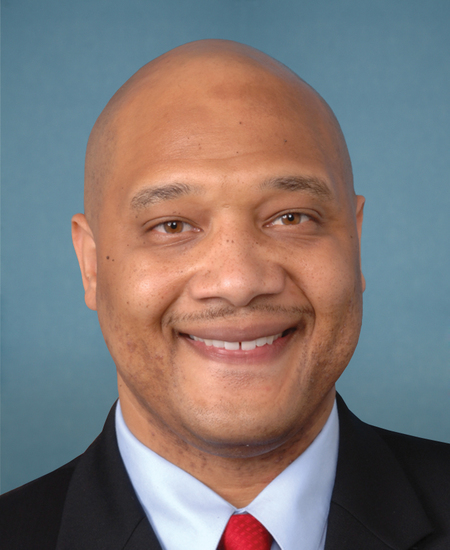
Rep. André Carson
Sponsored bills
This resolution expresses support for the principles of Transgender Day of Remembrance, memorializing the lives lost to anti-transgender violence this year.
Maddy summaryHRES 798 is a symbolic House resolution expressing the sense of Congress about the link between firearm violence and intimate partner violence, honoring victims like Gladys Ricart. It cites statistics showing firearms are used in 59% of intimate partner homicides, with women facing a 5x higher risk of being killed when an abusive partner has access to a gun. The resolution recommends specific policy actions, including strengthening background checks, restricting firearm access for those subject to domestic violence restraining orders, and supporting research on the disproportionate impact on Black, American Indian/Alaska Native, and Hispanic women. It does not create new law but urges Congress to advance related legislation like the Zero Tolerance for Domestic Abusers Act. The resolution directly addresses the intersection of firearms and intimate partner violence affecting millions of women, particularly in marginalized communities.
This resolution recognizes the annual celebration of Dia de los Muertos. The resolution urges the United States and the Department of Homeland Security to promote policies that uphold the human dignity of each migrant person and put an end to migrant deaths along the U.S.-Mexico border. Finally, this resolution calls on the United States and the Department of Health and Human Services to promote policies focused on COVID-19 protections and ensure that all communities have equal access to these to put an end to COVID-19 related deaths.
This resolution recognizes the victims of Islamophobic hate crimes that have occurred since September 11, 2001, and condemns racism, xenophobia, discrimination, Islamophobic sentiment, scapegoating, and ethnic or religious intolerance.
This resolution celebrates the first International Day for People of African Descent and expresses a commitment to a legislative agenda that eliminates persistent racial inequalities in the United States.
This resolution encourages law enforcement departments to use the National Night Out as an opportunity to improve relationships with the communities they serve.
This resolution recognizes Immigrant Heritage Month in honor of the contributions immigrants and their children have made to the United States. It also welcomes immigrants presently in the United States and individuals seeking to immigrate to the United States to contribute to the health, safety, diversity, and prosperity of the United States.
Maddy summaryHRES 507 is a non-binding House resolution condemning legislative actions and violence targeting transgender and nonbinary individuals. It references 2021 state bills restricting transgender youth access to gender-affirming medical care, sports participation, and public facilities, alongside statistics on rising violence (44 transgender killings in 2020) and mental health impacts. The resolution formally condemns discriminatory legislation and violence, remembers victims of transphobic hate, and commits to advocating for the community’s safety. As a symbolic resolution - not a law - it expresses congressional disapproval but does not create new policies or alter existing laws.
This resolution expresses support for (1) equal rights and protections for all people, regardless of actual or perceived sexual orientation or gender identity; and (2) the designation of LGBTQ Equality Day on June 26 to commemorate Supreme Court decisions handed down on that day in 2003, 2013, and 2015. The resolution also acknowledges the need for further legislation to ensure that people in the United States are free from all forms of discrimination on the basis of actual or perceived sexual orientation or gender identity.