

Veteran Service Recognition Act of 2022 This bill addresses immigration-related issues pertaining to noncitizen (or non-U.S. national) military veterans, including by authorizing the Department of Homeland Security (DHS) to provide lawful permanent resident status to a veteran subject to removal. If a noncitizen veteran appears to be eligible for lawful permanent resident status under this bill, that veteran must receive a reasonable opportunity to apply for such status and may not be removed until there is a final administrative decision on the veteran's eligibility. For the purposes of providing such status under this bill, DHS may waive any applicable grounds of inadmissibility, except for certain crime- or security-related grounds. The bill also extends certain deadlines relating to obtaining citizenship after serving in the Armed Forces. DHS must create a system for identifying noncitizens who are or may be veterans. Before initiating removal proceedings against a noncitizen, DHS must attempt to determine whether the noncitizen is a veteran. DHS must ensure that veteran status is considered in immigration proceedings. The bill also requires U.S. Citizenship and Immigration Services (USCIS) and the Department of Defense to take certain actions to facilitate opportunities for military recruits and veterans to obtain U.S. citizenship, such as by training Judge Advocate General Corps members to act as liaisons between the Armed Forces and USCIS on servicemember citizenship applications. The bill also establishes the Military Family Immigration Advisory Committee to provide recommendations on cases involving the removal of a servicemember, veteran, or certain family members of a servicemember or veteran. Such an individual may not be removed until the committee has provided a recommendation to DHS about the individual's case, unless the individual is inadmissible due to a conviction for an aggravated felony. The bill also waives certain grounds of inadmissibility (e.g., being unlawfully present in the United States) for certain noncitizens applying for lawful permanent resident status as an immediate relative of a U.S. citizen who has served at least two years in the Armed Forces.
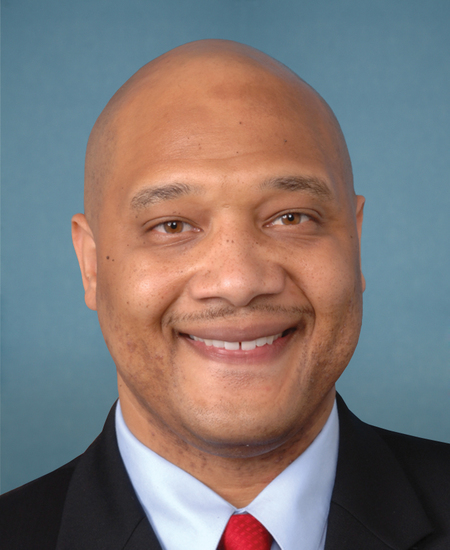
Rep. André Carson
Sponsored bills
READ Act Reauthorization Act of 2022 This bill reauthorizes a law that requires the implementation of a strategy to promote quality basic education in partner countries by (1) expanding access to basic education for all children, particularly marginalized children and vulnerable groups; and (2) improving the quality of basic education and learning outcomes.
Maddy summaryHR 7075 designates a specific triangular area in Washington, D.C. (bounded by 22nd Street NW, P Street NW, and Florida Avenue NW) as "Ukrainian Independence Park," including National Park Service reservations 57D and 360 (which contains the Taras Shevchenko Memorial). The bill updates all federal references to this area to use the new name and authorizes signage highlighting Ukraine's independence and U.S.-Ukraine solidarity. This is a procedural designation bill with no substantive policy changes, solely renaming a park area.
Save Oak Flat Act This bill repeals the requirement for the Department of Agriculture to convey the 2,422 acres of Forest System land located in Tonto National Forest in Pinal County, Arizona, known as Oak Flat, to Resolution Copper Mining, LLC, in exchange for various parcels of land owned by Resolution Copper. Oak Flat is withdrawn from (1) entry, appropriation, or disposal under the public land laws; (2) location, entry, and patent under the mining laws; and (3) disposition under all laws pertaining to mineral and geothermal leasing or mineral materials.
Identifying Mass Shooters Act This bill requires the National Institute of Justice (NIJ) to report to Congress on the content patterns used by mass shooters through online platforms and social media channels. Additionally, the bill directs the NIJ to identify items for further study that are identified in the report. Finally, the bill requires the NIJ to submit findings and federal legislative recommendations to Congress.
Responsibility and Integrity in Security Clearance Act or the RISC Act This bill revokes the security clearance of a family member or financial associate of the President that was granted contrary to the determination or recommendation of an agency, including the Federal Bureau of Investigation. A subsequent background investigation and agency adjudication is required before such an individual may be granted a security clearance. In addition, the White House Chief of Staff must notify Congress if the President or any other individual grants a security clearance to a family member or financial associate of the President contrary to the determination or recommendation of an agency. The notification must be made in writing no later than five days after the decision to grant the clearance.
One Stop Shop Community Reentry Program Act of 2022 This bill authorizes grants to support community-based reentry resources for previously incarcerated individuals who return to their communities. First, the bill authorizes the Department of Justice (DOJ) to make grants for community-based nonprofit organizations to create community reentry centers. Second, the bill authorizes DOJ to make grants for states, Indian tribes, and local governments to operate reentry services assistance hotlines.
This resolution encourages people around the world to work to achieve the goal of zero new HIV transmissions, zero discrimination, and zero AIDS-related deaths, in order to end the HIV epidemic in the United States and around the world by 2030. The resolution supports continued funding for prevention, care and treatment services, and research programs for communities impacted by HIV and people living with HIV in the United States and globally. The resolution supports continued leadership by the United States in domestic, bilateral, multilateral, and private sector efforts to fight HIV. Finally, the resolution urges other members of the international community to sustain and scale up their support for and financial contributions to efforts around the world to combat HIV.
VA Work-Study Improvement Act This bill updates the Department of Veterans Affairs work-study program, including by increasing the number of hours an individual may work, modifying the minimum wage requirements, and implementing an electronic timesheet.
Food Deserts Act This bill establishes a Department of Agriculture program to provide grants to states for revolving funds to support the establishment and operation of grocery stores in underserved communities. An underserved community is a community that has (1) limited access to affordable, healthy foods, including fresh fruits and vegetables, in grocery retail stores or farmer-to-consumer direct markets; and (2) a high rate of hunger or food insecurity or a high poverty rate. States must use the funds to make loans to support grocery stores in underserved communities, including for opening a store (excluding new construction), or supporting or purchasing an existing store. States may only make loans for grocery stores that meet requirements related to emphasizing unprocessed, healthful foods; providing staple foods and a variety of raw fruits and vegetables; having a plan to keep the foods in stock; charging affordable prices at or below market averages; meeting specified matching requirements using nonfederal funds; and being qualified to operate a store or having partnerships with organizations that provide technical assistance. States must prioritize loan applications from entities that meet criteria related to hiring workers from the underserved community, providing classes or educational information about a healthful diet, sourcing food from local urban farms and gardens, or demonstrating existing supply chain relationships or expertise in the grocery industry.