

Maddy summaryThe Richard L. Trumka Protecting the Right to Organize Act of 2023 strengthens workers' rights to organize unions by making it harder for employers to interfere with organizing efforts. Key provisions include changing the definition of "employee" to make it more difficult to classify workers as independent contractors, prohibiting employers from threatening to permanently replace striking workers, and requiring employers to provide voter lists for union elections. The bill also creates a new electronic voting system for union elections, strengthens whistleblower protections for workers reporting labor violations, and increases penalties for unfair labor practices. These changes directly affect workers seeking to form unions, employers who may interfere with organizing, and labor organizations. The bill aims to make it easier for workers to exercise their right to collective bargaining under the National Labor Relations Act.
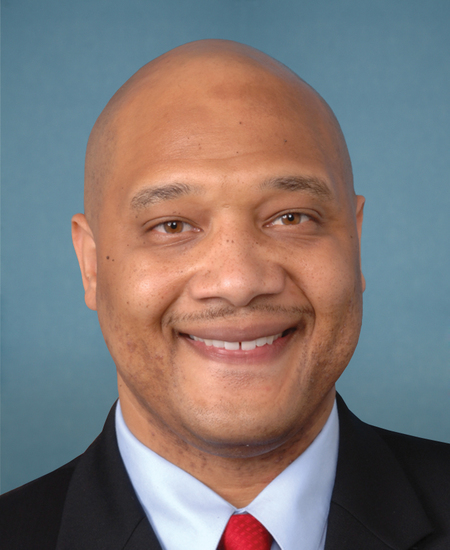
Rep. André Carson
Sponsored bills
Maddy summaryHRES 177 is a non-binding resolution supporting National Engineers Week (February 19-25, 2023). It expresses the House's recognition of engineers' contributions to public health, safety, and technological innovation, and emphasizes the importance of engineering education and diversity in STEM fields. The resolution does not create new laws, funding, or obligations - it solely affirms support for the week's goals of promoting engineering careers and STEM literacy. It was introduced by 12 representatives and referred to relevant committees for consideration.
Maddy summaryHR 1181 would limit pollution discharge permits under the Clean Water Act to 10 years for state and municipal programs, and 5 years for all other polluters like industrial facilities. This changes how long permits remain valid before requiring renewal, directly affecting wastewater treatment plants, factories, and state environmental agencies. The bill does not alter pollution standards or requirements, only the maximum duration of permits. It amends the Federal Water Pollution Control Act to establish these fixed terms.
This bill redesignates the federal building located at 935 Pennsylvania Avenue Northwest in the District of Columbia, commonly known as the J. Edgar Hoover Federal Building, as the Federal Bureau of Investigation Building.
This resolution condemns Russia for committing acts of genocide against the Ukrainian people. It also calls on the United States, in cooperation with North Atlantic Treaty Organization and European Union allies, to undertake measures to support the Ukrainian government to prevent further acts of Russian genocide against the Ukrainian people.
Maddy summaryThe Justice for Black Farmers Act of 2023 addresses historical discrimination against Black farmers by the USDA through several key provisions. It establishes an Equity Commission to study discrimination and recommend solutions, creates an independent Civil Rights Oversight Board to review discrimination complaints, and provides land grants of up to 160 acres to eligible Black farmers at no cost. The bill also improves access to credit for socially disadvantaged farmers, requires the USDA to collect and publish data on racial disparities in its programs, and includes protections against discriminatory practices in the livestock industry. These measures aim to increase land ownership and economic opportunity for Black farmers while addressing systemic barriers they've faced for decades.
Humane and Existing Alternatives in Research and Testing Sciences Act of 2022 [ sic ] or the HEARTS Act of 2022 [ sic ] This bill establishes a center within the National Institutes of Health (NIH) and requires other activities to promote alternatives to using animals in research and testing. The duties of the center include developing nonanimal research models (e.g., advanced cell cultures and advanced imaging systems) and training scientists about the methods. Additionally, if a federal department or agency or federally funded research entity uses animals for research and testing, it must develop and update plans for reducing such uses and periodically report on the number and types of animals that they use to the center. The center must establish a standard process for entities to submit and update their plans and reports and for making the plans and reports publicly available. The NIH must also provide incentives for the use of nonanimal research and generally ensure that nonanimal alternatives are considered when reviewing and approving research applications and proposals. Further, NIH applications for research grants must include an assurance that nonanimal methods for carrying out the research are unavailable.
Maddy summaryHRES 148 is a non-binding resolution supporting International Mother Language Day (observed February 21) to highlight the global importance of preserving linguistic and cultural heritage. It recognizes that thousands of languages are endangered worldwide - including over 150 Native American languages in the U.S., with more than 115 already extinct - and encourages Americans to participate in events celebrating language diversity. The resolution does not create new laws or obligations but serves as a symbolic endorsement of UNESCO’s language preservation efforts. Introduced in the 118th Congress (2023), it aligns with UNESCO’s Decade of Indigenous Languages initiative.
Maddy summaryHRES 150 is a ceremonial House resolution honoring the late civil rights leader John Robert Lewis (1940-2020). It formally recognizes his lifelong commitment to nonviolent activism, including his leadership in the Civil Rights Movement, the 1965 Selma voting rights march ("Bloody Sunday"), and his 30+ years serving as a U.S. Representative from Georgia. The resolution specifically commends his "towering achievements in the nonviolent struggle for civil rights" and his dedication to building the "Beloved Community" through justice and equality. As a commemorative resolution, it has no policy impact but serves as an official tribute to Lewis's legacy for the public and Congress.
Maddy summaryThe Department of Peacebuilding Act of 2023 would establish a new Cabinet-level Department of Peacebuilding within the executive branch of the U.S. government. The department would include multiple offices focused on domestic and international peacebuilding, violence prevention, peace education, and conflict resolution, with specific offices dedicated to areas like peace education, domestic activities, international activities, technology, arms control, and human rights. It would create a Secretary of Peacebuilding position and require the department to develop policies addressing root causes of violence, promote nonviolent conflict resolution, and collaborate with existing federal agencies. The bill would mandate annual reports on progress toward peace in the United States and require consultation with other departments on matters related to conflict prevention and peacebuilding.