

This resolution expresses support for the designation of Pi Day. (Pi is an irrational number that equals the ratio of the circumference of a circle to its diameter; it is a fundamental mathematical constant and central in mathematics, science, and engineering.)
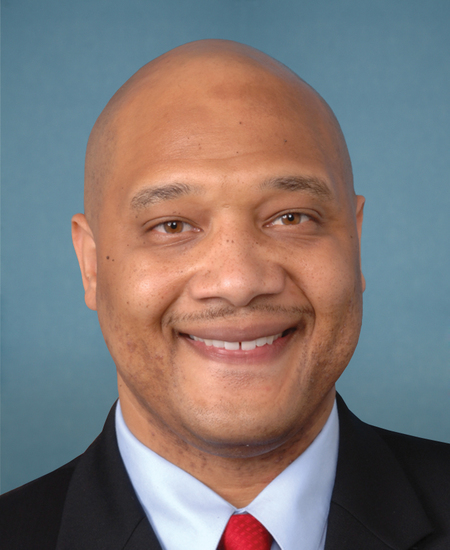
Rep. André Carson
Sponsored bills
Maddy summaryHRES 185 is a non-binding House resolution declaring racism a public health crisis in the United States. It directly affects communities of color - including Black, Latino, Native American, and Asian American populations - who experience significant health disparities like higher infant mortality rates, shorter life expectancy, and worse outcomes for conditions like heart disease and diabetes. The resolution cites evidence showing racism meets all four public health crisis criteria (widespread impact, unfair distribution, preventable, and lacking current solutions) and calls for a nationwide strategy to dismantle systemic racism and address its health impacts. It does not create new laws or funding but urges federal agencies to prioritize racial equity in health policy.
Maddy summaryHRES 181 is a non-binding House resolution expressing symbolic support for designating February 28, 2023, as "Rare Disease Day." It does not create new laws or policies but formally recognizes the importance of raising awareness about rare diseases, improving early diagnosis, and supporting research for treatments. The resolution acknowledges that rare diseases affect over 25 million people in the U.S. and highlights ongoing efforts like the FDA’s Rare Disease Endpoint Advancement Pilot Program. It aligns with the global observance of Rare Disease Day, which began in the U.S. in 2009.
Eliminating Backlogs Act of 2023 This bill increases the number of employment-based immigration visas available. The total number of additional visas made available under this bill shall be based on a formula relating to certain types of visas issued from FY1992-FY2021. These visas shall be available in FY2024 and in subsequent fiscal years until they are used. Furthermore, the yearly cap on the number of employment-based immigration visas that are made available to a single country shall not apply to the visas made available under this bill. (Generally, individuals from a single country may only receive up to 7% of such visas made available in a fiscal year.)
Maddy summaryHR 1538 creates a new "emerging business enterprise" designation for very small, young businesses (under 5 years old, with fewer than 25 employees or under 10% of industry size standards, and managers earning no more than 200% of average manager salaries). It requires federal agencies to set annual goals for awarding 3% of contracts to these businesses, prioritizing them if goals aren't met. The bill also waives SBA loan fees for eligible businesses and mandates agencies to report their progress to the Small Business Administration and Congress annually. These provisions aim to increase federal contracting opportunities for early-stage small businesses through defined eligibility, agency targets, and financial incentives.
Maddy summaryHR 1499, the Good Jobs for Good Airports Act, requires airports receiving federal funding to pay covered service workers a minimum wage of at least $15 per hour (or higher if state/local laws or federal standards require it) and provide minimum fringe benefits. It directly affects workers in specific airport roles like security, ticketing, concessions, cleaning, and ramp services at small, medium, or large hub airports. The bill mandates annual certification from airport operators to verify compliance with these wage and benefit standards, tied to eligibility for federal airport grants under the Infrastructure Investment and Jobs Act. It does not override stricter state or local laws but ensures minimum standards for workers supporting airport operations.
Maddy summaryHR 1280, the Cerebral Palsy Research Program Authorization Act of 2023, creates a federal research program at the CDC to study cerebral palsy. The bill authorizes the CDC to fund research on diagnosis, treatment, prevention factors, health costs, and public health surveillance related to cerebral palsy, which affects over 1 million Americans. It allocates $5 million annually from 2024 through 2029 for these research activities. This program directly supports researchers and health systems by advancing scientific understanding of a condition with no known cure that impacts children and adults worldwide.
Maddy summaryHR 1328, the Medical Device Nonvisual Accessibility Act of 2023, requires certain home-use medical devices (like blood pressure monitors and sleep apnea machines) to include nonvisual accessibility features - such as voice commands or audio feedback - by 2025. It directly affects blind or low-vision users who rely on these devices for independent, safe, and private care at home. The bill mandates that devices classified as Class II or III (and cleared via FDA processes) must meet accessibility standards ensuring equal usability for blind or low-vision individuals, with limited waivers allowed for manufacturers facing undue hardship. The FDA will develop and enforce these standards within two years, consulting with accessibility experts and blind users.
Maddy summaryHR 1241 establishes a competitive grant program to help local governments and tribes streamline zoning and permitting for broadband infrastructure deployment, directly benefiting unserved rural and low-income communities. Eligible entities must adopt efficient processes, like expedited review for micro-trenching and cost-based fees, before receiving grants to fund staff training or technology for faster application processing. The bill also creates a Local Broadband Advisory Council to develop solutions for deployment challenges, reporting to Congress within a year. It provides federal funding to support local efforts without imposing new regulations, focusing on accelerating broadband access through improved local government capacity.
Maddy summaryThe Paycheck Fairness Act (HR 17) strengthens equal pay protections by amending the Fair Labor Standards Act. It prohibits pay discrimination based on sex, pregnancy, childbirth, sexual orientation, gender identity, and sex characteristics. The bill modifies employer defenses for pay differences to require demonstration that any disparity is job-related, consistent with business necessity, and accounts for the entire pay differential. It also prohibits employers from relying on wage history when making hiring decisions or setting pay, enhances penalties for violations, and requires the EEOC to collect compensation data disaggregated by sex, race, and national origin.