

Maddy summaryHR 1716, the Global Aircraft Maintenance Safety Improvement Act, requires U.S. airlines to annually report detailed information about heavy maintenance work performed outside the U.S. on their aircraft, including locations, work descriptions, and any safety issues identified after maintenance. It prohibits U.S. airlines from entering new contracts for such maintenance with repair stations in countries classified by the FAA as "Category 2" due to safety deficiencies. The bill also mandates that mechanics and supervisors at foreign repair stations performing heavy maintenance on U.S. aircraft must hold appropriate FAA certifications. Additionally, it establishes a working group with international aviation authorities to review and recommend improvements for overseeing foreign repair stations.
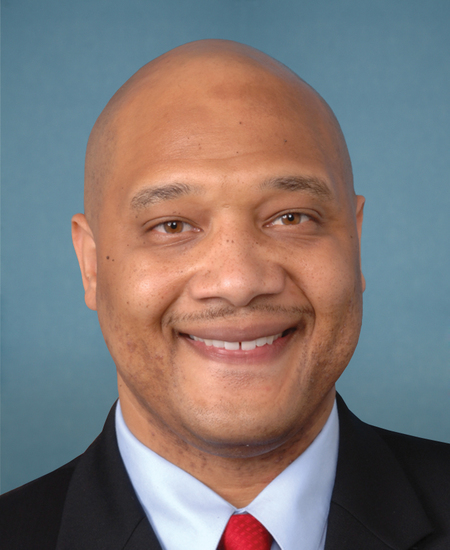
Rep. André Carson
Sponsored bills
Maddy summaryThis bill restores access to VA housing loans and educational benefits for Black World War II veterans who were denied GI Bill benefits due to racial discrimination, as well as for their living spouses, children, grandchildren, or direct descendants. It defines eligibility by requiring applicants to certify that their veteran relative was denied GI Bill benefits on racial grounds, with a five-year application window starting from the bill's enactment date. The VA must process these applications within 90 days and report to Congress on the number of recipients and total benefit value within one year. This addresses historical discrimination by creating new pathways to benefits for affected individuals and their families.
Maddy summaryThis resolution (HRES 242) is a non-binding congressional recognition honoring Roberto Clemente's legacy as a baseball legend and human rights advocate. It specifically acknowledges his historic achievements as the first Latino MLB star to win a World Series as a starter, MVP, and Hall of Fame inductee, while highlighting his activism against racial discrimination and humanitarian work, including aid efforts in Nicaragua after an earthquake. The resolution urges Major League Baseball to permanently retire his jersey number 21 and expand Roberto Clemente Day to require all players and staff to wear number 21 annually. As a symbolic resolution, it does not create new law or policy but formally commemorates Clemente's impact on baseball and social justice.
Office of Manufacturing and Industrial Innovation Policy Act of 202 3 This bill addresses the manufacturing capacity of the United States. The bill establishes the Office of Manufacturing and Industrial Innovation Policy, led by the Chief Manufacturing Officer, to serve as a source of manufacturing and industrial innovation analysis and judgment for the President with respect to the major policies, plans, and programs of the federal government. The office must establish a national strategic plan for manufacturing and industrial innovation that identifies critical needs to the manufacturing sector, including emergency readiness and resilience. Additionally, the bill establishes the President's Advisory Committee on Manufacturing and Industrial Innovation to promote regular communication between the federal government and the U.S. manufacturing sector. The Government Accountability Office must report on the efforts of the office along with recommendations for improvements. The bill also establishes the Federal Strategy and Coordinating Council on Manufacturing and Industrial Innovation within the executive branch to be chaired by the President to coordinate manufacturing and industrial innovation policy. Further, the bill establishes the Manufacturing and Industrial Innovation Policy Institute to assemble information relating to significant manufacturing and industrial development and trends in research and applications. Finally, the bill establishes the National Medal of Manufacturing and Industrial Innovation to be awarded for outstanding contributions to knowledge in manufacturing and industrial innovation.
Maddy summaryHR 1723, the Abortion is Health Care Everywhere Act of 2023, amends the Foreign Assistance Act to remove restrictions on using U.S. foreign aid funds for abortion services. It explicitly allows U.S. foreign assistance programs to fund comprehensive reproductive health care, including abortion services, training, and equipment. This change directly affects U.S. international health programs and recipient countries, enabling them to integrate safe abortion care into broader reproductive health services. The bill aims to align U.S. policy with global health guidelines by making abortion services a standard part of reproductive health care funded through foreign assistance.
Maddy summaryThis bill modifies federal highway funding rules to prioritize safety for cyclists and pedestrians. It allows states and local governments to receive 100% federal funding for projects that connect existing bike/pedestrian infrastructure or reduce safety risks for these users, instead of the usual lower federal share. The bill also requires projects to align with state safety plans focusing on vulnerable road users and includes specific "Proven Safety Countermeasures" for cyclists/pedestrians. These changes directly affect states administering federal highway funds and local governments seeking to improve non-motorized transportation infrastructure.
Marine Mammal Climate Change Protection Act This bill establishes requirements to protect marine mammals adversely affected by climate change, including by establishing a program within the National Oceanic and Atmospheric Administration (NOAA) to monitor the adverse impacts of climate change on marine mammals. In addition, it also requires NOAA's National Marine Fisheries Service (NMFS) and the U.S. Fish and Wildlife Service (USFWS) to issue regulations that list marine mammal species in waters under U.S. jurisdiction for which climate change is more likely than not to result in a decline in population abundance, an impeded population recovery, or a reduced carrying capacity (i.e., the maximum population of a marine mammal species that an area will support without undergoing deterioration). The NMFS and the USFWS must update the list at least once every five years and issue regulations that include climate impact management plans for species on such list. The bill also directs the NMFS and the USFWS to review agreements with foreign governments concerning the management of marine mammals that are or may be affected by climate change. The Department of State must initiate amendments to such agreements or negotiate the development of such agreements in a manner consistent with the goals of the bill.
Maddy summaryHR 1232, the Fort Pillow National Battlefield Park Study Act, directs the Secretary of the Interior to conduct a study evaluating whether Fort Pillow Historic State Park in Tennessee should become a National Battlefield Park. The study will assess the site's national significance related to the 1864 Civil War massacre where many U.S. Colored Troops were killed after surrendering, and determine the feasibility of designating it as a National Historic Park unit. This bill authorizes a review process but does not create the park or change current status. The study would examine the park's 1,642 acres, museum, and historical resources as part of the evaluation. This procedural step is required before any potential designation as a National Battlefield Park.
Maddy summaryThe Food Deserts Act creates a federal grant program to help establish grocery stores in underserved communities by funding state revolving funds. States receive capitalization grants (up to $150 million for FY2022) to provide low-interest loans to grocery stores that meet specific criteria, such as selling unprocessed, affordable healthy foods and matching 20% of the loan with non-federal funds. Priority is given to stores hiring local workers, offering nutrition education, sourcing from local farms, and having established supply chains. The program directly supports grocery store operators in areas with limited access to fresh food, aiming to improve community health outcomes through increased access to nutritious options.
Maddy summaryHR 1136, the Albert Pike Statue Removal Act, directs the National Park Service to remove a statue honoring Albert Pike from its location near Judiciary Square in Washington, D.C. The bill mandates removal of the statue erected in 1898 under a prior congressional resolution and authorizes the Secretary of the Interior to donate it to a museum or similar institution for indoor preservation. The recipient must display the statue only indoors; if displayed outdoors, ownership reverts to the federal government. This bill directly affects the physical location and future display of the statue, with no other policy changes.