

Maddy summaryHRES 291 is a symbolic resolution supporting "Financial Literacy Month" to raise public awareness about the importance of personal financial education in the U.S. It cites statistics showing widespread challenges with financial literacy, such as 18.6% of households being unbanked or underbanked and only 44% of adults having a budget. The resolution urges federal, state, local governments, schools, nonprofits, and businesses to observe Financial Literacy Month with educational programs. It does not create new laws or funding but emphasizes the need for better financial education to help individuals manage money, credit, and debt.
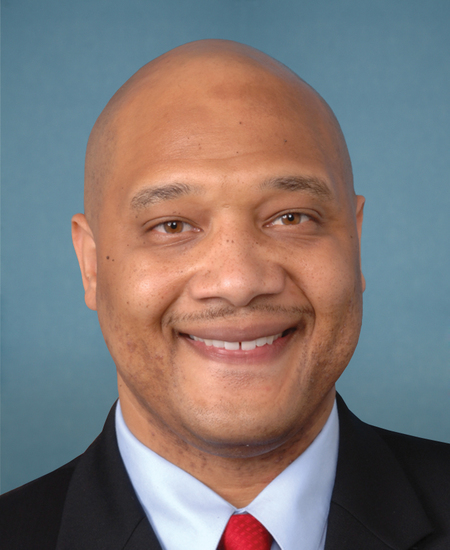
Rep. André Carson
Sponsored bills
Employee Profit-Sharing Encouragement Act of 2023 This bill denies the business tax deduction for the remuneration of highly-compensated corporate employees unless the corporation has average annual gross receipts of less than $25 million and maintains a plan for making qualified profit-sharing distributions to its employees. The bill defines qualified profit-sharing distributions as cash distributions under a written employer plan that gives employees who have been employed for at least one year a right to profit-sharing distributions and bases the amount of such distributions on the measure of the receipts, profit, revenues, or earnings of the employer.
Maddy summaryHR 2584, the SAVE Act, creates a new federal criminal offense for assaulting or intimidating hospital employees while they're performing their duties, punishable by up to 10 years in prison, with enhanced penalties for using weapons, causing injury, or during public emergencies. The bill authorizes $25 million annually in federal grants to hospitals for violence prevention programs, including staff training, security technologies like panic buttons and video surveillance, and coordination with law enforcement. It defines "hospital" broadly to include various medical facilities such as long-term care hospitals, rehabilitation facilities, and critical access hospitals. The legislation directly affects hospital workers and medical facilities by establishing federal criminal penalties for violence against employees and providing funding to improve workplace safety. The law aims to address the rising problem of workplace violence against healthcare workers, which the bill states has increased since 2011.
Maddy summaryHR 2630, the Safe Step Act, requires group health plans and health insurance issuers to establish a clear, transparent process for patients or their doctors to request exceptions to medication step therapy protocols. These protocols typically force patients to try cheaper drugs first before covering more expensive alternatives. The bill mandates that plans must approve exceptions when prior treatments failed, delay would cause serious harm, a treatment is unsafe, or a patient is stable on a previously approved drug, with strict 72-hour (or 24-hour in emergencies) decision timelines. It also requires plans to publish the exception process online and limit documentation requests to only necessary medical information. This law directly affects health insurers, employers offering health plans, and patients using step therapy for prescription drugs.
Maddy summaryHJRES 54 proposes a constitutional amendment stating that only natural persons (human beings) have rights protected by the U.S. Constitution, explicitly denying constitutional rights to corporations, limited liability companies, and other artificial entities. It would require governments to regulate or restrict corporate political contributions and spending to ensure equal access to elections, mandate public disclosure of all political spending, and clarify that campaign finance rules do not violate the First Amendment. This amendment directly affects corporations and other artificial entities by removing their constitutional standing in legal challenges and subjecting their political activities to stricter government oversight. If passed, it would fundamentally change how corporations interact with election laws and constitutional protections, though it preserves press freedom under Section 3. The bill is a proposed amendment requiring ratification by 3/4 of state legislatures to become part of the Constitution.
Maddy summaryThe School Meals Expansion Act (HR 2567) amends the National School Lunch Act to make it easier for schools to provide free meals to all students. It lowers the income threshold to 25% (from a higher previous rate) and increases the eligibility multiplier to 2.5 for school years starting July 1, 2023. This means school districts with 25% or more students from low-income families can now qualify for full federal funding to offer free meals to all students without requiring individual applications. The bill directly affects local school districts that choose to participate in the community eligibility program under the National School Lunch Act.
Expanding Opportunities for Diverse Entrepreneurs Act This bill requires the Department of Transportation (DOT) Disadvantaged Business Enterprise (DBE) program and recipients of assistance from the program to analyze and report on the program. The DBE program seeks to offer small disadvantaged businesses (i.e., certified as owned and controlled by socially and economically disadvantaged individuals) a fair opportunity to compete for federally funded transportation contracts. The bill requires the DBE liaison officers to track and provide an analysis of all efforts to expand knowledge of services and opportunities available (e.g., minimum outreach, training, and online development support) to non-certified and certified DBEs to increase an enterprise's ability to compete for, and perform on, federally funded transportation contracts; DOT to publicly post online a searchable and exportable version of the Uniform Report of DBE Awards/ Commitments and Payments for each state; and DOT to submit an annual report to Congress on the DBE program.
Maddy summaryThis bill creates a 2-year pilot program to establish or improve state-based nursing workforce centers. It provides $1.5 million annually (2024-2025) for up to six state or regional centers, requiring non-Federal matching funds (1:4 ratio). These centers will analyze nursing workforce data - including education, retention, and shortages - and develop strategies to recruit, retain, and diversify nurses, especially in rural and underserved areas. The program mandates annual reports to Congress on outcomes and best practices for addressing nursing shortages. It directly affects states, nursing schools, healthcare employers, and nursing workforce centers through federal grants and data-driven planning.
Maddy summaryHR 2439, the Ally’s Act, requires most private health insurance plans to cover hearing-related services and devices for qualifying individuals. It mandates coverage for cochlear implants, bone conduction devices, maintenance, upgrades every five years, hearing assessments, surgery, and rehabilitation, without separate cost-sharing or medical necessity reviews. This directly affects people with hearing loss who need implantable devices, as defined by a physician or audiologist. The law applies to group health plans under the Public Health Service Act, ERISA, and Internal Revenue Code, taking effect for plan years beginning January 1, 2025.
Maddy summaryHR 2434, the Next Generation Fuels Act of 2023, requires automobile manufacturers to design vehicles for model years 2028 and later to operate with gasoline containing up to 25% ethanol (2028-2032) or 30% ethanol (2033+) and to be compatible with gasoline having a research octane number of 95 or higher (2028-2032) or 98 or higher (2033+). Fuel retailers must install equipment to ensure compatibility with these high-octane, high-ethanol fuels, while refiners must meet specific requirements for gasoline aromatics content and low-carbon fuel standards. The bill mandates labeling requirements to inform consumers about fuel compatibility and potential consequences of using lower-octane fuels. EPA must determine nationwide availability of 98 octane gasoline by 2031 before the full requirements take effect in 2033, affecting automobile manufacturers, fuel retailers, and refiners through changes in vehicle design, fuel composition, and consumer information standards.