

Maddy summaryHR 2777, the School Meals during School Closures Act, allows schools to continue providing meals during certain closures without following standard meal program rules. It directly affects schools and meal providers by enabling the Secretary to waive requirements under the National School Lunch Act for closures due to strikes (excluding employer lockouts), weather disasters, public health emergencies, unsafe facilities, construction, or other unanticipated events. The key provision creates a new waiver exception (added to Section 12 of the Act) that skips specific regulatory hurdles normally required for meal services during these closures. This change ensures students can still receive meals when schools close unexpectedly for covered reasons.
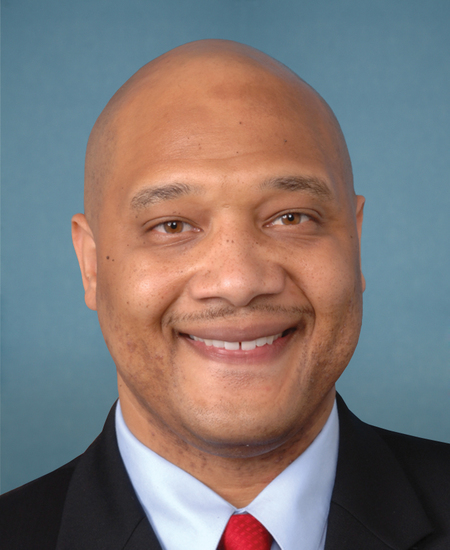
Rep. André Carson
Sponsored bills
American Innovation and R&D Competitiveness Act of 2023 This bill eliminates the five-year amortization requirement for research and experimental expenditures, thus allowing continued expensing of such expenditures in the taxable years in which they are incurred.
Maddy summaryHRES 269 is a non-binding resolution passed by the U.S. House of Representatives on March 30, 2023. It recognizes the federal government's duty to develop and implement a Transgender Bill of Rights to protect transgender and nonbinary people. The resolution outlines key provisions, including ensuring access to gender-affirming medical care, ending discrimination in employment and housing, and improving legal recognition of gender identity on government documents. It also calls for addressing systemic barriers in education, safety, and economic security faced by transgender and nonbinary individuals.
Maddy summaryHR 2703, the Green Energy for Federal Buildings Act, requires the U.S. federal government to increase its use of renewable energy in buildings over time. It amends existing law to set specific renewable energy purchase targets: 7.5% for 2013-2019, rising to 35% (2030-2039), 75% (2040-2049), and 100% starting in 2050. The bill directs federal agencies to prioritize on-site, on Federal lands, or on tribal lands renewable energy where economically and technically feasible. This directly affects all federal agencies operating buildings by mandating progressively higher renewable energy consumption in their operations. The policy change focuses on concrete, phased targets for federal energy use without specifying outcomes or advocating for particular energy sources.
Women in Aviation Advisory Board Act This bill establishes a Federal Advisory Committee on Women in Aviation. The committee must advise the Department of Transportation and the Federal Aviation Administration on matters related to the education, training, mentorship, outreach, recruitment, and retention of women in the aviation industry. Membership in the committee must include representatives from aviation-related manufacturers, commercial air carriers, general aviation operators, unmanned aircraft systems operators, airports, aviation training and maintenance providers, labor organizations, educational institutions, and nonprofit organizations within the aviation industry.
Maddy summaryHR 2728, the Young Farmer Success Act, expands student loan forgiveness eligibility under the Higher Education Act to include full-time farm and ranch workers. It directly affects young agricultural workers employed as employees or managers at farms meeting specific revenue thresholds. The key provision adds "full-time job engaged in farm work" as a qualifying employment type for loan forgiveness, requiring farms to earn at least $35,000 in gross revenue from agricultural sales in 2023 (with annual inflation adjustments based on the Consumer Price Index). This amendment modifies existing loan forgiveness rules without creating new programs, applying to workers meeting the farm revenue criteria.
Maddy summaryHR 2725, the "Do No Harm Act," amends the Religious Freedom Restoration Act (RFRA) to clarify that RFRA does not apply when federal laws protect against discrimination or promote equal opportunity. It specifically exempts protections under the Civil Rights Act, Americans with Disabilities Act, workplace benefits like leave, child labor safeguards, and healthcare access from RFRA challenges. The bill also clarifies that RFRA does not block private lawsuits between individuals, applying only to cases involving government entities. This amendment ensures that existing federal civil rights and workplace protections remain enforceable under RFRA.
Maddy summaryThe Latonya Reeves Freedom Act of 2023 strengthens the Americans with Disabilities Act's requirement that individuals with disabilities receive long-term services and supports in community settings rather than institutions. It defines "community-based" services to include specific housing options where individuals with disabilities can live independently with maximum control over their lives, including access to integrated housing, employment, and community participation. The bill requires states to develop transition plans to move people from institutional settings to community-based services within 12 years, with measurable annual targets for reducing institutionalization. It establishes enforcement mechanisms through the Department of Justice and Department of Health and Human Services to ensure compliance with these requirements.
EIDL Relief Act This bill provides temporary relief for certain borrowers of Economic Injury Disaster Loans (EIDL) that were made in response to the COVID-19 emergency. Specifically, for one year, the Small Business Administration must reduce the interest rate and limit the monthly payment due for borrowers of these loans experiencing short-term financial challenges.
Maddy summaryHR 2702, the Tax Refund Protection Act, requires tax return preparers to obtain licenses or certifications demonstrating competency and good character before providing services. The bill establishes penalties - including fines up to $1,000 per violation - for preparers who fail to disclose key details about refund anticipation loans (fees paid to receive refunds early) or engage in misconduct like fraud. It mandates clear disclosures to taxpayers about preparer fees, average refund timelines, and risks of refund anticipation arrangements, such as potential debt if refunds are delayed or smaller than expected. The law directly affects tax preparers and taxpayers by increasing oversight of preparer conduct and improving transparency around refund-related fees.