

Maddy summaryHR 3113, the Expanding Access to School Meals Act of 2023, would eliminate reduced-price breakfast and lunch programs in schools, requiring all meals to be either free or full price. It would expand eligibility for free school meals by raising the income threshold from 130% to 200% of the federal poverty level and creating direct certification for children receiving Medicaid benefits. The bill also allows schools to seek retroactive reimbursement for meals served to eligible students and increases the community eligibility program multiplier to 2.5. These changes would affect school meal programs nationwide, particularly benefiting low-income children who qualify for free meals under the revised standards.
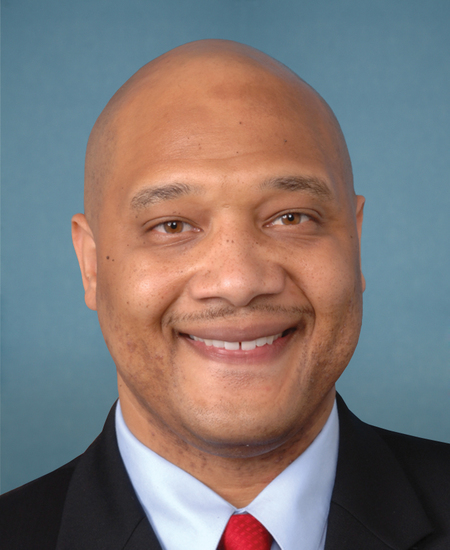
Rep. André Carson
Sponsored bills
Maddy summaryThis bill allows states to implement a statewide program under the National School Lunch Act, enabling all schools in the state to receive federal reimbursement for free meals without needing to individually verify student poverty levels. It removes the previous requirement that schools must meet a minimum percentage of low-income students (setting the threshold to zero) and simplifies eligibility by calculating student need across the entire state instead of per school district. Schools in participating states would no longer need to conduct individual student eligibility screenings for free meal programs, streamlining access. The policy directly affects public school districts and students in states that adopt this statewide approach, ensuring all enrolled students receive free meals without administrative barriers.
Defending the Human Rights of Palestinian Children and Families Living Under Israeli Military Occupation Act This bill limits U.S. assistance to Israel and establishes reporting requirements related to Israel's activities in the West Bank and its expenditures for offshore procurement. (Offshore procurement involves spending U.S. security assistance from the Foreign Military Financing program on Israeli-origin rather than U.S.-origin defense articles.) Specifically, the bill prohibits the use of any funds that are made available for assistance to Israel to support (1) military detention, interrogation, abuse, or ill treatment of Palestinian children; (2) seizure, appropriation, or destruction of Palestinian property and forcible transfer of civilians in the Israeli-controlled West Bank; or (3) certain activities to facilitate unilateral annexation by Israel of West Bank territory. The Department of State must report on the nature and extent of such activities carried out by Israel. Further, the Government Accountability Office must submit to Congress a report on related topics, such as (1) identifying specific programs and items to which funds for offshore procurement in Israel have been allocated, (2) identifying all end-use monitoring to which Israel is subject with respect to U.S.-origin defense articles, and (3) assessing the extent to which offshore procurement funds have supported illegal Israeli settlement activity in the occupied West Bank.
This resolution affirms the importance of free expression and freedom of the press around the world and condemns threats to these freedoms. The resolution calls on the President and the Department of State to (1) urge foreign governments to bring to justice those who threaten or attack journalists, and (2) leverage foreign assistance to help expand access to independent media in countries where authoritarian regimes control the internet.
Maddy summaryHR 3056, the Research Advancing to Market Production for Innovators Act, aims to improve the commercialization of technologies developed by small businesses through the SBIR and STTR programs. The bill requires federal agencies to consider commercialization potential in peer reviews, designate Technology Commercialization Officials to assist small business awardees, and establish annual commercialization impact assessments measuring outcomes like product sales, outside investment, and patent activity. It also creates a prioritized patent examination program to help small businesses protect intellectual property more efficiently without additional fees. These changes apply to all federal agencies administering SBIR and STTR programs and directly affect small businesses receiving these awards.
Maddy summaryThis bill prohibits forced arbitration for race discrimination claims under federal, tribal, state, or local law. It makes pre-existing arbitration agreements unenforceable for disputes involving discrimination based on race, color, or national origin, allowing affected individuals to pursue cases in court instead. The law directly impacts employees, job applicants, and others facing alleged race discrimination who would otherwise be barred from court by mandatory arbitration clauses. It requires courts - not arbitrators - to decide if the law applies to a dispute, ensuring legal clarity for affected parties.
Maddy summaryHRES 341 is a nonbinding resolution expressing the House's support for maintaining cash as a viable payment option. It highlights that 18.6% of U.S. households (nearly 6 million) rely solely on cash due to lack of bank access, privacy concerns, and risks associated with digital payments like data breaches. The resolution cites legal tender status under U.S. Code and Federal Reserve Chair Powell's testimony emphasizing cash's critical role for unbanked and low-income communities. It does not create new laws but urges businesses to accept cash to protect consumer privacy and financial security.
Original Fair Housing Resolution of 2023 This resolution expresses support for the goals and values of the 55th anniversary of the Fair Housing Act and for efforts to strengthen housing protections.
Maddy summary# Summary of EDUCATORS for America Act Provisions This comprehensive legislation makes significant changes to educator preparation, certification, and support systems, with a strong focus on loan forgiveness and retention of educators in high-need settings. ## Key Provisions: 1. **Enhanced Loan Forgiveness Programs**: - Creates new "Educator Loan Forgiveness Programs" under sections 428J and 460 of the Higher Education Act - Provides 100% loan forgiveness for educators who complete 5 years of qualifying service in high-need schools or early childhood education programs - Offers monthly loan forgiveness/cancellation during the service period (in addition to annual forgiveness) 2. **Expanded Eligibility**: - Defines "high need school" as schools where: * Over 30% of students meet poverty measures * School is identified for comprehensive support * School is Bureau of Indian Education funded * School is operated by Tribal educational agencies - Includes Tribal early childhood programs, Native Hawaiian education systems, and Bureau of Indian Education programs as eligible settings - Special rule for educators providing instruction in Native American languages 3. **"Qualifying Educator" Definition**: - Includes elementary/secondary teachers (with full certification) - Includes school leaders (with full certification) - Includes early childhood educators and program directors - Includes educators working in Native American language instruction regardless of certification status 4. **New Support Programs**: - Centers of Excellence for teacher preparation at institutions serving underrepresented populations - Recruitment and completion grants for underrepresented students in education - Resiliency grants for technology integration and educator workforce partnerships - Doctoral fellowships to diversify faculty in high-need education areas 5. **Implementation Details**: - Monthly loan credit program for eligible educators in income-driven repayment plans - Allows counting of partial service years under specific conditions - Prevents double benefits with other service programs - Allows for promotions within qualifying schools without losing eligibility This legislation aims to create a more diverse, stable, and well-prepared educator workforce by reducing financial barriers to entering and remaining in the education profession, particularly in high-need schools and early childhood education settings.
Maddy summaryThe Returning Home Act (HR 2994) establishes a new federal grant program to provide rental assistance and housing support for individuals recently released from incarceration. It directly affects people leaving prisons, jails, juvenile facilities, or halfway houses who are at risk of homelessness or housing insecurity within 365 days of release. The program funds 24 months of rental assistance (60% minimum), housing counseling, case management, landlord incentives, and other supportive services like pre-release planning and mental health referrals. It authorizes $100 million annually for these services and prohibits funding for law enforcement entities.