

Adult Day Center Enhancement Act This bill requires the Administration for Community Living (ACL) to carry out various activities related to adult day programs. These programs provide care to individuals living with neurological diseases or conditions (e.g., Parkinson's disease or traumatic brain injury). Specifically, the ACL must conduct a survey that identifies successful programs, programs that serve young adults, and financial support that the ACL provides to programs; develop best practices for establishing adult day programs; and award grants to programs that support younger people.
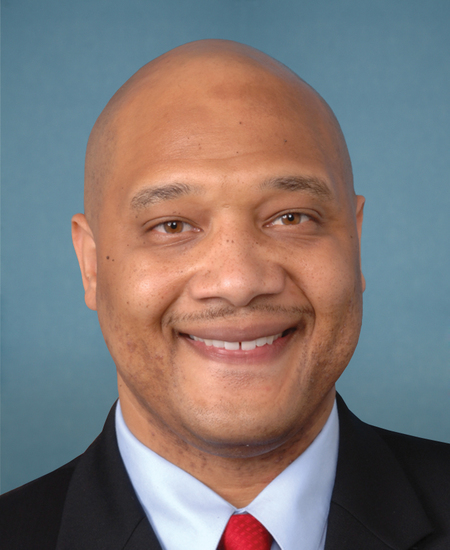
Rep. André Carson
Sponsored bills
Maddy summaryThe HERO Act creates a national data system to track suicides among public safety officers (including police, firefighters, and EMTs) and requires annual reports broken down by age, gender, occupation, and status (volunteer, career, etc.). It establishes grants for peer-led mental health support programs within fire departments and EMS agencies, where trained fellow responders provide confidential counseling. The bill also mandates development of educational resources for mental health professionals on first responder-specific stressors and evidence-based PTSD treatment strategies. All data collection and reporting include strict privacy protections to prevent misuse of information for denying survivor benefits.
Maddy summaryThis bill creates a new grant program under the Public Health Service Act to provide emergency funding for health care facilities during declared emergencies (like pandemics or natural disasters). It authorizes grants to public or private nonprofit health care facilities and home health agencies to pay hazardous duty compensation to eligible health care workers - such as nurses, medical technicians, and facility cleaners - performing essential on-site work. Grants can cover up to $13 per hour in hazard pay (capped at $25,000 annually per worker) or fund safety measures like personal protective equipment and alternative transit. The program requires the Secretary of Health and Human Services to determine if work or commutes are hazardous during emergencies.
Secure Testing Resources Instead of Prosecuting Act or the STRIP Act This bill exempts the possession, sale, or purchase of fentanyl drug testing equipment, including test strips, from criminal penalties under the Controlled Substances Act.
Maddy summaryH.J.Res. 65 designates November 9th each year as "Gold Star Father's Day" to honor fathers who have lost children serving in the U.S. Armed Forces. The resolution recognizes these fathers' sacrifice, aligns with existing recognition of Gold Star Mothers (since 1936), and supports efforts to honor military families. It does not create new benefits or legal requirements but formally designates a day for national recognition of fathers who lost children in military service. This symbolic resolution follows Georgia's 2017 designation of November 9 as "Georgia Gold Star Father's Day."
Maddy summaryThis resolution (HRES 443) is a symbolic gesture by the U.S. House of Representatives supporting National Poppy Day, observed on the Friday before Memorial Day. It formally endorses the tradition of wearing red poppies to honor veterans who died serving in the U.S. Armed Forces, referencing the poppy’s historical symbolism from World War I. The resolution encourages all U.S. citizens, residents, and visitors to wear a poppy that day as a sign of appreciation for military service. It does not create new laws, programs, or obligations - it is purely a statement of recognition.
Corporal Fernando Ruiz Baltazar Posthumous Citizenship Act of 2023 This bill extends posthumous citizenship to an otherwise qualified noncitizen who enlisted, reenlisted, extended enlistment, or was inducted into the U.S. Armed Forces in the Philippines and died as a result of such active duty service during the period beginning September 1, 1939, and ending December 31, 1946. The executive department under which an individual served must determine whether the individual satisfied the requirements for posthumous citizenship under this bill. Specified naturalization and other posthumous benefit provisions shall not apply to the surviving spouse, child, or parent of such an individual.
This bill allows a new tax credit for a taxpayer's employment-related expenses necessary to care for a dependent who has attained age 50. Employment-related expenses include (1) expenses for household services; and (2) expenses for the care of the dependent, including respite care and hospice care. The expenses must be incurred to enable the taxpayer to be gainfully employed for any period for which there are one or more dependents that qualify for the credit. The bill limits the amount of such credit to $3,000 for the care of one dependent and $6,000 for the care of two or more dependents of the taxpayer in a taxable year.
Maddy summaryThis bill makes the adoption tax credit refundable, meaning adoptive parents who claim the credit can receive a cash refund even if they owe no federal income tax. Currently, the credit is non-refundable, so any excess credit beyond taxes owed is lost. The bill redesignates the credit in tax code (from section 23 to 36C), adds new requirements for third-party affidavits to verify adoptions, and applies to tax returns filed for 2024 and later. It directly affects adoptive parents who qualify for the credit but have no tax liability.
Reward Work Act This bill prohibits issuers from purchasing their own securities on a national exchange. The bill also requires one-third of an issuer's board of directors to be elected by employees in order for the issuer to be allowed to register securities.