

Maddy summaryHR 4272, the Stop Fentanyl Now Act of 2023, directly affects schools, public health systems, and law enforcement by expanding prevention and response efforts to the fentanyl crisis. The bill requires schools to train staff on carrying and administering naloxone (an opioid overdose reversal drug) and provides grants to states for school-based programs, treatment access, and harm reduction tools like fentanyl test strips. It also increases law enforcement resources to disrupt fentanyl trafficking, including targeting online sales, and removes legal barriers for possessing fentanyl test strips. These provisions aim to reduce overdose deaths by improving education, treatment access, and prevention strategies in communities most impacted by fentanyl-laced pills.
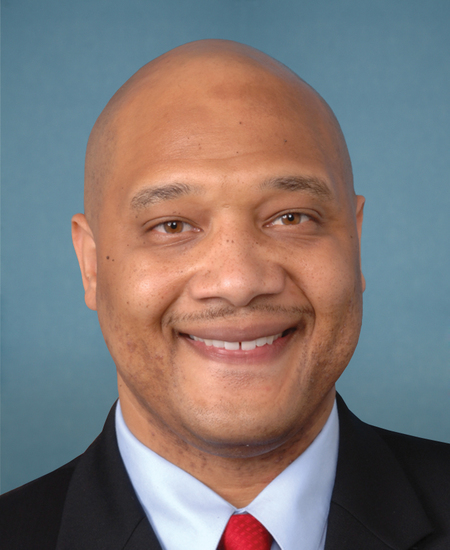
Rep. André Carson
Sponsored bills
Maddy summaryThe HERO Act establishes a national data system to track suicides among public safety officers, including firefighters, EMTs, police, and telecommunicators, collecting detailed statistics by age, gender, occupation, and employment status (career, volunteer, or retired). It mandates annual reports to Congress and public availability of findings to identify suicide trends and effective interventions. The bill also funds peer-support wellness programs for fire/EMS departments, behavioral health programs for healthcare providers, and resources to train mental health professionals on treating public safety personnel. All data collection and program provisions include strict privacy safeguards to protect confidentiality and prohibit using suicide data to deny survivor benefits.
Maddy summaryHR 4270 creates a federal grant program to fund green roofs on public elementary and secondary schools. It provides grants for planning, installing, and maintaining vegetated roofs that improve energy efficiency, reduce stormwater runoff, and offer educational opportunities. Schools serving communities where at least 30% of students are from low-income households receive priority, and grants require ADA compliance and plans for local workforce hiring. The program includes 5 years of maintenance funding after installation to ensure long-term energy savings and environmental benefits.
Maddy summaryHR 4241, the Horse Transportation Safety Act of 2023, prohibits transporting horses between states or territories in multi-level motor vehicles (like certain livestock trailers with stacked levels). This directly affects commercial horse transporters moving animals across state lines. The bill adds a civil penalty of $100-$500 per horse per violation for knowingly violating this rule, with separate penalties for each horse transported. It amends the Horse Protection Act to address safety concerns related to transporting horses in vehicles not designed for such travel.
Maddy summaryHR 4263, the ADINA Act, requires drug manufacturers to clearly label human-use drugs containing major food allergens (like peanuts or shellfish) or ingredients derived from gluten-containing grains (such as wheat or barley). This affects drug producers and pharmacies by mandating that labels state the presence of these allergens and specify the exact gluten source if applicable. The law aims to inform consumers with allergies about potential risks in medications. It applies to all drugs meeting these criteria, with implementation beginning within two years of the bill's enactment.
Maddy summaryHR 3519, the Hot Foods Act of 2023, amends the Food and Nutrition Act of 2008 to allow Supplemental Nutrition Assistance Program (SNAP) benefits to be used for hot foods or hot food products ready for immediate consumption at participating retailers. This change directly affects SNAP recipients who purchase such hot foods and retailers that sell them. The key provision removes the previous exclusion of hot foods from SNAP eligibility, while adding a limit that no more than 50% of a retailer's total gross sales from SNAP can come from hot foods. The bill clarifies that hot foods can be purchased for home or immediate consumption, aligning SNAP rules with current retail practices for prepared foods.
Maddy summaryThe SAFE Act of 2023 extends a 2018 law that prohibits slaughtering animals for human consumption to include horses, donkeys, and other equine animals, such as ponies. It amends Section 12515 of the Agriculture Improvement Act of 2018 by updating the language to replace "dog or cat" with "dog, cat, or equine" in both the section title and the main prohibition. This change directly affects the livestock industry and slaughter facilities by banning the processing of equines for food. The bill modifies existing law without adding new enforcement mechanisms, closing a gap in animal protection.
Maddy summaryThis bill, the Senior Hunger Prevention Act of 2023, aims to improve access to nutrition assistance for older adults and people with disabilities through several key changes to the Supplemental Nutrition Assistance Program (SNAP) and related programs. It extends SNAP certification periods to 36 months, establishes a standard medical expense deduction for elderly/disabled participants, and creates streamlined application processes (Elderly Simplified Application Program and Combined Application Program) to reduce administrative burdens for eligible households. The bill also establishes a pilot program to improve enrollment among older adults, kinship families, and people with disabilities, and adds provisions for food delivery services for SNAP participants who are elderly or disabled and unable to shop. Additionally, it increases funding for the Seniors Farmers' Market Nutrition Program and creates infrastructure funding for farmers' markets to improve access to fresh food in underserved communities.
Maddy summaryThis bill renames the U.S. Food for Peace program after Peter O'Brien and makes key changes to how agricultural aid is delivered. It prohibits using cash, food vouchers, or foreign-sourced food for aid (section 2d), requires that at least 50% of annual funds be used for procuring U.S. agricultural commodities (section 2b(5)), and mandates annual reports to Congress on fund usage (section 2b(6)). These changes directly affect U.S. farmers supplying aid and international recipients of food assistance. The bill focuses on strengthening domestic agricultural exports within the Food for Peace program while adding transparency requirements.
Maddy summaryHR 4289 prohibits "buy now, pay later" financing for firearms classified as "assault weapons" under the bill. It bans such loans for consumers purchasing these weapons and makes it illegal for dealers, manufacturers, or importers to accept funds from these loans for assault weapon sales. The law defines assault weapons to include rifles with features like folding stocks, detachable magazines, or pistol grips, and pistols with specific attachments or capacity limits. Violations carry $100,000 civil penalties assessed by the Attorney General. This directly affects consumers seeking to finance these weapons and the businesses selling them.