

Maddy summaryHR 4899, the Housing Financial Literacy Act of 2023, lowers mortgage insurance premiums for first-time homebuyers who complete approved financial literacy counseling. The bill requires that homebuyers finish such counseling before signing a mortgage application or sales agreement. It changes the premium structure so that eligible borrowers pay 0.25 percentage points less than the standard rate set by the Secretary. This directly affects first-time homebuyers participating in designated housing counseling programs. The policy modifies existing National Housing Act provisions to incentivize financial education prior to mortgage application.
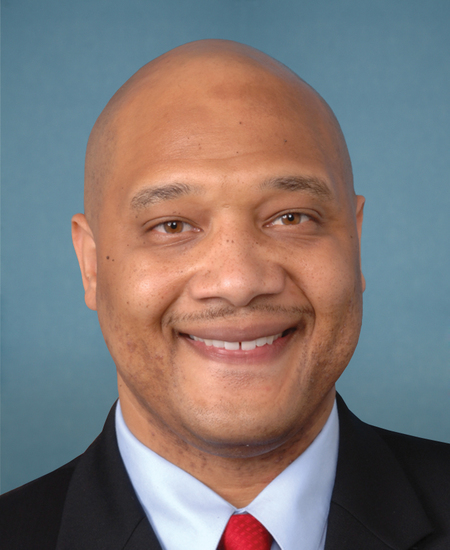
Rep. André Carson
Sponsored bills
Maddy summaryHR 4900, the Fair College Admissions for Students Act, bans colleges receiving federal financial aid from favoring applicants based on family connections to donors or alumni. Specifically, it amends the Higher Education Act to prohibit institutions from giving preferential treatment in admissions to students whose parents or relatives donated money to the school or are alumni. This applies to all colleges participating in federal student aid programs under the Higher Education Act. The rule takes effect for the second award year starting after the bill's enactment date.
Maddy summaryHR 4942 extends and modifies the Conrad State 30 program, which allows states to sponsor foreign medical graduates to work in medically underserved areas in exchange for a commitment to practice for three years. The bill directly affects foreign medical graduates seeking to work in the U.S., states that sponsor them, and health facilities in underserved communities. Key provisions include creating mechanisms for physicians to change employers or states if they face issues with their current employment, adding requirements for employment agreements (including prohibitions on non-compete clauses), and establishing exceptions to the three-year work requirement under certain circumstances. The bill also creates a process for states to recapture waiver slots when physicians leave their employment and requires annual reporting on the program's usage. These changes aim to improve physician retention in underserved areas by providing more flexibility and protections for foreign medical graduates.
Maddy summaryHR 4898, the Global Press Freedom Act, establishes a dedicated Office of Press Freedom within the U.S. Department of State, led by an Ambassador-at-Large for Press Freedom. This office will coordinate U.S. efforts to protect journalists abroad, denounce press freedom violations, and engage foreign governments on media independence. The bill also mandates a State Department curriculum for Foreign Service Officers on press freedom issues and requires a Government Accountability Office study evaluating past policies like the Daniel Pearl Freedom of the Press Act. These measures aim to institutionalize press freedom as a core component of U.S. foreign policy and national security strategy.
Maddy summaryHR 1776, the End Tuberculosis Now Act of 2023, would amend U.S. foreign assistance law to strengthen global tuberculosis (TB) programs. The bill requires U.S. assistance to align with the World Health Organization's End TB Strategy, aiming to reduce TB deaths by 95% and incidence by 90% by 2035. It mandates annual reporting on TB diagnosis and treatment progress, prioritizes research for new diagnostics and treatments, and emphasizes integrating TB services into primary health care. The legislation affects U.S. government agencies, global health partners, and countries with high TB burdens, particularly focusing on low- and middle-income nations.
Maddy summaryThis bill directs the U.S. Treasury to mint commemorative coins marking the Marine Corps' 250th anniversary in 2025. It authorizes three coin types: $5 gold coins (max 50,000), $1 silver coins (max 400,000), and half-dollar coins (max 750,000), with surcharges of $35, $10, and $5 respectively. The surcharge proceeds will fund the Marine Corps Heritage Center's educational programs, with no net cost to taxpayers as the Treasury must recover all minting costs through the surcharges. The coins can only be issued during 2025, and the Treasury must ensure all costs are covered before distributing funds to the Heritage Foundation.
Maddy summaryHR 4893, the Scientific Integrity Act, requires federal agencies that fund, conduct, or oversee scientific research to adopt policies preventing political interference in science. The bill mandates these agencies to prohibit suppression or distortion of research findings, establish Scientific Integrity Officers to enforce policies, and implement training and reporting systems. It directly affects scientists and engineers employed by or contracted with covered agencies (like the EPA or NIH), ensuring their work remains free from political pressure. Key mechanisms include annual public reporting on misconduct complaints, whistleblower protections, and requiring scientific conclusions to be based on evidence, not ideology.
Maddy summaryThis bill expands eligibility for business loans at credit unions to include veterans. It amends the Federal Credit Union Act to define "member business loan" as including loans made to veterans, using the standard definition of "veteran" from Title 38 of U.S. Code. Credit unions offering these loans will now be able to serve veteran business owners under the same terms as other qualifying borrowers. The policy change directly affects veterans seeking business financing and credit unions providing such loans.
Maddy summaryHR 4870, the Wall Street Tax Act of 2023, imposes a 0.1% tax on most securities transactions occurring on U.S. exchanges or involving U.S. persons. It directly affects financial institutions, brokers, and investors participating in covered transactions like stock, bond, and derivative trades. The tax applies to the fair market value of transactions (excluding initial security issuances and short-term debt under 100 days), with payment responsibility falling on U.S. exchanges, brokers, or U.S. parties depending on the transaction type. Exceptions include certain real property contracts, insurance products, and derivatives used in normal business operations. The tax takes effect for transactions after December 31, 2023.
Maddy summaryHR 4889, the Raise the Wage Act of 2023, would gradually increase the federal minimum wage for most workers to $15.50 per hour by 2027, with specific annual targets: $9.50 starting in 2023, rising to $11.00 after one year, $12.50 after two years, and $15.50 after four years. It would also phase out the separate lower minimum wage for tipped employees (starting at $6.00/hour) by aligning their pay with the regular minimum wage by 2028, while requiring employers to let workers keep all tips. The bill includes similar phased increases for workers under 20 and transitions toward fairer wages for workers with disabilities under special certificates, which would sunset after 2028. Future annual increases after 2028 would tie the minimum wage to the median hourly wage of all workers.