

Maddy summaryThe Unhoused Persons Bill of Rights (HRES 634) is a non-binding congressional resolution that outlines 19 specific civil and human rights for unhoused individuals, including the right to housing, healthcare, access to public facilities, and freedom from discrimination based on housing status. It calls for the federal government to commit to ending homelessness by 2027 through specific policy changes, including $20 billion from the defense budget for housing programs, expanded rental assistance, and improved access to healthcare services. The resolution requires federal agencies to implement measures such as 24-hour shelter access, removal of hostile architecture in public spaces, and improved data collection methods to better address homelessness. It also calls for the Department of Health and Human Services to declare the unhoused crisis a public health emergency and establishes legal protections for unhoused people against discrimination and harassment.
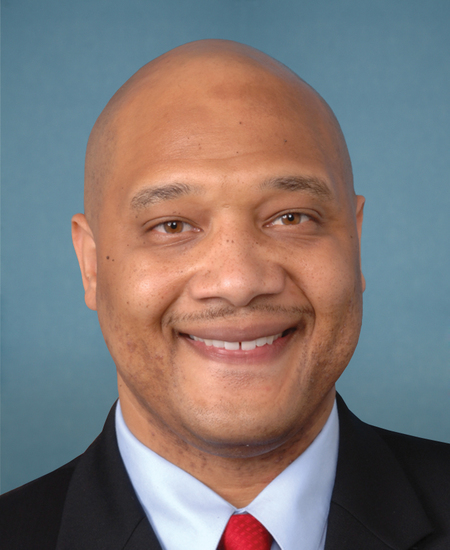
Rep. André Carson
Sponsored bills
Maddy summaryHR 4350, the MONARCH Act of 2023, establishes a $12.5 million annual fund (2023-2027) to support habitat restoration for western monarch butterflies, which are at risk of extinction due to a 99% population decline over 30 years. The bill authorizes grants to eligible entities like tribal governments, nonprofits, and local agencies to restore milkweed, protect overwintering sites, and conserve pollinator habitats across California, Arizona, Nevada, Washington, Oregon, Idaho, and Utah. Projects must include community consultation, avoid conflicts with food safety, and demonstrate clear conservation benefits. The Secretary of the Interior will manage the grants, require annual progress reports to Congress and the public, and coordinate with existing conservation plans.
Maddy summaryHRES 645 is a non-binding House resolution recognizing August as "Chicano Heritage Month" to celebrate the contributions of Mexican Americans to U.S. history. It highlights historical figures like labor leaders Cesar Chavez and Dolores Huerta, landmark court cases (e.g., *Mendez v. Westminster* ending school segregation), and cultural impacts such as Selena's influence on music. The resolution does not create new laws or policies but serves as a symbolic acknowledgment by the House to honor this heritage. It encourages the public and institutions to observe the month with events celebrating Mexican American contributions.
Maddy summaryThe Homeless Children and Youth Act of 2023 amends the McKinney-Vento Homeless Assistance Act to better support homeless children and youth. It extends the timeframe for determining homelessness from 14 to 30 days, creates a new definition for "child or youth defined as homeless under any other Federal program" (including those covered by Head Start, Child Care Development Block Grant, and other programs), and requires that all individuals identified as homeless under any provision of the Act be eligible for services without additional verification. The bill mandates public reporting of detailed homeless data through the Homeless Management Information System (HMIS), including demographic information about homeless individuals by age, disability, and length of homelessness. It also requires that all homeless populations proposed to be served receive equal priority without discrimination based on subpopulation.
Maddy summaryThis bill authorizes $700 million in federal grants to fund cancer prevention programs for firefighters, including multi-cancer early detection testing with a $1,750 per-test spending limit. It creates a voluntary program allowing firefighters to share anonymized test results with the CDC and FEMA to identify cancer trends in the profession, while protecting personal privacy. The legislation amends existing law to establish these prevention and research mechanisms, directly supporting firefighters exposed to cancer risks through early detection and data analysis.
Maddy summaryThis bill modernizes the federal Vaccine Injury Compensation Program (VICP) by increasing the minimum number of special masters from 8 to 10 to reduce processing delays. It raises compensation for vaccine-related death and pain/suffering to $600,000 in 2021, adjusted annually for inflation via the Consumer Price Index. The statute of limitations for filing claims is extended from 36 months to 5 years, and it mandates adding COVID-19 vaccines to the Vaccine Injury Table while transferring all pending claims to the VICP. These changes directly affect individuals seeking compensation for alleged vaccine injuries by improving program efficiency and updating financial protections.
Providing Essential Temporary Shelter Assistance For Emergencies Act of 2023 or the PETSAFE Act of 2023 This bill directs the Federal Emergency Management Agency (FEMA) to establish a pilot program to provide grants for mobile pet shelters during emergencies and major disasters. FEMA may provide funds to state, local, and tribal governments to establish a new pet shelter site that is a mobile unit, which may be a companion animal mobile equipment trailer, to be used in case of evacuation due to emergencies and major disasters. FEMA's authority to approve projects under this bill shall cease on January 1, 2029.
Maddy summaryHR 4249, the VET PFAS Act, provides healthcare benefits to veterans and their families exposed to PFAS chemicals at military bases. Veterans who served at contaminated bases (including through water sources) and developed specific conditions like testicular cancer, ulcerative colitis, or pregnancy-induced hypertension become eligible for VA healthcare without needing medical proof of cause. Family members who lived at these bases or were in utero during such residence also qualify for covered conditions. The bill creates a "presumption of service connection" for these illnesses, meaning the VA assumes PFAS exposure caused the condition. It requires annual VA reports tracking beneficiaries, denials, and conditions treated.
Maddy summaryHRES 639 is a non-binding resolution supporting "Minority Mental Health Awareness Month" and recognizing that minority communities in the U.S. face disproportionate mental health challenges. It calls for increased access to culturally competent care, collaboration with health agencies to address disparities, and expanded resources for mental health services. The resolution specifically highlights barriers like stigma, lack of minority mental health providers, and higher untreated rates among Black, Indigenous, and people of color. It directly affects these communities by urging systemic improvements to reduce existing mental health inequities.
Assault Weapons Excise Act This bill imposes an additional 1000% excise tax on large capacity ammunition feeding devices and semiautomatic assault weapons. It exempts from such additional tax devices and weapons acquired by the United States or by a state or local government.