

Maddy summaryHR 6290, the Recidivism Reduction Transparency Act of 2023, requires states and localities receiving federal grants for offender reentry programs to submit detailed annual reports. These reports must now include specific recommendations for replicating successful reentry projects, in addition to standard performance data. The Department of Justice must then compile and publicly release an annual summary of all grantees' results, including strategic outcomes and progress. This bill directly affects states and local governments managing federal reentry grants and the Justice Department, focusing on increasing transparency around program effectiveness without changing the core grant program itself.
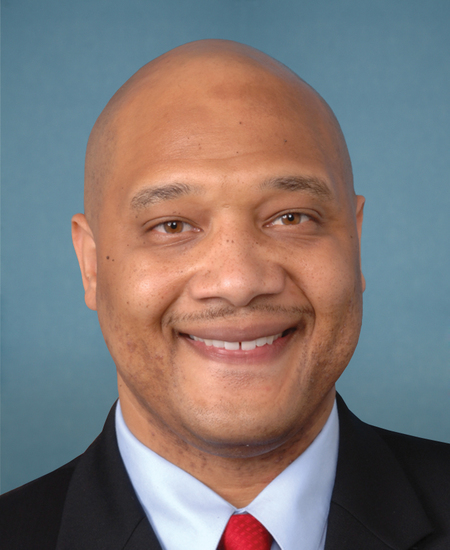
Rep. André Carson
Sponsored bills
Maddy summaryThe Inaugural Fund Integrity Act regulates donations to presidential inaugural committees. It bans donations from organizations, foreign nationals, and prohibits using funds for personal expenses unrelated to committee duties. The bill sets a $50,000 annual donation limit per individual (adjusted for inflation), requires 24-hour disclosure of donations over $1,000, and mandates a detailed final report within 90 days of the inauguration listing all large donations and disbursements. This directly affects inaugural committees and donors by increasing transparency and limiting contribution sources for future presidential inaugurations starting in 2025.
Maddy summaryHRES 850 is a purely ceremonial resolution designating the House Press Gallery as the "Frederick Douglass Press Gallery." It honors Frederick Douglass, the first Black journalist permitted in Capitol press galleries (1871-1875), recognizing his role as a pioneering journalist, abolitionist, and advocate for civil rights during Reconstruction. The resolution commemorates his historical connection to the space where he reported on legislation affecting the African-American community. As a naming resolution, it has no policy or legal effect beyond this commemorative gesture.
Maddy summaryThis bill requires colleges and universities planning to close to create and submit a detailed record-management plan to their accrediting agency. The plan must cover how student records (including transcripts, billing, and financial aid) will be stored, accessed, and handled after closure, along with a timeline for providing student contact lists to federal and state agencies. It also mandates that institutions release all financial holds on records and stop charging students for copies for one year after closing, with a possible nominal fee after that period. These requirements apply to any institution notifying its accreditor of intended closure, starting five years after the bill's enactment.
Maddy summaryThis bill codifies the Young African Leaders Initiative (YALI) as a formal U.S. government program. It authorizes annual fellowships for African leaders aged 25-35 to participate in U.S.-based leadership training (including the Mandela Washington Fellowship) and establishes at least four regional leadership centers across sub-Saharan Africa for ongoing professional development in business, civic engagement, and public administration. The program requires annual congressional reports on progress and impacts, with implementation ending after five years. Directly affecting young African leaders (ages 18-35 for regional centers) in business, civic leadership, and governance, it provides structured training, networking, and technical assistance to strengthen U.S.-Africa partnerships.
Maddy summaryThe SMOKE Act establishes new federal workplace safety standards to protect employees from wildfire smoke exposure. It requires employers to monitor PM2.5 air quality (AQI ≥151), implement engineering controls (like filtered buildings), provide respirators, and communicate risks when smoke levels are hazardous. Employees at risk of health harm from smoke can take up to 12 weeks of unpaid leave per year, with job protection upon return. The law excludes emergency responders and workplaces with certified filtered air systems (e.g., closed vehicles or buildings with filtered ventilation). OSHA must finalize these standards within 42 months of enactment.
Maddy summaryHR 6204, the "See the Board Act," establishes a federal grant program to provide free eye care services to students in public elementary and secondary schools. The bill directs the Health and Human Services Secretary to fund nonprofit organizations that operate mobile eye clinics using portable equipment to deliver screenings, exams, and glasses directly at schools. This program covers costs for equipment, personnel, and operational expenses, targeting students in schools defined under the Elementary and Secondary Education Act. The initiative is authorized for fiscal years 2024 through 2029.
Maddy summaryHR 6076 establishes a $600 million program to fund energy efficiency improvements for small- and medium-sized manufacturers (defined as businesses with 750 or fewer employees in manufacturing sectors 31-33). Qualified entities like state energy offices, tribes, or nonprofits receive grants to provide subgrants directly to these manufacturers for projects that reduce electricity or natural gas use. The bill requires all iron and steel products used in funded projects to be "produced in the United States" (with limited waivers for cost or availability issues), and mandates labor compliance checks for contractors. It also requires manufacturers to develop energy management plans and share data on energy savings with program managers.
Maddy summaryThis bill excludes veterans' disability and dependency payments from income calculations for HUD housing assistance programs. It directly affects veterans and their families receiving disability compensation under Title 38, U.S. Code, by ensuring these benefits don't reduce their eligibility or housing assistance amounts. Specifically, it prevents HUD from counting these payments when determining eligibility, benefit amounts, or rent calculations for assisted housing. The policy change applies solely to HUD-administered housing programs, not other federal benefits.
Maddy summaryThis bill updates legal terminology in District of Columbia court codes to replace outdated and potentially stigmatizing terms. It specifically replaces "substantially retarded persons" and similar phrases with "persons with moderate intellectual disabilities" in three sections covering U.S. District Court, Superior Court, and Family Court jurisdiction. The change directly affects how DC courts formally reference individuals in legal contexts, aligning terminology with current standards. It is a purely procedural update to court codes with no new policy or funding provisions. The bill does not alter eligibility, rights, or court procedures - only the language used in the legal text.