

Maddy summaryHRES 1075 is a ceremonial resolution recognizing AmeriCorps members, alumni, and AmeriCorps Seniors volunteers for their community service. It highlights their contributions over 30 years, including supporting vulnerable populations, disaster response, education, and environmental protection through nearly 200,000 annual volunteers. The resolution encourages nationwide recognition during AmeriCorps Week (March 10-16, 2024), urging the public to salute volunteers and promote community service. It has no funding or policy changes - only symbolic acknowledgment of existing program impacts.
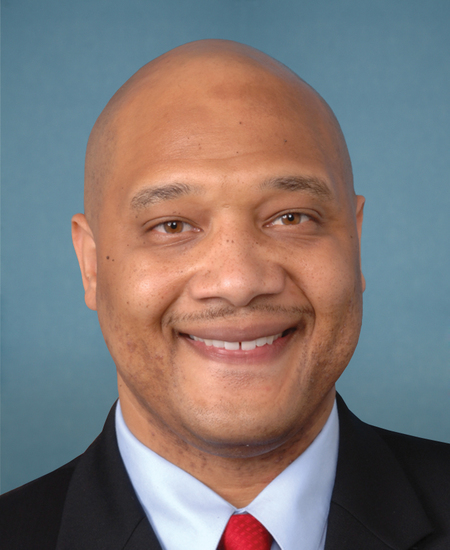
Rep. André Carson
Sponsored bills
Maddy summaryHRES 1076 is a ceremonial resolution recognizing the Girl Scouts of the United States of America on its 112th anniversary. It celebrates the organization’s longstanding mission to provide girls with safe, inclusive spaces for leadership development, mental wellness, and skill-building in areas like STEM and civic engagement. The resolution highlights Girl Scouts’ century-long impact, including its role in fostering community, supporting mental health, and preparing girls for leadership through programs like the Gold Award. As a symbolic gesture, it does not create new laws or policies but formally acknowledges the organization’s contributions.
Maddy summaryHRES 1074 is a symbolic House resolution reaffirming congressional support for a two-state solution to the Israel-Palestine conflict. It explicitly states the House supports Israel's right to exist as a Jewish, democratic state and recognizes Palestinians' right to sovereignty through a separate state. The resolution identifies a two-state solution as the best path to lasting peace and condemns efforts opposing this approach. As a non-binding resolution, it does not create new law or policy but formally expresses the House's position on this issue. It was introduced by multiple House members on March 12, 2024.
Maddy summaryHR 7629, the Protect Our Letter Carriers Act of 2024, allocates $1.4 billion annually (2025-2029) to the U.S. Postal Service for high-security collection boxes and replacing physical universal mailbox keys with electronic versions, directly affecting USPS operations and letter carriers. It requires the Attorney General to appoint specialized prosecutors in each district to coordinate investigations and prosecutions of postal-related crimes, such as assaults on carriers or mail theft. The bill also mandates the U.S. Sentencing Commission to adjust guidelines so that assaults or robberies against postal employees are treated with the same severity as assaults against law enforcement officers. These provisions aim to enhance safety through infrastructure upgrades, improved prosecution, and stricter sentencing for crimes targeting postal workers.
Maddy summaryHR 7639 establishes a 14-member National Advisory Council to address unpaid school meal fees in child nutrition programs. The Council, composed of diverse members including school nutrition directors, parents, FNS officials, and food service workers, will provide recommendations to the Food and Nutrition Service Administrator within three years. Its key focus is ensuring students aren’t shamed for unpaid fees while helping schools maintain financial stability for meal programs. The Council’s report will guide future policy guidance, but the bill itself creates no immediate changes to school meal eligibility or funding. This procedural bill sets up a process for studying the issue, not implementing new rules.
Maddy summaryThe American High-Speed Rail Act authorizes $35 billion annually for high-speed rail corridor development (with $3 billion for corridor planning), requiring at least 20% of project costs to come from non-Federal sources. It defines "high-speed rail" as services reaching 186+ mph and "higher-speed rail" as 110-186 mph, with no more than 20% of funds allocated to higher-speed rail projects. Key provisions include allowing advance acquisition of rail corridors before environmental reviews, creating tax exclusions for rail carriers selling property to high-speed rail projects, and requiring consideration of equity, sustainability, and economic development impacts in planning. The bill affects federal agencies, state and local governments, rail carriers, and communities along proposed rail corridors.
Maddy summaryThis House resolution (HRES 1036) expresses the U.S. House of Representatives' support for designating February 29, 2024, as "Rare Disease Day." It acknowledges the global observance of Rare Disease Day - first recognized in the U.S. in 2009 - and highlights the challenges faced by the over 25 million Americans living with rare diseases (affecting fewer than 200,000 people in the U.S. each). The resolution recognizes the importance of improving awareness, encouraging early diagnosis, and supporting efforts to develop treatments for rare diseases. It is a symbolic gesture with no new policies or funding, aligning with the annual global observance of Rare Disease Day.
Maddy summaryThis bill requires states to immediately stop Medicaid recovery claims against beneficiaries' estates. Specifically, it mandates that states withdraw all existing liens within 90 days of enactment and notify affected individuals or their estates about the withdrawal. The law also prohibits states from initiating, maintaining, or collecting any future Medicaid recovery claims for benefits correctly paid. It directly affects Medicaid recipients and their heirs who were previously subject to state recovery efforts. The key mechanism is the 90-day deadline for states to remove existing liens and cease all new recovery actions.
Maddy summaryHR 7481 establishes a new CDC program to address social determinants of health - such as housing, food access, and transportation - that impact community health outcomes. It authorizes $100 million annually (2025-2029) to fund grants for state/local health agencies, nonprofits, and universities to design and implement community-based strategies tackling unmet health needs. Grantees must collaborate with health systems, housing organizations, and local stakeholders to collect data, develop evidence-based solutions, and monitor impacts on health equity and healthcare costs. The bill requires annual reporting and a national evaluation after five years to assess program effectiveness.
Young Adult Tax Credit Act This bill allows a refundable young adult tax credit and a monthly advance payment of such credit. The bill defines young adult as an individual who is at least age 18, but not yet 25, and is either a citizen, national, or resident of the United States. The amount of such credit is the sum of $500 for each taxpayer or taxpayer dependent who is a young adult in any calendar month.