

Maddy summaryThis bill would require the U.S. to withhold funding for the UNRWA (United Nations refugee agency for Palestinians) unless the State Department certifies UNRWA staff, materials, and facilities comply with specific conditions. Key conditions include confirming no ties to terrorism or anti-Israel rhetoric (like denying Israel's right to exist or promoting BDS), no misuse of UNRWA resources for terrorist activities, and adherence to international financial audits. It also caps U.S. contributions to UNRWA at levels comparable to Arab League countries and mandates annual reports to Congress on phasing out UNRWA support. These changes directly affect U.S. foreign aid decisions for Palestinian refugees in Jordan, Lebanon, Syria, Gaza, and the West Bank.
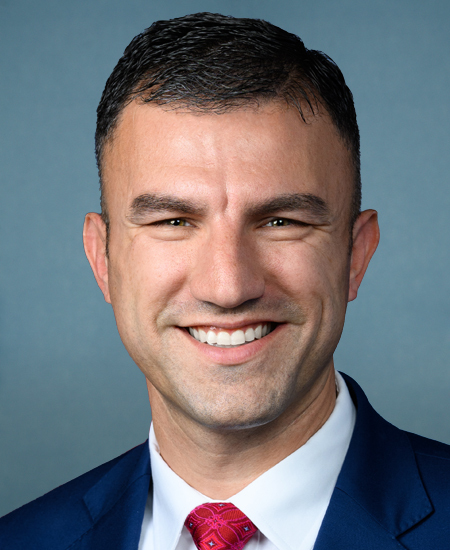
Rep. Rudy Yakym III
Sponsored bills
Maddy summaryThis bill authorizes a single Congressional Gold Medal to honor all U.S. Army Dustoff crews who served during the Vietnam War (1962-1973). It recognizes their critical role in evacuating nearly 900,000 wounded personnel, including U.S., South Vietnamese, and allied forces, under extreme combat conditions. The medal, designed with input from the Secretary of Defense, will be presented to the U.S. Army Medical Department Museum for permanent display. Duplicate bronze medals may be sold to cover costs, but the primary action is the commemorative recognition of these crews' service.
Maddy summaryHR 185 ends a Centers for Disease Control and Prevention (CDC) rule requiring foreign travelers entering the U.S. by air to show proof of a COVID-19 vaccination. The bill takes effect immediately upon enactment, terminating the specific requirement outlined in the CDC’s April 2022 order (and any similar future orders). It also prohibits federal funding from being used to enforce this rule. This change directly affects foreign air travelers entering the United States, removing a vaccination proof requirement for their entry. The bill does not impact domestic travel, other entry methods, or vaccination requirements for U.S. citizens.
Maddy summaryHR 976, the TCJA Permanency Act, makes permanent many tax provisions from the 2017 Tax Cuts and Jobs Act (TCJA) that were scheduled to expire after 2025. The bill affects individual taxpayers by keeping lower tax rates, higher standard deductions, increased child tax credits, and other key changes permanently. Key provisions include permanent modifications to income tax brackets, repeal of personal exemptions, limits on state and local tax deductions, and increased estate and gift tax exemptions. These changes would prevent the tax code from reverting to pre-TCJA rates and rules for millions of taxpayers.
Maddy summaryHR 889, the Broadband Grant Tax Treatment Act, excludes certain federal broadband grants from recipients' taxable income. It specifically applies to grants received under programs like the Infrastructure Investment and Jobs Act's Broadband Equity, Access, and Deployment Program and state digital equity grants. The bill prevents double tax benefits by disallowing deductions or credits for expenses covered by these excluded grants and reduces the adjusted basis of related property. This policy change directly affects broadband providers, local governments, and tribal entities receiving qualifying grants from federal or state sources for broadband infrastructure deployment.
Maddy summaryHCONRES 9 is a symbolic resolution passed by the U.S. House of Representatives that formally denounces socialism as incompatible with American values, citing historical examples of socialist regimes causing widespread suffering and authoritarian rule. It states Congress opposes the implementation of socialist policies in the United States. This resolution has no legal effect, does not change any laws, and serves solely as a non-binding statement of congressional opinion. It directly affects no individuals or policies, as it is purely a declarative position.
This resolution condemns Iranian state-sponsored terrorist attacks against U.S. citizens and officials and Iranian dissidents. The resolution also expresses support for the people of Iran who are legitimately defending their rights for freedom against repression and condemns the killing of Iranian protesters by the Iranian regime.
Maddy summaryHR 857, the Presidential Budget Accountability Act, requires the President to submit the annual budget to Congress by the first Monday in February. If the budget is late, federal funds cannot be used for the President's travel expenses starting the Tuesday after that date until the budget is submitted. The bill specifically restricts funds for the President's expense allowance, travel costs, entertainment, and subsistence during travel. This directly affects the President's travel budget and aims to incentivize timely budget submissions by the executive branch.
Maddy summaryHCONRES 13 is a concurrent resolution expressing Congress's support for maintaining the current policy that prohibits imposing new fees on local radio stations for playing music. It states that Congress should not impose any performance fee, tax, royalty, or charge on local radio stations for broadcasting sound recordings over the air, or on businesses like bars and restaurants that play music publicly. The resolution argues that such fees would harm local radio stations - critical sources for emergency information and community programming - and jeopardize the economic model that has supported both radio and the music industry for decades. This resolution does not create new law but formally opposes potential legislative changes to the existing fee structure.
Maddy summaryThe Auto Theft Prevention Act establishes a federal grant program to fund state and local law enforcement efforts combating auto theft and stolen vehicle trafficking, authorizing $30 million annually from 2024 to 2028. States receive funds based on prior-year auto theft rates, requiring at least 50% to be distributed to local agencies in high-theft areas and 25% to state agencies. Grants cover specific anti-theft measures like purchasing equipment (e.g., license plate readers), hiring staff, training officers, and funding data collection related to auto theft. The program also expands existing grant uses to include these anti-theft activities, with no more than 5% of funds allowed for administrative costs.