

Maddy summaryThe ReConnecting Rural America Act of 2023 provides federal funding through grants, loans, and combinations of both to build broadband infrastructure in rural areas. It requires projects to provide at least 100 Mbps downstream and 100 Mbps upstream service, with priority given to areas where at least 90% of households lack such service. The bill authorizes $650 million annually from 2024-2028 for this program, targeting rural communities that currently lack adequate broadband access, while requiring cost-sharing of up to 25% and technical assistance for applicants. Eligible entities include state/local governments, tribes, cooperatives, and corporations, but not individuals or general partnerships. The program will expire on September 30, 2028.
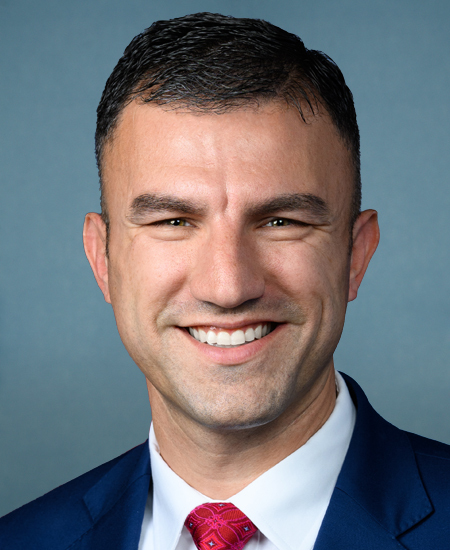
Rep. Rudy Yakym III
Sponsored bills
This bill requires various changes to the passport application process and addresses related issues. The bill requires all U.S. regular passports to contain a written notice advising travelers (1) to check travel.state.gov for updated travel warnings, (2) to register with the Department of State prior to overseas travel, (3) that many countries deny entry to travelers whose passport expires within six months, and (4) to renew their passports within at least one year of the expiration date. Further, the bill makes permanent existing State Department authority to assess a surcharge on the passport application fee to cover the costs of increased demand prompted by certain legal requirements. This authority currently expires on September 30, 2026. For three years starting from this bill's enactment, the State Department may use direct hire authority to expedite the hiring of individuals into Passport and Visa Examining positions (Series 0967). Finally, the bill requires the Department of State to report to Congress about passport processing wait times, agency plans for a public outreach campaign, and related information.
Maddy summaryHRES 651 is a non-binding House resolution condemning the Department of Education's decision to restrict funding for school archery and hunting programs under the Elementary and Secondary Education Act (ESEA) of 1965. It explicitly affirms that such programs - which teach safe firearm handling, environmental stewardship, and focus - are eligible for federal funding under ESEA. The resolution does not alter existing law but formally opposes the funding restriction and supports these educational initiatives. It directly addresses schools participating in archery/hunting programs that currently face eligibility concerns under ESEA.
Maddy summaryHR 5130, the "Finish It Act," requires the Department of Defense to use stored border wall construction materials (valued at approximately $300 million) for building permanent barriers along the U.S.-Mexico border within 30 days of the bill's enactment. It mandates that states receiving materials certify they will use them exclusively for border barriers, with penalties for unused materials (requiring repayment of the original cost) and imposes a 1% budget cut for every two days of delay in implementation. The bill also demands a detailed report from the Department of Defense within 90 days, including internal communications about storage costs and contracts with private landowners. This legislation directly affects the Department of Defense and border states, focusing on redirecting existing resources rather than creating new funding or construction.
Maddy summaryHR 4956 establishes a 32-member advisory committee composed entirely of farmers and ranchers to study how Waters of the United States (WOTUS) regulations impact agriculture. The committee will examine specific issues like the prior-converted farmland exemption, common farming practices not covered by current exemptions, inconsistent regulatory rulings, and how to create clearer rules for jurisdictional waters. It must submit a report with recommendations to federal agencies and congressional committees within one year, focusing on improving WOTUS regulations for farmers. The bill does not change existing regulations but creates a formal process for farmer input.
Maddy summaryHJRES 83 is a congressional resolution seeking to block a specific immigration rule. It targets a rule issued by U.S. Citizenship and Immigration Services (USCIS) and the Executive Office for Immigration Review (EOIR) on May 16, 2023, which addressed "Circumvention of Lawful Pathways" in immigration processes. If approved, the resolution would nullify this rule, preventing it from taking effect under federal law. This action directly affects how USCIS and immigration courts apply this particular policy to immigration cases. The resolution uses a standard procedural mechanism (Chapter 8 of Title 5, U.S. Code) to disapprove the rule without altering broader immigration law.
This bill requires the Department of State to make certain information regarding the 2021 withdrawal of U.S. personnel from Afghanistan available to Congress and to the public. Specifically, the State Department must provide Congress with the July 13, 2021, dissent channel cable regarding the likely consequences of a U.S. withdrawal from Afghanistan and the official State Department response to the cable. (The dissent channel is a tool that foreign service officers may use to communicate alternative or dissenting views about foreign policy matters with senior State Department officials. ) The unredacted cable and official response must be provided to Congress within five days of the bill's enactment, except that the names of the cable signatories may be redacted. The bill also requires the State Department to complete a declassification review of (1) the dissent channel cable and official response, and (2) the after-action review developed with respect to the Afghanistan withdrawal. After determining what information may be declassified, the State Department must publish such information online within 60 days of the bill's enactment.
Maddy summaryThis bill clarifies legal pathways for victims of terrorism to collect judgments against foreign states that sponsor attacks. It removes barriers by updating references in federal law to ensure victims can pursue claims under Section 2333(d)(1) without being blocked by prior legal interpretations. The bill also expands the definition of "national of the United States" to include U.S.-organized entities for these cases, making it easier for more victims to qualify. These changes apply to all pending or future lawsuits filed after the bill's enactment.
Maddy summaryHR 3933, the TAP Promotion Act, requires standardized presentations about Veterans Affairs (VA) benefits during military transition counseling for service members separating from the armed forces. These presentations must be approved by the VA, delivered by authorized veterans service organizations (VSOs), and include information on how VSOs assist with VA claims - without encouraging membership in specific organizations. The bill mandates a one-hour limit per presentation and requires the VA to submit annual reports to Congress detailing which VSOs presented, attendance numbers, and recommendations for improvement. This policy directly affects service members preparing for civilian life and the VSOs providing these transition resources.
Maddy summaryThis bill directs the U.S. Treasury to mint commemorative coins marking the Marine Corps' 250th anniversary in 2025. It authorizes three coin types: $5 gold coins (max 50,000), $1 silver coins (max 400,000), and half-dollar coins (max 750,000), with surcharges of $35, $10, and $5 respectively. The surcharge proceeds will fund the Marine Corps Heritage Center's educational programs, with no net cost to taxpayers as the Treasury must recover all minting costs through the surcharges. The coins can only be issued during 2025, and the Treasury must ensure all costs are covered before distributing funds to the Heritage Foundation.