

Maddy summaryThis bill allows married couples to contribute to a single Health Savings Account (HSA) using both spouses' catch-up contribution limits. It directly affects married couples with family coverage under high-deductible health plans who are both eligible to make catch-up contributions (age 55+). The key provision changes IRS rules so that the annual HSA contribution limit is divided equally between spouses (unless they agree otherwise) and includes both spouses' catch-up amounts if they qualify. The changes apply to taxable years beginning after December 31, 2023.
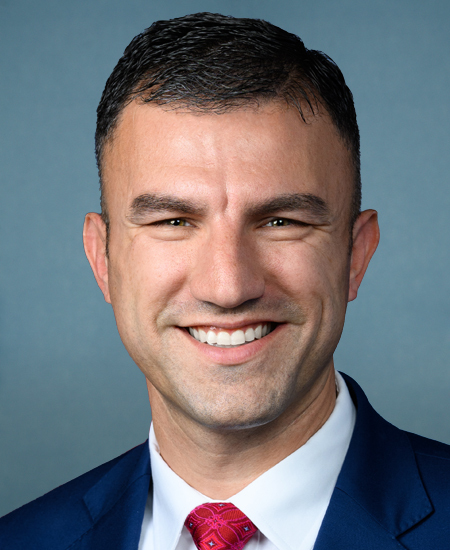
Rep. Rudy Yakym III
Sponsored bills
Maddy summaryHR 5458, the BO’s Act (Baby Observation Act), mandates a study on home cardiorespiratory monitors for infants under two years old. The study, to be conducted by the Patient-Centered Outcomes Research Institute, will examine best practices to reduce infant sleep-related deaths, evaluate monitor effectiveness and accuracy, establish healthcare coverage criteria, and assess whether monitors meet standards for insurance coverage under Medicaid, CHIP, and private plans. It does not change current coverage rules but requires a report analyzing evidence on these devices. The study must be completed within 15 months of the bill’s enactment and funded from an existing trust fund.
Maddy summaryHR 5193, the Senior Citizens’ Freedom to Work Act of 2023, repeals the Social Security Retirement Earnings Test. This means seniors receiving Social Security benefits who continue working will no longer have their benefits reduced based on their earnings. The bill removes specific provisions in the Social Security Act that previously deducted benefits for individuals under full retirement age who earned above a set limit. The change applies to taxable years ending after December 31, 2023, directly affecting working seniors who previously faced benefit reductions.
Maddy summaryThe CONNECT for Health Act of 2023 aims to expand access to telehealth services under Medicare by removing barriers that previously limited who could provide these services and where they could be delivered. The bill eliminates geographic restrictions on telehealth coverage, allows telehealth services to be provided from the patient's home and other clinically appropriate locations, and expands the types of healthcare providers who can offer telehealth services. It also improves the process for adding new telehealth services to Medicare coverage and includes provisions to ensure quality measurement includes telehealth services. This legislation directly affects Medicare beneficiaries seeking remote care and healthcare providers delivering telehealth services, with key provisions taking effect between 2024 and 2025.
Maddy summaryHR 3999 directs U.S. Customs and Border Protection to correct tariff classifications for specific golf cart tire entries. The bill requires Customs to reliquidate 231 specific import entries of K389 Hole-N-One golf cart tires at a free duty rate, as previously determined by Customs rulings in 2016-2017. This applies to entries made between 2009 and 2015 by importers including Monitor Manufacturing, Martin Wheel, and American Kenda. Customs must complete this process within 90 days of enactment and refund any duties paid with interest. The bill does not change tariff rates but corrects past classification errors for these specific entries.
Maddy summaryThis bill simplifies regulations for rural health clinics (RHCs) by reducing administrative burdens. It allows RHCs to contract with physician assistants and nurse practitioners (instead of requiring direct employment), updates the definition of "rural" to exclude areas with 50,000+ residents, and removes outdated lab service requirements by requiring only "prompt access" to clinical labs. These changes directly affect RHCs, enabling them to more flexibly staff and operate while complying with state practice laws. The amendments take effect January 1, 2024, applying to services provided on or after that date.
Maddy summaryHR 3423, the SAVE Act, defines "common name" for agricultural products (like "Cheddar" for cheese or "Merlot" for wine) as a term routinely used on packaging, consistent with international standards. It requires the Agriculture Secretary and U.S. Trade Representative to negotiate agreements with foreign countries to protect U.S. producers' right to use these common names in international markets. The bill directly affects U.S. agricultural exporters, processors, and producers who rely on familiar product names. It mandates biennial reports to Congress on these trade efforts, focusing on preserving market access for U.S. goods using common names.
Maddy summaryHR 3227, the Ensuring Seniors’ Access to Quality Care Act, amends Medicare and Medicaid rules to address nurse aide training programs in nursing facilities. It allows the Secretary of Health and Human Services to disapprove a facility’s nurse aide training program for up to two years if the facility received a $10,697+ civil penalty for substandard care and hasn’t corrected the quality issues. Facilities can have disapproval lifted by proving they fixed the care deficiencies, haven’t had recent patient harm incidents, and the penalty didn’t involve immediate patient jeopardy. The changes apply only to penalties assessed after the bill’s enactment and do not affect facilities already prohibited under prior rules.
Maddy summaryThis bill changes tax rules to treat direct primary care (DPC) membership fees as deductible medical expenses. It defines DPC as a fixed monthly fee (capped at $150 per person, $300 for families) for primary care services only, excluding procedures requiring anesthesia, prescription drugs (except vaccines), or lab tests. The law ensures these fees can be claimed on tax returns like other medical costs, while clarifying DPC arrangements aren’t considered health insurance plans. It applies to fees paid for DPC services provided through employment or directly to patients, effective for 2024 tax years.
Maddy summaryThis bill would require Medicare to cover FDA-approved blood tests that screen for multiple cancers simultaneously (like breast, lung, or colorectal cancer) for beneficiaries. It directly affects Medicare recipients aged 65+ who could access these new screenings once per year, without prior authorization. The key provision adds "multi-cancer early detection screening tests" to Medicare's covered services under Part B, defining them as blood tests analyzing cell-free DNA, while maintaining existing coverage for standard screenings like mammograms. The bill does not change current coverage for individual cancer screenings but ensures Medicare keeps pace with new medical technology.