

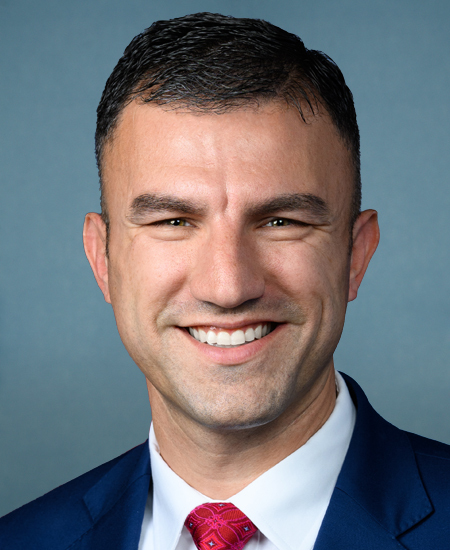
Photo of Rudy Yakym III
R United States House · District 2 · Indiana On the 2026 ballot

Rep. Rudy Yakym III

Compare
Total votes
1,944
all sessions
Attendance
100%
3 missed
Higher than 96% of chamber peers
With party
97%
of cast votes
Higher than 98% of chamber peers
Bipartisan score
2%
crosses aisle rarely
Lower than 99% of chamber peers
Sponsored
611
bills & resolutions
Near the chamber average
Committees
4
assignments
611 bills and resolutions

Sponsored bills

Total
611
Primary
51
Co-sponsor
560
This page
611
matching current filters
Co-sponsor HR 1882
In committee · United States House · Co-sponsor
Saving Gig Economy Taxpayers Act

Maddy summaryThis bill modifies tax reporting rules for gig economy platforms (like Uber or DoorDash) by reinstating a pre-American Rescue Plan threshold. It requires third-party payment platforms to report income to the IRS only if a gig worker earns over $20,000 in a year or completes more than 200 transactions. This directly affects low-earning gig workers who would no longer receive tax forms for smaller earnings. The change simplifies reporting for platforms and reduces administrative burden on workers with minimal income from these platforms.

In committee Mar 5, 2025 1 co-sponsor
Primary HR 1771
In committee · United States House · Lead sponsor
Improper Payments Transparency Act

Maddy summaryHR 1771, the Improper Payments Transparency Act, requires federal agencies to include detailed explanations of improper payments in the President's annual budget. It directly affects executive agencies that already report improper payments under existing law (specifically under Chapter 33, Subchapter IV of the U.S. Code). The bill mandates agencies provide a narrative explaining *why* improper payment amounts and rates changed (or didn't change) for specific programs over the past three years, plus details on incomplete corrective actions and future steps to address these issues. This aims to increase transparency about government payment errors by making specific, factual data publicly available in the budget submission.

In committee Mar 3, 2025 0 co-sponsors
Co-sponsor HR 1778
In committee · United States House · Co-sponsor
American Innovation Act of 2025

Maddy summaryThe American Innovation Act of 2025 modifies tax rules to support new businesses by changing how start-up and organizational costs can be deducted. It allows businesses to deduct up to $20,000 (adjusted for inflation) of initial costs in the first year, with remaining costs amortized over 15 years (180 months). The bill also preserves net operating losses and tax credits for new businesses after ownership changes, helping startups maintain tax benefits when sold or restructured. This primarily affects new businesses, startups, and small companies forming new ventures beginning after December 31, 2025.

In committee Mar 3, 2025 1 co-sponsor
Co-sponsor HR 1773
In committee · United States House · Co-sponsor
Federal Firearms Licensee Protection Act of 2025

Federal Firearms Licensee Protection Act of 2025 This bill modifies criminal penalties for an offense involving the theft of a firearm from a licensed importer, manufacturer, or dealer, or from their business premises. Specifically, the bill does the following: increases from 10 to 20 years the maximum prison term, and creates a 3- or 5-year mandatory minimum prison term for an offense that occurs during the commission of a burglary or robbery. An attempt to commit an offense is subject to the same penalties as a substantive offense.

In committee Mar 3, 2025 1 co-sponsor
Co-sponsor HR 575
In committee · United States House · Co-sponsor
Increased TSP Access Act of 2025

Maddy summaryHR 575, the Increased TSP Access Act of 2025, amends conservation program rules to expand access to third-party providers (TSPs) like agricultural retailers, engineers, and certified crop advisors. It creates new pathways for state agencies and professional organizations to certify TSPs (within 180 days of enactment), requires the USDA to review certifications within 10 business days, and sets payment rates equivalent to direct government services. The bill directly affects agricultural producers who use conservation programs and TSPs seeking certification, while mandating annual transparency reports on certification numbers, funding, and program effectiveness. Key changes include streamlined certification for existing specialists (e.g., certified crop advisors) and rules preventing double-counting of payments from other federal programs.

In committee Feb 28, 2025 1 co-sponsor
Co-sponsor HRES 176
In committee · United States House · Co-sponsor
Encouraging the EU to DESIGNATE Resolution

Maddy summaryThis resolution urges the European Union to formally designate Iran's Islamic Revolutionary Guard Corps (IRGC) as a terrorist organization under the EU's Common Position 931 framework, which allows for such designations. It cites the U.S. (2019) and Canada (2024) as precedents for designating the IRGC, noting the EU has only sanctioned individual IRGC members, not the entity itself. The resolution emphasizes the IRGC's documented ties to terrorism, human rights abuses in Iran, support for proxy groups like Hamas and Hezbollah, and its role in supplying drones to Russia for its war in Ukraine. The House requests the EU expedite this designation and encourages U.S. diplomatic efforts to prioritize it.

In committee Feb 27, 2025 1 co-sponsor
Co-sponsor HR 1698
In committee · United States House · Co-sponsor
Law Enforcement Protection and Privacy Act of 2025

Maddy summaryThis bill protects firearm trace data maintained by the ATF's National Trace Center and related licensee information from public disclosure under FOIA. It directly affects licensed firearms dealers, state/local governments, and other entities that handle this data. Key provisions include adding a new FOIA exemption for this data, imposing fines of $10,000-$25,000 for unauthorized disclosures, and allowing licensed dealers to sue for triple damages or $25,000 per disclosure. The law also prevents sovereign immunity from blocking such lawsuits and specifies that fines apply per individual disclosure.

In committee Feb 27, 2025 1 co-sponsor
Co-sponsor HR 1672
In committee · United States House · Co-sponsor
Maintaining Investments in New Innovation Act

Maddy summaryThis bill extends the exclusivity period for certain advanced drugs from 7 to 11 years. It defines "advanced drug product" as a drug using genetically targeted technology to modulate gene function (e.g., suppress or activate genes). This change directly affects pharmaceutical companies developing these specific advanced therapies by granting them longer market exclusivity. The policy change modifies the Social Security Act to provide extended protection for these innovative drugs, allowing companies more time to recoup research and development costs.

In committee Feb 27, 2025 1 co-sponsor
Co-sponsor HR 1743
In committee · United States House · Co-sponsor
UNITED Act

Maddy summaryHR 1743, the UNITED Act, directs the President to initiate negotiations with the United Kingdom within 180 days to reduce trade barriers affecting U.S. businesses, workers, and consumers. It authorizes a comprehensive trade agreement to lower tariffs and nontariff barriers, with a deadline of March 1, 2029, for the agreement to be finalized. The bill includes specific limits on tariff changes, such as prohibiting reductions below 50% of current rates for most goods and protecting existing agricultural duty levels. It also requires ongoing consultation with Congress and mandates that any implementing legislation must follow standard trade agreement procedures.

In committee Feb 27, 2025 1 co-sponsor
Co-sponsor HR 1659
In committee · United States House · Co-sponsor
Truck Parking Safety Improvement Act

Maddy summaryHR 1659, the Truck Parking Safety Improvement Act, creates a federal grant program to address commercial truck parking shortages on highways. It authorizes $151 million annually (2025-2029) for states, local governments, tribes, and other eligible entities to build or improve public parking facilities for commercial motor vehicles. Projects must be on or near highways, include safety features, and provide free, publicly accessible parking - prohibiting fees for drivers. The bill also requires annual reports to Congress evaluating parking availability and project effectiveness.

In committee Feb 27, 2025 1 co-sponsor
Showing 231 to 240 of 611 bills
Previous 1 … 23 24 25 … 62 Next