

Maddy summaryHR 5267, the American Franchise Act, clarifies when franchisors can be considered joint employers of franchisee employees under federal labor laws. It defines "substantial direct and immediate control" over essential employment terms like wages, benefits, hours, hiring, and discipline - requiring franchisors to actively set these terms to be deemed joint employers. The bill explicitly excludes routine brand standards, training, or minimal safety requirements from constituting such control. This directly affects franchisors and franchisees by limiting joint employer liability to cases where franchisors exert significant, ongoing influence over core employment decisions. The law applies prospectively to new cases after enactment, not past disputes.
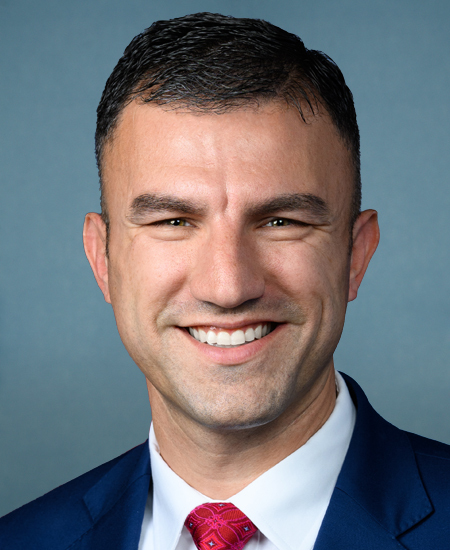
Rep. Rudy Yakym III
Sponsored bills
Maddy summaryThis House resolution marks the 25th anniversary of the September 11, 2001 terrorist attacks by formally honoring the memory of the nearly 3,000 victims and recognizing the sacrifices made by first responders, military personnel, and the passengers of United Airlines Flight 93. The bill acknowledges the ongoing health challenges faced by survivors and responders, highlighting the role of the World Trade Center Health Program in providing long-term medical support. It also credits charitable organizations and community groups that have continued to assist victims' families and veterans over the past two decades. Finally, the resolution urges the American public to observe the anniversary with ceremonies and reaffirms Congress's commitment to remembering the events and lessons of that day.
Maddy summaryHR 7008, the Stop Insider Trading Act, restricts Members of Congress, their spouses, and dependent children from purchasing certain investments like stocks in publicly traded companies. It requires 7-14 days' advance public notice before selling any such investment, including the sale date, description, and number of shares. Exceptions apply for work-related transactions (e.g., employer compensation) and reinvesting dividends. Violations trigger a fee of $2,000 or 10% of the investment’s value (whichever is greater), plus any net gain, paid from personal funds - not congressional allowances or campaign donations. The bill aims to prevent conflicts of interest by increasing transparency around congressional financial dealings.
Maddy summaryThis resolution expresses the House of Representatives' support for the Freedom 250 Grand Prix, an INDYCAR race scheduled to take place in Washington, D.C., in August 2026. The bill highlights the event's significance as the first motor race held near the National Mall, where drivers will navigate a course around iconic national monuments to celebrate America's 250th birthday. It recognizes the long history of American INDYCAR racing and its role in fostering national pride and entertainment. The text serves as a formal acknowledgment of the event rather than enacting new laws or funding.
Maddy summaryThe Veteran's Surviving Spouse Parity Act of 2026 expands eligibility for specific mortgage tax benefits to include spouses and surviving spouses of veterans who are legally treated as veterans themselves. This change allows these individuals to qualify for the three-year ownership look-back exception when purchasing qualified mortgage bonds or using mortgage credit certificates. To support this, the Department of the Treasury will work with the Department of Veterans Affairs to issue clear guidance on how to determine veteran status for these programs, including rules regarding remarriage. The new provisions will take effect for any bonds or certificates issued after December 31, 2026.
Maddy summaryHR 6213, the Heat Workforce Standards Act of 2025, prohibits the U.S. Department of Labor from finalizing, implementing, or enforcing OSHA's proposed "Heat Injury and Illness Prevention" standard (published August 30, 2024). This bill directly blocks the specific regulatory proposal targeting heat safety in both outdoor and indoor work settings. It does not create new requirements or affect workers; it solely prevents the implementation of the existing OSHA proposal. The bill is procedural, focusing on halting a regulatory action rather than establishing new policy.
Maddy summaryThe Federal Lands Lawful Carry Act modifies federal law to allow individuals who are legally permitted to carry firearms under state laws to do so on specific federal lands open to the public. This change directly affects visitors to areas managed by agencies such as the National Park Service, Bureau of Land Management, and National Forest System. Under the new provisions, carrying a firearm in these exempted areas is considered having a lawful purpose if the individual follows applicable state regulations and is not otherwise prohibited from possessing a weapon. The bill does not authorize carrying firearms in areas where state laws forbid it or in locations that remain closed to visitors.
Maddy summaryThis bill, known as the Daughters of the American Revolution Membership Integrity Act, amends federal law to explicitly limit membership in the Daughters of the American Revolution to adult human females. It defines a female as someone who naturally possesses or would have the reproductive system capable of producing ova for fertilization, regardless of any congenital anomalies or medical disruptions. By adding this specific definition to the organization's governing code, the legislation clarifies the genealogical and biological requirements for joining the group. The change directly affects the organization's eligibility rules but does not alter its internal operations or funding.
Maddy summaryThe Essential Caregivers Act of 2026 requires nursing homes, long-term care hospitals, rehabilitation facilities, and intermediate care facilities to allow two chosen family members or friends to visit residents during times when regular visitation is suspended. These essential caregivers must agree to follow the facility's existing safety and infection control rules, which are no more restrictive than those applied to staff. While facilities can limit access for the first seven days of a suspension or deny entry if a caregiver shows symptoms of a serious infectious disease, they cannot block visits for end-of-life care. Additionally, the bill mandates that complaints about denied access to essential caregivers be investigated and resolved within three days.
Maddy summaryHR 7184, the PRESS Act, targets equipment used to manufacture illegal drugs by making it unlawful to sell specific items like tableting machines, gelatin capsules, or related chemicals when the seller knows the equipment will be used to produce controlled substances for unlawful U.S. importation. It directly affects manufacturers and distributors of these drug-making tools who have knowledge or reasonable cause to believe their products will facilitate illegal drug trafficking. The bill adds new prohibitions to the Controlled Substances Act and increases potential prison sentences for violations, with penalties reaching up to 20 years for major offenses involving large quantities of equipment or chemicals. These changes aim to disrupt the supply chain for illicit synthetic drugs by holding equipment sellers accountable for their intended use.