

Maddy summaryThis bill amends the Victims of Crime Act to expand compensation for "angel families" - immediate family members of homicide victims caused by undocumented immigrants (under INA 212(a)(6)(A)(i)) or international drug cartel members (under Controlled Substances Act). It adds coverage for emotional distress-related wage loss and medical expenses, alongside existing medical, funeral, and physical injury costs. The bill also creates a new Victims of Immigration Crime Engagement Office within Homeland Security to provide victims and families with support services, referrals, and criminal history information, while requiring annual reports tracking crime demographics, locations, and perpetrator patterns. These changes directly affect families of homicide victims where the perpetrator fits the specified categories of immigration or drug trafficking violations.
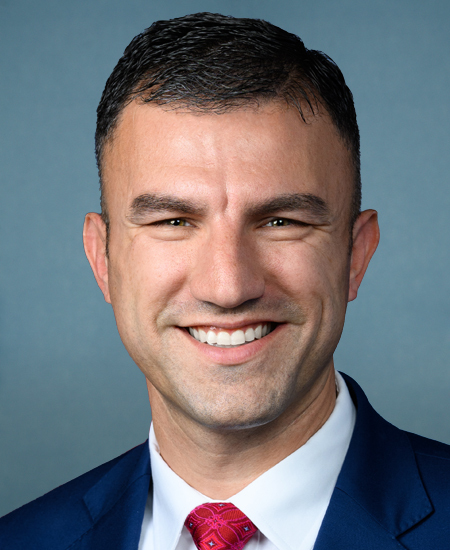
Rep. Rudy Yakym III
Sponsored bills
Maddy summaryHR 3088, the Veterans Hearing Health Expansion Act, expands access to hearing care for veterans by allowing licensed hearing aid specialists to provide services through the VA's Community Care Program. The bill amends Section 1703(c) of Title 38 to explicitly include "a hearing aid specialist licensed to furnish medical services in the State" among providers eligible for the program. This change directly affects veterans seeking hearing aid services outside VA facilities, as it adds a new category of qualified professionals to the existing provider network. The key provision simplifies access by enabling veterans to receive care from state-licensed hearing aid specialists participating in the VA's community care system.
Maddy summaryThis bill creates an independent Office of the National Veterans' Advocate within the Department of Veterans Affairs (VA) to directly address veterans' concerns. The National Veterans' Advocate, appointed at a senior executive level and reporting directly to the VA Secretary, will monitor VA operations, identify systemic problems veterans face, and make independent recommendations to Congress for improving care, benefits, and efficiency. The Office must establish a public casework request portal for veterans, submit biannual reports to Congress with unreviewed recommendations (including potential legislative changes), and ensure staffing levels of one advocate per 12,000 enrolled veterans in each VA service region. The bill authorizes $25 million annually for fiscal years 2026-2030 to fund these efforts.
Maddy summaryThis resolution blocks a Department of Energy rule that would have set new energy efficiency standards for gas-fired instant water heaters. It prevents the rule from taking effect, meaning appliance manufacturers would not have to meet the proposed efficiency requirements. The rule, submitted in December 2024, directly affected manufacturers of these water heaters and consumers purchasing them. Congress approved this disapproval through a joint resolution passed on May 9, 2025.
Maddy summaryThe Fiscal Commission Act establishes a 16-member commission to address the federal government's fiscal challenges, including reducing debt and deficit while aiming for a debt-to-GDP ratio of 100% by 2039. The commission must educate the public about fiscal issues, identify policy recommendations, and submit a detailed report with legislative language by November 2026 (with possible extension to April 2027). This report requires bipartisan approval, needing at least two Republican and two Democratic members for majority support. If approved, the recommended legislation would become an "implementing bill" considered under expedited procedures in both congressional chambers. The commission's work directly affects federal budget decisions and public awareness of fiscal policy, with hearings required to gather input from experts and government officials.
Maddy summaryHR 3277, the Ensuring Lasting Smiles Act, requires group health plans and health insurance issuers to cover medically necessary outpatient and inpatient treatments for congenital anomalies or birth defects primarily affecting the eyes, ears, teeth, mouth, or jaw. This includes reconstructive procedures, dental/orthodontic support during treatment, and follow-up care, but excludes purely cosmetic surgery not tied to a medical diagnosis. Cost-sharing (like copays) for these services must not be stricter than for other medical benefits. The law takes effect for plan years beginning January 1, 2026, and mandates insurers to provide notice about this coverage to beneficiaries.
Maddy summaryHR 3228, the Constitutional Hearing Protection Act, reclassifies firearm silencers as firearms under federal tax law and eliminates their separate registration under the National Firearms Act. It requires the Attorney General to destroy all existing federal silencer registration records within one year and preempts state laws that impose taxes, registration, or recordkeeping requirements on silencers. The bill defines "firearm silencer" and specifies that manufacturers must mark silencers on a "keystone part" with a serial number. This directly affects silencer owners, manufacturers, and state governments by standardizing federal regulation and removing state-level restrictions.
Maddy summaryHR 3208, the "No Official Palestine Entry Act of 2025," prevents U.S. funding for United Nations agencies that grant Palestine any status, rights, or privileges beyond its current observer status. The bill amends two existing laws to replace the phrase "full membership" with "any status, rights, or privileges beyond observer status" in funding restrictions. This directly affects U.S. government decisions on contributing to UN agencies if Palestine's standing is upgraded. The policy change specifically targets funding eligibility, not direct impacts on Palestinian citizens or officials. The bill explicitly excludes Taiwan from its provisions.
Maddy summaryHR 3207, the DEFENSE Act, authorizes state and local law enforcement officers to use drone detection and countermeasures at specific protected venues. It directly affects officers deputized by federal agencies to secure locations like stadiums during large public gatherings, events under flight restrictions, or sites covered by existing federal flight rules. Key provisions require officers to complete mandatory training, establish federal oversight through the Department of Homeland Security and FAA, and limit authorized equipment to a pre-approved list maintained by the Department of Homeland Security. The bill focuses on enhancing security at designated events without creating new federal regulations.
Maddy summaryThis bill clarifies liability for payroll tax errors when third-party payroll services (like professional employer organizations) rely on employer certifications. It allows these services to depend on employer-provided information unless they knew or should have known of an error. If an error is discovered, the employer bears full liability unless the third party had "constructive knowledge" of the error, in which case liability is shared based on the portion of the error the third party knew about. The bill also prevents the IRS from delaying payroll tax credits or auditing employers solely because a third party relied on an erroneous certification from that employer. It directly affects third-party payroll services and the businesses that use their services for tax filings.