

Pain-Capable Unborn Child Protection Act This bill establishes a new criminal offense for performing or attempting to perform an abortion if the probable post-fertilization age of the fetus is 20 weeks or more. A violator is subject to criminal penalties—a fine, a prison term of up to five years, or both. The bill provides exceptions for an abortion (1) that is necessary to save the life of the pregnant woman, or (2) when the pregnancy is the result of rape or incest. A physician who performs or attempts to perform an abortion under an exception must comply with specified requirements. A woman who undergoes a prohibited abortion may not be prosecuted for violating or conspiring to violate the provisions of this bill.
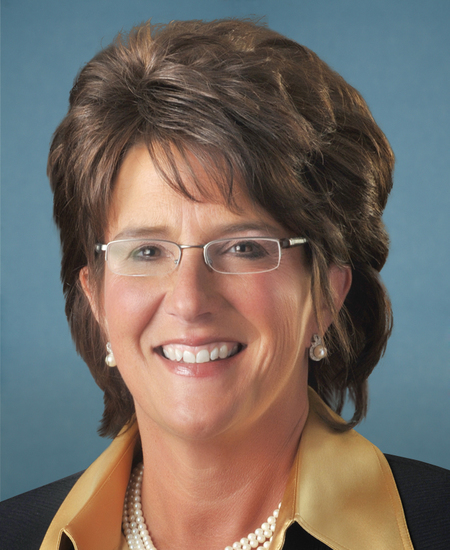
Rep. Jackie Walorski
Sponsored bills
PFC Joseph P. Dwyer Peer Support Program Act This bill requires the Department of Veterans Affairs (VA) to establish the PFC Joseph P. Dwyer Peer Support Program to make grants to eligible entities for peer-to-peer mental health programs for veterans. Eligible entities include (1) a nonprofit organization that has historically served the mental health needs of veterans; (2) a congressionally chartered veteran service organization; or (3) a state, local, or tribal veteran service agency, director, or commissioner. The VA shall establish an advisory committee to create appropriate program standards.
Abortion Providers Loan Elimination Act This bill makes abortion providers ineligible to receive a loan under the Paycheck Protection Program, which was established to support small businesses in response to COVID-19. This prohibition shall not apply to hospitals or entities that exclusively provide abortions (1) where the pregnancy is the result of rape or incest, or (2) where the pregnancy endangers the life of the mother. The Inspector General of the Small Business Administration must report on the number of paycheck protection loans made to the Planned Parenthood Federation of America and to other abortion providers.
Pharmacy and Medically Underserved Areas Enhancement Act This bill provides for Medicare coverage and payment with respect to certain pharmacist services that (1) are furnished by a pharmacist in a health-professional shortage area, and (2) would otherwise be covered under Medicare if furnished by a physician.
No Taxpayer Funding for Abortion and Abortion Insurance Full Disclosure Act of 2021 This bill modifies provisions relating to federal funding for, and health insurance coverage of, abortions. Specifically, the bill prohibits the use of federal funds for abortions or for health coverage that includes abortions. Such restrictions extend to the use of funds in the budget of the District of Columbia. Additionally, abortions may not be provided in a federal health care facility or by a federal employee. Historically, language has been included in annual appropriations bills for the Department of Health and Human Services (HHS) that prohibits the use of federal funds for abortions—such language is commonly referred to as the Hyde Amendment. Similar language is also frequently included in appropriations bills for other federal agencies and the District of Columbia. The bill makes these restrictions permanent and extends the restrictions to all federal funds (rather than specific agencies). The bill's restrictions regarding the use of federal funds do not apply in cases of rape, incest, or where a physical disorder, injury, or illness endangers a woman's life unless an abortion is performed. The Hyde Amendment provides the same exceptions. The bill also prohibits qualified health plans from including coverage for abortions. Currently, qualified health plans may cover abortion, but the portion of the premium attributable to abortion coverage is not eligible for subsidies.
Empower our Girls Act This bill allows certain grants authorized under the Violence Against Women Act to be used to support victims of female genital mutilation. Such grants already support victims of domestic violence, sexual assault, dating violence, and stalking. The bill also requires the Federal Bureau of Investigation (FBI) to classify female genital mutilation as a Part II crime (i.e., a less serious offense) in the Uniform Crime Reports. (The FBI compiles and periodically publishes crime statistics through the Uniform Crime Reporting Program. Currently, the FBI does not compile and publish information about female genital mutilation.)
Working Families Childcare Access Act of 2021 or the WFCA Act of 2021 This bill allows certain additional expenses in a dependent care flexible spending arrangement (FSA), specifically qualified sports, tutoring, and music or art expenses. It also increases the eligibility age for dependent care benefits to 15, allows a carry forward of unused benefits to the next plan year, and increases to $15,000 the maximum amount of dependent care benefits excludible from employee gross income.
Chiropractic Medicare Coverage Modernization Act of 2021 This bill expands Medicare coverage of chiropractic services to include all services provided by chiropractors, rather than only subluxation corrections through manual manipulation of the spine.
Affordable Housing Credit Improvement Act of 2021 This bill revises provisions of the low-income housing tax credit and renames it as the affordable housing credit . The bill increases the per capita dollar amount of the credit and its minimum ceiling amount beginning in 2021 and extends the inflation adjustment for such amounts. The bill modifies tenant income eligibility requirements and the average income formula for determining such income. It also revises rules for student occupancy of rental units and tenant voucher payments, and prohibits any refusal to rent to victims of domestic abuse. The bill further modifies the credit to increase state allocations of the credit; repeal the qualified census tract population cap; prohibit local approval and contribution requirements; increase the credit for certain projects designated to serve extremely low-income households; increase the credit for certain bond-financed projects designated by state agencies; eliminate the basis reduction for properties that receive certain energy-related tax benefits; and increase the population cap for difficult development areas (i.e., areas with high construction, land, and utility costs relative to area median gross income). The bill also includes Indian and rural areas as difficult development areas and modifies other requirements relating to casualty losses, acquisition credits, and foreclosures.
Accelerate Long-term Investment Growth Now Act or the ALIGN Act This bill makes permanent the expensing of certain new business equipment. Expensing allows the deduction of the full amount of an expense item in the same taxable year.