Unclaimed Savings Bond Act of 2021 This bill establishes requirements and procedures for the Department of the Treasury to transfer ownership of certain matured, unredeemed savings bonds and related records to states.
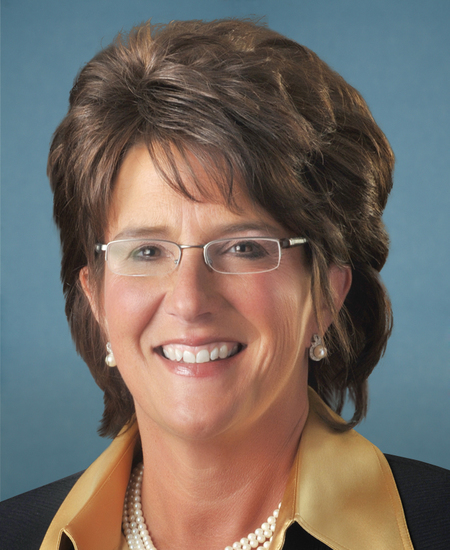
Rep. Jackie Walorski
Sponsored bills
Foreign Gain-of-Function Research Prevention Act of 2021 This bill prohibits the use of federal funds to conduct or support gain-of-function research involving potential pandemic pathogens by China, Russia, Iran, North Korea, or other foreign adversaries. Gain-of-function research is any research that is anticipated to confer an attribute on a pathogen to enhance its pathogenicity or transmissibility in mammals. If the Department of State finds that an entity has used funds for prohibited research, the entity may not receive any federal funding for a period of five years.
Ensuring Patient Access to Critical Breakthrough Products Act of 2021 This bill provides for Medicare coverage of medical devices that are approved under the Food and Drug Administration (FDA) Breakthrough Devices Program. (Under the program, manufacturers work with the FDA to expedite the review and approval of certain medical devices that provide for more effective treatment or diagnosis of life-threatening or irreversibly debilitating human diseases or conditions.) The bill allows designated medical breakthrough devices to be temporarily covered under Medicare during a four-year transitional period. The Centers for Medicare & Medicaid Services (CMS) must assign payment codes for such devices within three months of FDA approval. The CMS must also establish a process to allow for continued coverage after the transitional period has expired, taking into account any additional evidence or data the CMS deems necessary. The CMS must also provide for temporary and, where appropriate, permanent Medicare coverage of breakthrough devices for which there is no existing benefit category (i.e., classification).
Tribal Tax and Investment Reform Act of 2021 This bill treats Indian tribal governments as states for purposes of the annual allocation of the tax-exempt bond volume cap. It also repeals provisions that limit an Indian tribal government's eligibility to issue tax-exempt bonds or to be exempt from specified excise taxes to transactions involving the exercise of an essential government function customarily performed by state and local governments. The bill (1) treats employee benefit or pension plans maintained by Indian tribes and domestic relations orders issued pursuant to tribal law in the same manner as plans maintained by states and domestic relations orders issued pursuant to state law; and (2) treats tribal charities and foundations in the same manner as charities and foundations funded and controlled by other governmental entities for purposes of the tax-exempt status of, and deduction for contributions to, such organizations. The bill gives Indian tribes or tribal organizations access to the Federal Parent Locator Service if they are eligible for a grant to operate a child support enforcement program. It makes those tribes and tribal organizations eligible to participate in the program that collects past-due support from individual tax refunds. An Indian tribal government may determine whether a child has special needs for the purpose of the tax credit for the adoption of a child with special needs.
Trade Preferences and American Manufacturing Competitiveness Act of 2021 This bill reauthorizes and revises specified U.S. trade programs and provisions. Specifically, the bill extends through January 1, 2027, the Generalized System of Preferences (GSP), which provides duty-free treatment to products imported from designated beneficiary countries. The bill makes various changes to the GSP, including by (1) adding human rights, environmental, and other criteria for designation as a beneficiary developing country; (2) requiring an assessment of how the GSP supports worker and gender rights; and (3) requiring a study on rules of origin and GSP utilization rates. Additionally, the bill provides through December 31, 2023, and retroactively applies to 120 days before this bill's enactment, temporary duty suspensions or reductions to eligible imported products. This authorization is commonly known as the Miscellaneous Tariff Bill (MTB). The last version of the MTB was enacted in September 2018 and the temporary treatment for those products listed in the MTB expired on December 31, 2020. The bill also extends the American Manufacturing Competitiveness Act of 2016 for two future MTB cycles (one in 2022 and one in 2025). This extension allows the U.S. International Trade Commission to conduct the MTB petition, review, and recommendation process for those additional cycles. The bill extends customs user fees through June 21, 2031.

Keeping Our Promises Act This bill expands the list of diseases that are provided a presumption of service-connection for veterans who served in the Republic of Vietnam between January 9, 1962, and May 7, 1975. The bill extends through September 30, 2030, the requirement for the Department of Veterans Affairs (VA) to make determinations and submissions related to the connection between herbicide exposure and occurrence of disease. Additionally, the VA is prohibited from taking the costs of compensation into account when determining the association between exposure to an herbicide agent and occurrence of a disease. The bill requires the VA to determine within 120 days (currently 60) whether a presumption of service-connection is warranted for diseases covered by a National Academy of Sciences report.
This bill requires the Department of Veterans Affairs to ensure that, if it creates a presumption of service-connection between the occurrence of a disease and exposure to an herbicide agent while serving in the Armed Forces between January 9, 1962, and June 30, 1976, at a military base in Thailand, such presumption must also apply to exposure at any military base in Thailand, regardless of where on the base the veteran was located or what military job specialty the veteran performed.
This resolution expresses the sense of the House of Representatives that the Indiana Veterans' Home is an example of Hoosiers' dedication to their veterans and should be recognized for its 125 years of care to the veterans of Indiana and their families.
Clean Energy Production Parity Act This bill modifies the tax credit for investments in energy property to make qualified fuel cell property (certain fuel cell power plants) that uses an electromechanical process or includes a linear generator assembly eligible for the credit.
Work Without Worry Act This bill modifies eligibility for Social Security Disability Insurance (SSDI) benefits for individuals who have a disability that began before age 22. Under current law, these individuals may obtain SSDI benefits based on the work record of a retired, disabled, or deceased parent. However, an individual with earnings after age 22 that exceed a specified monetary limit (i.e., constitute substantial gainful activity) permanently loses eligibility for such benefits. This bill allows individuals to retain eligibility for such benefits regardless of the amount of earnings after age 22. Additionally, individuals who apply for SSDI benefits on a parent's record and also independently qualify for Social Security benefits on their own record will receive the larger of the two benefit amounts.