

Accelerating Individuals into the Workforce Act This bill requires the Administration for Children and Families (ACF) to make grants to states for demonstration projects that provide wage subsidies to enable low-income individuals to enter and retain employment. States may use grant funds to subsidize an individual's wages for up to 12 months. The subsidy may be up to 50% of an individual's wages. Individuals are eligible for subsidized wages if they (1) are recipients of Temporary Assistance for Needy Families or similar state assistance or a noncustodial parent of a child receiving such assistance, and (2) are unemployed when the subsidy begins or have an income below 200% of the poverty line. States must ensure that participants in subsidized job programs do not displace current workers. The ACF must reserve funding to carry out this bill from amounts in the Contingency Fund for State Welfare Programs.
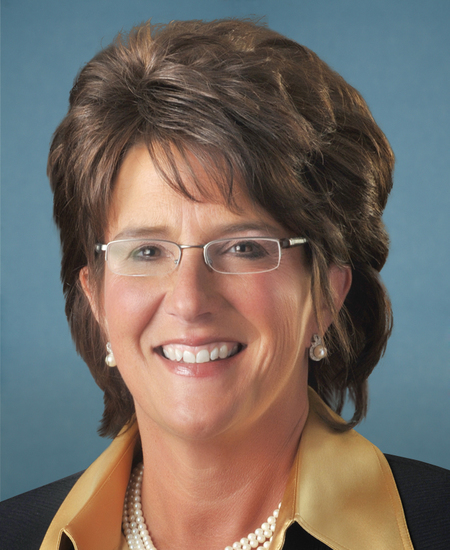
Rep. Jackie Walorski
Sponsored bills
Workforce Opportunity Realignment Kickstart Act or the WORK Act This bill modifies requirements for states with respect to the administration of Temporary Assistance for Needy Families (TANF) funds. Specifically, the bill (1) establishes new performance indicators related to employment and educational outcomes for states receiving TANF funds; (2) increases the percentage of TANF funds, from 30% to 50%, that may be used to support other state programs; and (3) allows states to use TANF funds to carry out certain workforce development programs. Under current law, states may use TANF funds to support other state programs only if they are related to Child Care and Development Block Grants or Social Services Block Grants. States must negotiate with the Department of Health and Human Services (HHS) to establish a level of performance for each indicator, taking into account certain economic, demographic, and other factors. HHS must periodically revise levels of performance for states to reflect economic and other conditions.
Improving Access to Child Care Act This bill eliminates certain funding for the Temporary Assistance for Needy Families (TANF) program and increases certain funding for child care assistance. Specifically, the bill (1) eliminates the TANF Contingency Fund, which provides additional funds to states in economic distress; and (2) increases and extends child care assistance provided to states and tribes through the Child Care Entitlement to States.
Focusing State Efforts to Expand Opportunity Act This bill prohibits states from using Temporary Assistance for Needy Families grants to provide assistance or services to families whose monthly incomes exceed twice the poverty line. Under current law, families must be financially needy and have a minor child to qualify for assistance; however, individual states determine the financial eligibility requirements.
Improving Transparency in TANF through Data Act This bill revises state reporting requirements under the Temporary Assistance for Needy Family (TANF) program. It eliminates the option for states to use certain sampling methods in their reporting and requires states to report additional information related to the work eligibility status and participation in work activities for individuals participating in TANF programs. The Department of Health and Human Services must also determine reporting requirements related to employment and earnings outcomes in consultation with the Department of Labor.
Helping Americans Succeed by Measuring Outcomes Act This bill establishes certain performance measures for states receiving Temporary Assistance for Needy Families (TANF) program grants. It also requires states to specify how they will allow for transitional periods of benefits for recipients who become ineligible for TANF benefits due to employment or an increase in wages.
Supporting Work Through Apprenticeships Act This bill specifies that, for purposes of meeting mandatory work requirements under the Temporary Assistance for Needy Families (TANF) program, work activities include apprenticeships.
Improving Access to Work Act This bill requires states to use at least 25% of grant funds received under the Temporary Assistance for Needy Families (TANF) program for assistance, case management, supportive services, nonrecurring short-term benefits, and certain activities related to work and wages.
Protecting Family Resources and Training Options Act This bill applies specified federal laws regarding improper payment to state Temporary Assistance for Needy Families (TANF) programs. The Department of Health and Human Services must establish review and reporting requirements through regulations.
Facilitating Innovative Nuclear Diagnostics Act of 2021 This bill establishes separate payment requirements for diagnostic radiopharmaceuticals under the Medicare prospective payment system for hospital outpatient department services. The bill's requirements apply to diagnostic radiopharmaceuticals that have an average daily cost of $500 or more in 2022 and as adjusted based on a specified fee schedule factor in each year thereafter.