Rural Health Fairness in Competition Act This bill requires the Centers for Medicare & Medicaid Services (CMS) to establish a Medicare Rural Health Clinic Value-Based Care Program that exempts certain rural health clinics (e.g., those participating in Medicare quality programs) from payment limitations if they meet reporting requirements relating to quality measures and performance standards, as set by the CMS.
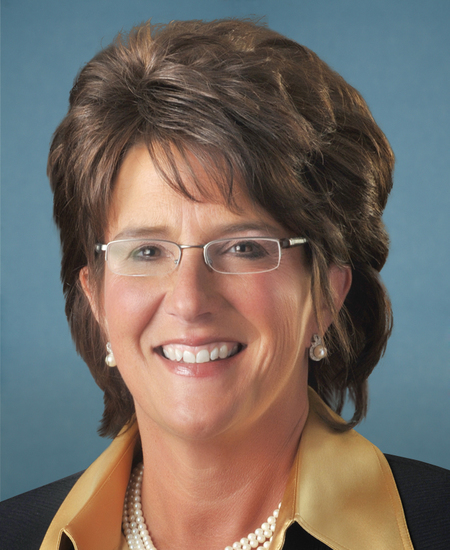
Rep. Jackie Walorski
Sponsored bills
Outpatient Surgery Quality and Access Act of 2021 This bill establishes and modifies certain requirements relating to Medicare payments for ambulatory surgical center (ASC) services. Specifically, the bill (1) requires the payment system for ASC services to feature certain positive annual adjustments equivalent to those made with respect to hospital outpatient department (OPD) services; (2) revises quality reporting requirements to permit publicly available, side-by-side comparisons of quality measures for ASCs and OPDs in the same geographic area; and (3) requires the Centers for Medicare & Medicaid Services (CMS), when excluding requested procedures from the list of those approved to be performed in ASCs, to cite specified reasons for doing so. With respect to excluding procedures from the approved list for ASCs, the CMS may not cite as a basis for exclusion that a procedure can only be reported using an unlisted surgical procedure code. (Physicians sometimes use unlisted codes when performing new procedures or services if no existing code is adequately descriptive.) The bill also limits the copayment amount for ASC services under Medicare to that of the inpatient hospital deductible.
White House Conference on Food, Nutrition, Hunger, and Health Act This bill directs the President to convene a conference to make policy recommendations for ending hunger, creating sustainable markets for agricultural producers, and improving nutrition and the resiliency of the food system. The bill also requires specified congressional committees to hold hearings on the conference recommendations and on the status of hunger, nutrition security, and food systems.
Continued State Flexibility To Assist Older Foster Youth Act This bill temporarily extends certain flexibilities for states to assist older youth in foster care during the COVID-19 pandemic. This includes expanding through FY2022 eligibility for services until a child reaches age 27 and suspending until December 31, 2021, certain education and training requirements.
Ensuring Workers Get PAID Act of 2021 This bill reestablishes the Payroll Audit Independent Determination program, which is administered by the Department of Labor and allows employers to self-report federal minimum wage and overtime violations as an alternative to litigation. Employers may apply to the program by submitting certain information from a self-audit that includes calculations of any unpaid minimum or overtime wages. Labor must verify the calculations and, if the application is approved, supervise a settlement with affected employees that provides payment of any unpaid wages. Employees who accept a settlement under the program waive their private right of action to recover the unpaid wages provided under the settlement.
Simon Crosier Act This bill requires hospitals and other health care providers, as a condition of Medicare and Medicaid participation, to have certain written policies and procedures in place that limit the implementation of do-not-resuscitate (DNR) orders for unemancipated minors in accordance with specified criteria. Among other provisions, such policies and procedures must (1) require the informed consent of at least one parent and a reasonable attempt to contact the other parent before instituting a DNR order, (2) allow either parent to refuse to consent to a DNR order, and (3) allow a parent to transfer a minor to another facility after being informed of an intent to institute a DNR order.
Strengthening America's Strategic National Stockpile Act of 2021 This bill makes changes to the administration and management of the Strategic National Stockpile. Among these changes, the bill authorizes through September 30, 2024, the Department of Health and Human Services (HHS) to transfer supplies from the stockpile to any federal departments or agencies under certain conditions. HHS must also ensure the contents of the stockpile remain in working order and may enter into maintenance service contracts to carry out this requirement. Furthermore, as part of its management of the stockpile, HHS must establish and maintain domestic reserves of certain supplies, including by entering into cooperative agreements or partnerships to access facilities and equipment to produce these supplies. The authority for such agreements and partnerships terminates on September 30, 2024. Additionally, the bill temporarily authorizes HHS to award grants to states for maintaining stockpiles of certain equipment and supplies for use during public health emergencies. HHS must also develop transparent processes for the use and distribution of supplies from the stockpile that address, for example, the prioritization of requests. Additionally, during the COVID-19 emergency, the Office of the Assistant Secretary for Preparedness and Response must report monthly on requests for supplies from states, tribes, and other jurisdictions. These reports must include the rationale for any partially fulfilled or denied requests. Lastly, the Government Accountability Office must study the feasibility of establishing user fees to offset costs for procuring single-source materials for, and distributing such materials from, the stockpile.

This resolution recognizes and appreciates the dedication and devotion demonstrated by the men and women of law enforcement. It also condemns calls to defund, disband, dismantle, or abolish the police.
Lower Costs, More Cures Act of 2021 This bill establishes and modifies several programs and requirements to address prescription drug prices. The bill modifies provisions under Medicare and Medicaid relating to prescription drug coverage and price transparency. Among other changes, the bill requires the Centers for Medicare & Medicaid Services to publish certain information, as reported by pharmacy benefit managers (PBMs), relating to generic dispensing rates, drug discounts and rebates, and payments between PBMs, health plans, and pharmacies; caps annual out-of-pocket spending under the Medicare prescription drug benefit; allows prescription drug plan sponsors under the Medicare prescription drug benefit to offer additional plans in a region; requires pass-through pricing models, and prohibits spread-pricing, for payment arrangements with PBMs under Medicaid; and allows states to include in the Medicaid Drug Rebate Program covered outpatient drugs that are provided as part of physician or outpatient hospital services. The bill also generally modifies other provisions relating to the regulation and costs of generic and brand-name drugs. Among other changes, the bill prohibits the manufacturer of a brand-name, generic, or biosimilar drug from entering into certain agreements to resolve or settle a patent infringement claim in connection with the sale of a drug or biological product; permanently allows high deductible health plans to waive deductibles for insulin and associated products; and establishes the position of Chief Pharmaceutical Negotiator in the Office of the U.S. Trade Representative.
Maximum Pressure Act This bill expands sanctions and economic penalties on Iran. It also restricts the President from unilaterally lifting or waiving the sanctions or penalties and increases congressional oversight of them. Specifically, the bill requires the President to impose visa- and asset-blocking sanctions. Additionally, it modifies existing sanctions, including by (1) providing statutory authority for executive orders imposing sanctions; (2) applying sanctions to additional sectors of Iran's economy; and (3) broadening sanctionable conduct to cover, for example, assisting Iran with the acquisition of ballistic missiles and the complicity of Iranian officials in human rights violations in specified countries. The bill also requires reporting on licenses that authorize activities subject to sanctions. The bill prohibits U.S. representatives at the International Monetary Fund from voting to allow Iran's access to special drawing rights (a currency support tool) and places restrictions on financial transactions with Iran. The restrictions include requiring domestic financial institutions to implement special measures with respect to foreign financial institutions that conduct significant transactions connected to the Instrument in Support of Trade Exchanges (a European mechanism that bypasses U.S. sanctions when carrying out trade with Iran). The Department of State must maintain the Islamic Revolutionary Guard Corps' designation as a terrorist organization and must designate Ansharallah (or Houthis), which operates in Syria, as a foreign terrorist organization. The bill also requires reports on U.S. sanctions concerning Iran, the status of Iran's nuclear weapons program, and other matters.