

Maddy summaryHR 3433, the "Give Kids a Chance Act of 2024," requires pharmaceutical companies developing certain cancer drugs to conduct pediatric studies if the drugs target molecular pathways relevant to childhood cancers. It directly affects drug manufacturers submitting new applications for cancer treatments, particularly those combining previously approved adult cancer drugs or containing a single new active ingredient. The bill amends FDA regulations to mandate these pediatric investigations only when specific conditions are met, such as when a drug's molecular target is relevant to pediatric cancer growth. The FDA must issue implementing guidance within 12 months, and reports to Congress will track implementation and effectiveness starting 2 years after enactment.
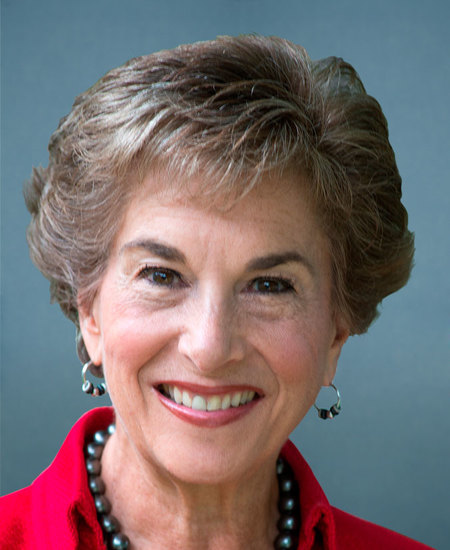
Rep. Janice D. Schakowsky
Sponsored bills
Maddy summaryHCONRES 129 designates the week of September 22-28, 2024, as "National Fall Prevention Awareness Week" to raise public awareness about falls among older adults. The resolution cites CDC data showing falls cause approximately 14 million incidents, 3 million emergency visits, and $80 billion in annual medical costs for adults aged 65+. It supports existing evidence-based prevention strategies - such as balance exercises, home safety modifications, and medication management - without creating new legal requirements or funding. The bill focuses on awareness and collaboration among government agencies, healthcare providers, and community organizations to reduce fall risks.
Maddy summary# Summary of Health Equity and Accountability Act of 2024 This comprehensive legislation addresses multiple aspects of health care access, workforce development, and immigration policy with a strong focus on health equity. ## Key Themes 1. **Workforce Diversity**: Significant emphasis on increasing racial, ethnic, and socioeconomic diversity in the health care workforce 2. **Language Access**: Mandates for language access services for individuals with limited English proficiency 3. **Underserved Communities**: Targeted investments in medically underserved areas and communities 4. **Immigration Policy**: Modifications to programs that bring health care professionals to the U.S. ## Major Provisions ### Workforce Development - **$1 billion** for nursing education enhancement and modernization grants in underserved areas - **$552 million** for health professions workforce development in 2032 (increasing annually) - **$392 million** for health professions education programs in 2025 - New grants for schools of medicine and osteopathic medicine in underserved areas - Expansion of the Conrad State 30 program for foreign physicians to address physician shortages ### Language Access - Requires health care providers to provide language access services to individuals with limited English proficiency - Mandates translation services and interpretation services for all health care settings ### Diversity Initiatives - **David Satcher Public Health and Health Services Corps** to increase awareness of health career opportunities - **Louis Stokes Public Health Scholars Program** for underrepresented students - **Patsy Mink Health and Gender Research Fellowship Program** - **Paul David Wellstone International Health Fellowship Program** - **Edward R. Roybal Health Scholar Program** ### Immigration Policy - **Conrad State 30 program extension** through 2027 - **Physician retention** provisions to help foreign physicians stay in medically underserved areas - **Dual intent for physicians** seeking graduate medical training - **Clarifications to national interest waiver** requirements - **Automatic extension** of physician nonimmigrant status during residency transitions ### Funding - **Health Professions Workforce Fund** established with multi-year funding increasing from $392 million in 2025 to $552 million in 2032 - Specific allocations for nursing workforce development and health professions education This legislation represents a comprehensive approach to addressing health care disparities through workforce development, improved access, and policy changes to support a more diverse and equitable health care system.
Maddy summaryHRES 1484 is a symbolic resolution recognizing the value of evidence-based parenting and caregiving education in elementary and secondary schools. It encourages schools to promote such programs, which focus on teaching positive parenting practices like predictable routines, emotional warmth, and effective discipline strategies. These programs aim to support children's social-emotional development, reduce risks of child abuse and neglect, and improve long-term outcomes like academic success and mental health. The resolution does not create new programs or funding but highlights existing federal initiatives (like Head Start and CDC-backed research) that support this approach. It directly affects schools as implementers and families as beneficiaries of these educational resources.
Maddy summaryThis bill establishes a Diversity and Inclusion Administrator at the Department of Labor to increase African American participation in apprenticeship programs. It requires all new and renewing registered apprenticeship programs to submit plans for boosting African American enrollment, and authorizes competitive grants for programs targeting underrepresented groups in industries like construction, tech, and healthcare. Grant recipients must report on metrics including participant demographics, program completion rates, and job placement in related fields. The law directly affects African American youth and other underrepresented groups by mandating systemic changes to apprenticeship programs nationwide.
Maddy summaryThis bill removes a barrier for parents who borrowed Federal Direct PLUS loans to pay for their dependent children's education. It amends the Higher Education Act to make these PLUS loans eligible for income-contingent repayment (ICR) and income-based repayment (IBR) plans - previously excluded from both. As a result, affected parents can now use income-driven repayment options that adjust payments based on their earnings, rather than being limited to standard repayment. The change applies to existing PLUS loans for dependent students and related consolidation loans, effective upon the bill's enactment.
Maddy summaryHRES 1478 is a non-binding House resolution recognizing access to water, sanitation, electricity, heating, cooling, broadband, and public transportation as basic human rights. It declares these services must be accessible, affordable, climate-resilient, and safe for all people, without discrimination. The resolution does not create new laws or funding but affirms principles like banning utility shutoffs for non-payment and ending privatization of water systems. It urges federal action to support public utilities and address affordability crises, but has no legal force.
Maddy summaryHRES 1473 is a non-binding resolution passed by the U.S. House of Representatives that condemns racism, bigotry, and misinformation targeting Haitian people and their descendants. It celebrates the historical contributions of Haitian Americans to U.S. society, including founding cities (like Chicago via Jean Baptiste Point du Sable), advancing civil rights (W.E.B. Du Bois), and enriching healthcare, education, and culture. The resolution specifically calls on all Americans to reject racist tropes and misinformation, and urges elected officials to promote inclusivity and responsible communication. It was introduced in response to recent false claims that fueled threats against Haitian communities, such as the bomb threats in Springfield, Ohio.
Maddy summaryThe SAFE Lending Act of 2024 establishes new protections for consumers in small-dollar lending (transactions under $5,000, adjusted annually for inflation). It requires lenders to register with the Consumer Financial Protection Bureau before issuing small-dollar loans, prohibits unauthorized remotely created checks without explicit consumer authorization, and bans certain fees for prepaid accounts. The bill also restricts lead generation for small-dollar credit, requiring that anyone gathering applications must directly provide the credit. Additionally, it mandates a study on small-dollar credit access for Native American tribes on reservations to assess economic impacts.
Maddy summaryHR 9691 establishes the Julius Rosenwald and Rosenwald Schools National Historical Park as a unit of the National Park System. The park will preserve specific sites, including the San Domingo School in Maryland and the St. George Rosenwald School in South Carolina, plus a Chicago headquarters at the former Sears complex. It aims to commemorate Julius Rosenwald's philanthropy - particularly his partnership with Booker T. Washington to build over 5,000 schools for African-American students in the segregated South - and his broader legacy of social justice. The bill directs the Secretary of the Interior to administer the park, develop a management plan, and create a national network connecting related Rosenwald School sites for educational interpretation.