

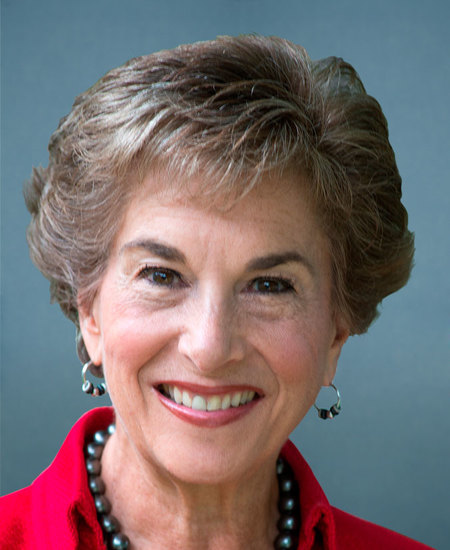
Photo of Janice D. Schakowsky
D United States House · District 9 · Illinois

Rep. Janice D. Schakowsky

Compare
Total votes
2,837
all sessions
Attendance
97%
99 missed
Lower than 88% of chamber peers
With party
97%
of cast votes
Higher than 80% of chamber peers
Bipartisan score
1%
crosses aisle rarely
Lower than 80% of chamber peers
Sponsored
2,557
bills & resolutions
Higher than 92% of chamber peers
Committees
3
assignments
2,557 bills and resolutions

Sponsored bills

Total
2,557
Primary
150
Co-sponsor
2,407
This page
2,557
matching current filters
Primary HCONRES 44
In committee · United States House · Lead sponsor
Recognizing a health and safety emergency disproportionately affecting the fundamental rights of children due to the Trump administration's directives that unleash fossil fuels and greenhouse gas emissions that contribute to climate change, while suppressing climate change science.

Maddy summaryHCONRES 44 is a symbolic resolution recognizing a health and safety emergency for children linked to the Trump administration's climate policies. It claims these policies - unleashing fossil fuel production, blocking renewable energy, and suppressing climate science - disproportionately harm children through increased air pollution, extreme weather, and denied access to climate data. The resolution calls for reversing these policies, restoring the EPA's mission, and ensuring climate action aligns with protecting children's rights. It does not enact new laws or change policy, but serves as a formal congressional statement of concern.

In committee Jul 16, 2025 0 co-sponsors
Primary HR 4434
In committee · United States House · Lead sponsor
Cosmetic Supply Chain Transparency Act of 2025

Maddy summaryThis bill would require cosmetic suppliers to provide brand owners with detailed safety information about ingredients, including environmental and health hazards, chemical properties, and testing results. It creates a new FDA list of "nonfunctional constituents" (chemicals with no purpose in the product but potentially harmful to health or the environment) and mandates testing for these substances. Suppliers must provide certificates of analysis showing levels of these substances before selling to brand owners. The bill also establishes recordkeeping requirements for the entire cosmetic supply chain to facilitate recalls or investigations. These requirements apply to cosmetic manufacturers, suppliers, and brand owners, with the FDA responsible for implementation and enforcement.

In committee Jul 16, 2025 0 co-sponsors
Primary HR 4436
In committee · United States House · Lead sponsor
Cosmetic Safety for Communities of Color and Professional Salon Workers Act of 2025

Maddy summaryThis bill would fund research into health impacts from chemicals in cosmetics used by communities of color and professional salon workers, with $7.5 million allocated for each research area. It requires cosmetic manufacturers to provide safety data sheets in multiple languages (English, Spanish, Vietnamese, Chinese, Korean) for salon products containing hazardous chemicals. The bill establishes two national resource centers to provide education, training, and culturally appropriate materials about safer cosmetic choices for underserved populations. It also regulates synthetic braids as cosmetics under FDA safety standards, requiring warning labels if safety standards aren't met.

In committee Jul 16, 2025 0 co-sponsors
Primary HR 4435
In committee · United States House · Lead sponsor
Cosmetic Hazardous Ingredient Right to Know Act of 2025

Maddy summaryThis bill would require cosmetic brand owners to disclose all ingredients, including fragrances and flavors, on their websites and product packaging. Starting 1 year after enactment, brand owners must list all ingredients in descending order on their websites, including the functional purpose of fragrance ingredients. By 2 years after enactment, product packaging must list all ingredients and include a link to health information for products containing certain hazardous chemicals identified in EPA, California, EU, and other official lists. The bill creates a master list of hazardous chemicals that the Food and Drug Administration must maintain and update, which would be publicly available. This affects all cosmetic manufacturers and brand owners selling products in interstate commerce, giving consumers more transparency about potentially harmful ingredients.

In committee Jul 16, 2025 0 co-sponsors
Co-sponsor HR 4456
In committee · United States House · Co-sponsor
Stop ICE from Kidnapping U.S. Citizens Act

Maddy summaryThis bill prohibits U.S. Immigration and Customs Enforcement (ICE) from using federal funds to detain or transport U.S. citizens during civil immigration enforcement actions. It directly affects ICE operations by blocking funding for any activity that would hold or move citizens outside the U.S. under immigration laws. The key mechanism is a specific funding restriction in the bill text, stating no funds may be used for detaining or transporting citizens. This applies to all civil immigration enforcement activities defined under the Immigration and Nationality Act. The bill does not create new enforcement powers but limits how existing funds can be spent.

In committee Jul 16, 2025 1 co-sponsor
Primary HR 4433
In committee · United States House · Lead sponsor
Toxic-Free Beauty Act of 2025

Maddy summaryThe Toxic-Free Beauty Act of 2025 bans 15 specific harmful chemicals and contaminants in cosmetic products, directly affecting manufacturers and retailers selling cosmetics in the U.S. market. It prohibits ingredients like formaldehyde, mercury, certain parabens, phthalates, and triclosan, while setting strict limits for contaminants such as lead and 1,4-dioxane in products. The law includes a non-preemption clause allowing states to maintain or enforce stricter rules than federal standards, and the ban will take effect for products introduced into interstate commerce starting January 1, 2027. This legislation aims to reduce consumer exposure to chemicals linked to health risks by defining key terms like "contaminant" and "intentionally added ingredient."

In committee Jul 16, 2025 0 co-sponsors
Co-sponsor HR 4443
In committee · United States House · Co-sponsor
Asunción Valdivia Heat Illness, Injury, and Fatality Prevention Act of 2025

Maddy summaryThis bill establishes federal worker heat protection standards to prevent heat-related illness and injury. It requires employers to provide a workplace free from heat stress hazards, including access to cool water, scheduled rest breaks, shaded cooling areas, and training on heat illness symptoms. The Secretary of Labor must create these standards within one year, incorporating evidence-based practices like engineering controls (e.g., ventilation), administrative measures (e.g., adjusted schedules), and employer-paid personal protective equipment. The law directly affects all employers in high-heat work environments - such as construction, agriculture, and manufacturing - and strengthens whistleblower protections for workers reporting safety violations.

In committee Jul 16, 2025 1 co-sponsor
Co-sponsor HR 4418
In committee · United States House · Co-sponsor
Child Care for Working Families Act

Maddy summaryThe Child Care for Working Families Act creates a federal program to provide affordable, high-quality child care for working families with children under age 6. It would provide direct child care assistance through certificates or grants to parents, with no copayment required for families at or below 85% of state median income. The program requires states to implement quality standards for child care providers, including a tiered quality system and minimum wage requirements for staff (at least a living wage equivalent to elementary educators). The bill appropriates $20 billion for the program over five years, with additional funding for quality improvement initiatives and universal preschool services.

In committee Jul 15, 2025 1 co-sponsor
Co-sponsor HR 4406
In committee · United States House · Co-sponsor
State-Based Universal Health Care Act of 2025

Maddy summaryThis bill would allow states to create their own universal health care systems by applying for waivers that replace federal health programs with state-based coverage. States would need to demonstrate they can cover at least 95% of residents within 5 years, maintain comparable benefits and affordability, and provide comprehensive coverage including reproductive health services. The federal government would redirect funds that would have gone to federal programs like Medicaid and Medicare to the states, with states required to submit regular reports on coverage progress and costs. The bill includes specific protections for Indian health care providers and ensures coverage for vulnerable populations without imposing new costs on them. This framework would apply to states that choose to implement their own universal health care system rather than relying on existing federal programs.

In committee Jul 15, 2025 1 co-sponsor
Co-sponsor HR 4387
In committee · United States House · Co-sponsor
People’s Response Act

Maddy summaryHR 4387, the People's Response Act, establishes a new Division on Community Safety within the Department of Health and Human Services to fund evidence-based, nonpunitive approaches to community safety that reduce reliance on law enforcement and criminal legal systems. The bill creates four grant programs totaling $13.5 billion (2026-2030) to support community-based organizations ($4 billion), local governments ($3.5 billion), states ($3.5 billion), and first responder hiring ($2.5 billion), with specific requirements to prioritize communities disproportionately impacted by the criminal legal system. These grants mandate the use of "qualified approaches to community safety" including crisis intervention, violence prevention, community-led safety planning, and support for survivors of violence, while requiring at least 30% of funds to go to rural areas and staff hired with grant funds to earn at least $17 per hour. The bill requires recipients to submit regular reports on how funds are used and their impact on reducing criminal legal system involvement, with an emphasis on racial equity and community input. It aims to shift resources away from carceral systems toward community-driven safety solutions that address root causes of violence and support marginalized communities.

In committee Jul 15, 2025 1 co-sponsor
Showing 351 to 360 of 2,557 bills
Previous 1 … 35 36 37 … 256 Next