

This resolution urges the U.S. Postal Service to take steps to ensure the continuation of its six-day mail delivery service.
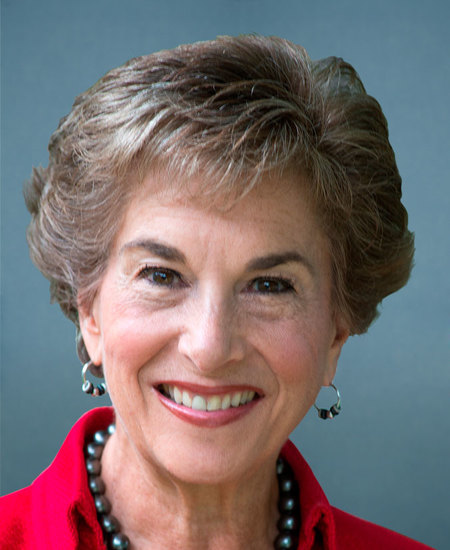
Rep. Janice D. Schakowsky
Sponsored bills
This resolution expresses the sense of the House of Representatives that the U.S. Postal Service should restore mail delivery service standards to those of July 1, 2012.
This resolution recognizes the cultural and historical significance of the Lunar New Year. The resolution expresses, in observance of this Lunar New Year, the Year of the Ox, the deepest respect of the House of Representatives for Asian Americans and all individuals throughout the world who celebrate this significant occasion. The resolution wishes Asian Americans and all individuals who observe this holiday a happy and prosperous new year.
Robust International Response to Pandemic Act This bill requires the Department of the Treasury and each U.S. Executive Director at an international financial institution to take certain actions in support of the global response to COVID-19 (i.e., coronavirus disease 2019). Specifically, each U.S. Executive Director at an international financial institution (e.g., the International Bank for Reconstruction and Development or the International Finance Corporation) must seek the suspension of debt service payments to the institution and the relaxation of fiscal targets for certain programs, oppose programs or loan agreements that would reduce countries' health care spending or other spending related to their responses to COVID-19, and require approval of all Special Drawing Rights (a currency support tool) allocation transfers from wealthier member countries to countries that are emerging or developing to ensure the allocations are used for the public good and in response to the global pandemic. Further, the U.S. Governor at the International Monetary Fund (IMF) must advocate for the issuance of Special Drawing Rights so that governments may access additional resources to finance their responses to COVID-19. Of these Special Drawing Rights allocated to the United States, Treasury must lend a specified amount to the Poverty Reduction and Growth Trust or other special purpose vehicle of the IMF to help eligible low-income countries respond to COVID-19. Treasury must also advocate for an extension of the current moratorium on debt service payments to official bilateral creditors by the world's poorest countries.
Save Voters Act This bill prohibits a state from removing registrants from the official list of eligible voters unless it meets certain verification and notice requirements. Specifically, the bill prohibits a state from removing a registrant from the official list of eligible voters unless it verifies, on the basis of objective and reliable evidence, that the registrant is ineligible to vote in federal elections. Further, a state is prohibited from considering failure to vote in an election or failure to respond to a notice as evidence of ineligibility to vote. Additionally, the bill requires a state to provide individual registrants who are removed with a notice, which must include the grounds for the removal and information on contesting the removal. Public notice must be provided after conducting any general program to remove the names of ineligible voters.
Electric Bicycle Incentive Kickstart for the Environment Act or the E-BIKE Act This bill allows a refundable tax credit for 30% of the cost of a qualified electric bicycle. The credit is limited to $1,500 per taxpayer less all credits allowed for the two preceding taxable years. A qualified electric bicycle is a two-wheeled vehicle that is, among other things, equipped with an electric motor of less than 750 watts that is capable of propelling such vehicle.
COVID-19 Language Access Act This bill requires each federal agency that receives federal assistance related to the COVID-19 (i.e., coronavirus disease 2019) pandemic to translate any English language written material prepared for the general public relating to the pandemic, including COVID-19 vaccine distribution and education, into specified languages not later than seven days after such material is made available in English. Such languages shall include, at a minimum, the following: Spanish, Arabic, Cambodian, Chinese, Haitian Creole, French, Hindi, Hmong, Italian, Japanese, Korean, Laotian, Russian, Tagalog, Urdu, Vietnamese, Greek, Polish, Thai, and Portuguese.
"Six Triple Eight" Congressional Gold Medal Act of 2021 This bill directs the Speaker of the House of Representatives and the President pro tempore of the Senate to arrange for the award of a Congressional Gold Medal in honor of the women of the 6888th Central Postal Directory Battalion (commonly known as the Six Triple Eight) in recognition of their pioneering military service, devotion to duty, and contributions to increase the morale of personnel stationed in the European theater of operations during World War II. The medal shall be given to the Smithsonian Institution and made available for display and research.
This bill establishes programs and requires research to diversify the perinatal workforce and advance respectful maternal care delivery models. Specifically, the Department of Health and Human Services (HHS) must award grants to education and training programs to grow and diversify the professions that make up the perinatal workforce. HHS must also disseminate guidance on respectful maternal care delivery. This guidance must cover, among other topics, recruiting and retaining maternity care providers from diverse backgrounds and incorporating trained midwives and other perinatal health workers into maternity care teams. In addition, the National Institutes of Health must study best practices for culturally congruent maternity care. This is care that is in agreement with the preferred cultural values, beliefs, languages, worldview, and practices of health care consumers and other stakeholders. The Government Accountability Office must also report on certain aspects of perinatal health care professions. The report must focus on barriers to entering those professions for low-income and minority women.
Protecting Moms and Babies Against Climate Change Act This bill establishes grants and directs other activities to address health risks associated with climate change, particularly for members of racial and ethnic minority groups, pregnant or postpartum individuals, and children younger than age three. Specifically, the Department of Health and Human Services (HHS) must establish a program to award grants to partnerships of community-based organizations and other entities to identify and address climate-change-related risks to these individuals at a county level. HHS must also establish a program to award grants to health professional schools and training programs to integrate training on identifying risks associated with climate change for patients, with a focus on those intending to become pregnant, in curricula and continuing education programs. In addition, the National Institutes of Health (NIH) must establish the Consortium on Birth and Climate Change Research. The consortium must coordinate research on climate-change-related risks conducted and supported by various NIH institutes and offices. The Centers for Disease Control and Prevention must also develop a strategy to identify areas where there is a high risk of adverse maternal and infant health outcomes due to climate change.