

Telehealth Extension Act of 2021 This bill expands and otherwise modifies coverage of telehealth services under Medicare. Specifically, the bill permanently (1) removes geographic restrictions on originating sites (i.e., the location of the beneficiary), (2) allows the home of the beneficiary to serve as the originating site for all services, and (3) allows federally qualified health centers and rural health clinics to serve as the distant site (i.e., the location of the health care practitioner). The bill also extends any Medicare telehealth flexibilities that were granted during the COVID-19 public health emergency until two years after the emergency ends and generally allows such flexibilities to be granted during any public health emergency. In addition, the bill (1) allows for Medicare payment of outpatient critical access hospital services consisting of telehealth behavioral therapy until two years after the COVID-19 public health emergency ends; and (2) after the emergency ends, conditions payment for certain high-cost laboratory tests and durable medical equipment that are ordered via telehealth on at least one in-person visit during the preceding six-month period.
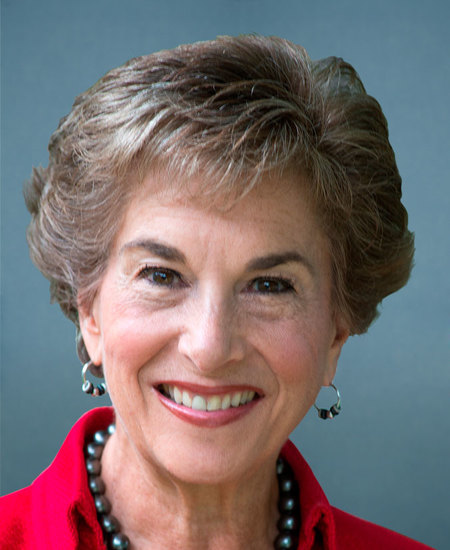
Rep. Janice D. Schakowsky
Sponsored bills
Mental Health in International Development and Humanitarian Settings Act or the MINDS Act This bill directs the U.S. Agency for International Development (USAID) and the Department of State to integrate mental health and psychosocial support activities across all U.S. foreign assistance programs, with a particular focus on children and other vulnerable populations. To facilitate this integration, the bill makes organizational changes at the USAID. It authorizes the USAID to appoint a coordinator to oversee and direct mental health and psychosocial support activities. The coordinator must ensure that these activities focus on children, adult caretakers and families, displaced populations, and other vulnerable groups. In addition, the bill establishes a working group comprised of representatives from every USAID bureau and the Department of State to coordinate interagency efforts related to, promote best practices for, and ensure sustainability and continuity of mental health and psychosocial support activities. The USAID and the State Department must brief Congress about the amount of foreign assistance spending on mental health and psychosocial support activities and related matters.
Combating International Islamophobia Act This bill establishes within the Department of State the Office to Monitor and Combat Islamophobia and addresses related issues. The office shall monitor and combat acts of Islamophobia and Islamophobic incitement in foreign countries. The bill establishes the position of Special Envoy for Monitoring and Combating Islamophobia, who shall head the office. The bill also requires certain existing annual reports to Congress about human rights and religious freedom in foreign countries to include information about Islamophobia, such as information about (1) acts of physical violence or harassment of Muslim people, (2) instances of propaganda in government and nongovernment media that attempt to justify or promote hatred or incite violence against Muslim people, and (3) actions taken by a country's government to respond to such acts. The office shall coordinate and assist in preparing these portions of the reports.
Maddy summaryHRES 845 is a procedural resolution passed by the U.S. House of Representatives to remove Representative Lauren Boebert (Colorado) from two standing committees: the Committee on the Budget and the Committee on Natural Resources. The resolution directly affects Boebert's committee assignments, which are part of her official duties as a House member. It does not change laws or policies but alters her participation in specific legislative committees. This action was taken under House rules requiring members to "reflect creditably on the House," though the resolution itself only addresses committee membership. The resolution was submitted by multiple House members and referred to the Committee on Ethics.
Allied Health Workforce Diversity Act of 2021 This bill allows the Department of Health and Human Services to provide grants to accredited education programs to increase diversity in the physical therapy, occupational therapy, respiratory therapy, audiology, and speech-language pathology professions. Grants may be used to provide scholarships or to support recruitment and retention of students from underrepresented groups.
Maddy summaryHRES 834 is a ceremonial resolution honoring the late Congresswoman Carrie Pittman Meek (1926-2021) for her congressional service and legacy. It commends her dedication to public service, her role as a trailblazer for Black women in politics, and her advocacy for communities in Florida. The resolution specifically recognizes her work securing hurricane relief funding after Hurricane Andrew and her service in the Florida State Senate and U.S. Congress. As a commemorative resolution, it contains no policy changes or funding provisions.
Eliminating Global Market Distortions to Protect American Jobs Act of 2021 This bill addresses unfair trade practices by making various changes to U.S. antidumping and countervailing duty law. Antidumping provides relief to U.S industries and workers that are materially injured or threatened with injury due to imports of like products sold in the U.S. market at less than fair value, while countervailing duty provides such relief from imports of products subsidized by a foreign government or public entity. Specifically, the bill establishes a process for successive antidumping and countervailing duty investigations. Successive investigations may be concurrent (an ongoing investigation of the same product from different countries) or recently completed (not more than two years before the date of the initiation of the successive investigation). Further, the bill establishes a time line for the Department of Commerce to issue determinations in successive investigations. Among other provisions, the bill authorizes Commerce to apply countervailing duty law to subsidies provided by a foreign government or public entity to a company operating in a different country, use another method for calculating the cost of production in specific circumstances, and require importers to provide a certification that the imported merchandise is not subject to an antidumping or countervailing duty order. Additionally, the bill establishes procedures for Commerce to conduct circumvention inquiries, including by specifying the deadlines for preliminary and final determinations. The bill repeals the Softwood Lumber Act of 2008, which addresses the importation of softwood lumber and softwood lumber products.
FTC Whistleblower Act of 2021 This bill provides protections and incentives for whistleblowers who disclose information about, or refuse to participate in, an activity they reasonably believe is a potential violation of any law, rule, or regulation enforced by the Federal Trade Commission. Specifically, it prohibits retaliation against whistleblowers and provides monetary incentives for information that leads to administrative or judicial actions that result in sanctions exceeding $1 million.
Maternal Vaccination Act This bill includes a focus on pregnant and postpartum individuals in existing public health activities to increase vaccination rates. First, the Centers for Disease Control and Prevention must incorporate a focus on pregnant and postpartum individuals, including by disseminating information to obstetric health care providers, into its existing public awareness campaign about the importance of vaccinations. Second, the bill expressly allows certain project grants for preventive health services to be used for activities to increase vaccination rates of pregnant and postpartum individuals (and their children).
Strength in Diversity Act of 2021 This bill establishes a program through which the Department of Education may award planning and implementation grants to specified educational agencies (e.g., local educational agencies) to improve diversity and reduce or eliminate racial or socioeconomic isolation in publicly funded early childhood education programs, public elementary schools, or public secondary schools.