

Cleaner, Quieter Airplanes Act This bill directs the National Aeronautics and Space Administration (NASA) to establish an initiative to research, develop, and demonstrate new technologies and concepts to reduce emissions and noise from aviation. Emissions to be addressed include carbon dioxide (CO2), nitrogen oxides (NOx), water vapor, black carbon, and sulfate aerosols. The goals and objectives of the initiative shall include ensuring U.S. leadership in research and technology innovation leading to substantial reductions in aviation noise and greenhouse gas emissions, a reduction of greenhouse gas emissions from new aircraft by at least 50% as compared to the highest-performing aircraft technologies in service as of December 31, 2021, net-zero greenhouse gas emissions from aircraft by 2050, and demonstrating new technologies developed pursuant to the initiative on regional aircraft intended to enter into service by 2030 and single-aisle aircraft designed to accommodate more than 125 passengers intended to enter into service by 2040.
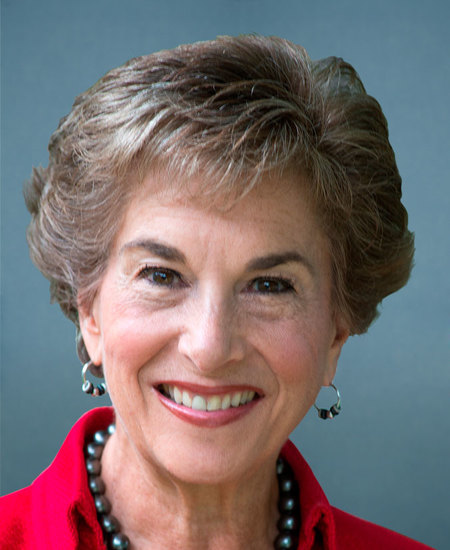
Rep. Janice D. Schakowsky
Sponsored bills
This bill designates the facility of the United States Postal Service located at 200 East Main Street in Maroa, Illinois, as the Jeremy L. Ridlen Post Office.
Recovering America’s Wildlife Act of 2022 This bill provides funding for the conservation or restoration of wildlife and plant species of greatest conservation need, including endangered or threatened species, and establishes related requirements. TITLE I--WILDLIFE CONSERVATION AND RESTORATION (Sec. 101) This title establishes and funds a subaccount of the Wildlife Conservation and Restoration Account, which was established under the Pittman-Robertson Wildlife Restoration Act. The subaccount must be used to support efforts of states, territories, or the District of Columbia to recover and manage wildlife and plant species of greatest conservation need. The Department of the Interior must use a portion of the funding from the subaccount for grants to state fish and wildlife departments, the District of Columbia fish and wildlife department, fish and wildlife departments of territories, nonprofit organizations, or regional associations of fish and wildlife departments. The grants must be used for innovative recovery efforts for species of greatest conservation need, species listed as endangered or threatened species, or the habitats of such species. Funding for the subaccount must supplement existing funds available to the states from funds distributed under the Dingell-Johnson Sport Fish Restoration Act and the Wildlife Conservation and Restoration Account. Recipients of the funding from the subaccount must match federal funds as specified by the title. The Government Accountability Office must study and report on the progress of states, territories, the District of Columbia, and Indian tribes in protecting species of greatest conservation need, endangered species, and threatened species. TITLE II--TRIBAL WILDLIFE CONSERVATION AND RESTORATION (Sec. 201) This title establishes and funds a Tribal Wildlife Conservation and Restoration Account to support Indian tribes' efforts to recover and manage wildlife and plant species of greatest conservation need. Indian tribes are not required to provide matching funds. TITLE III--ENDANGERED SPECIES RECOVERY AND HABITAT CONSERVATION LEGACY FUND (Sec. 301) This title establishes and funds through FY2026 the Endangered Species Recovery and Habitat Conservation Legacy Fund. The U.S. Fish and Wildlife Service must use the fund to (1) implement an Endangered Species Recovery Grant Program; (2) address its interagency consultation responsibilities under the Endangered Species Act of 1973; (3) work with nonfederal entities to conserve wildlife habitat and at-risk species, threatened or endangered species, or species proposed to be listed as threatened or endangered species; or (4) address the development and permitting of voluntary conservation agreements under such act. Amounts made available under the fund must supplement other federal amounts made available to carry out such activities. The President must annually submit to Congress, together with the annual budget of the United States, a list of threatened species and endangered species for which recovery plans will be developed or implemented with amounts from the Endangered Species Recovery and Habitat Conservation Legacy Fund. TITLE IV--REPORT (Sec. 401) Interior must also report on information concerning the amount of grants and contracts that were awarded or are allocated under this bill to Historically Black Colleges and Universities, Hispanic-serving educational institutions, tribally controlled colleges and universities, minority-serving educational institutions, minority-owned business enterprises, women-owned business enterprises, and community-based organizations that are principally administered by, operated by, or serving minority communities.
Assault Weapons Excise Act This bill imposes an additional 1000% excise tax on large capacity ammunition feeding devices and semiautomatic assault weapons. It exempts from such additional tax devices and weapons acquired by the United States or by a state or local government.
Maddy summaryThis non-binding resolution (HR 8040) expresses Congress's view that many national security threats are non-military and calls for reducing the Pentagon's 2023 budget by $100 billion. It directs the Secretary of Defense to consider a 2021 CBO report when implementing potential cuts, while exempting specific accounts like military personnel pay and defense health programs from reductions. The resolution proposes reallocating the savings to address non-military national priorities. It does not alter actual funding but sets a policy direction for the Department of Defense budget.
Commission To Study the Potential Creation of a National Museum of Asian Pacific American History and Culture Act This bill establishes a Commission to Study the Potential Creation of a National Museum of Asian Pacific American History and Culture. The commission must (1) report recommendations for a plan of action for the establishment and maintenance of a National Museum of Asian Pacific American History and Culture in Washington, DC; (2) develop a fundraising plan to support the establishment, operation, and maintenance of the museum through public contributions; (3) obtain an independent review of this fundraising plan, including an analysis of the resources necessary to fund the construction of the museum and its operations and maintenance in perpetuity without reliance on federal funds; and (4) submit a legislative plan of action to establish and construct the museum. The commission may convene a national conference relating to the museum. The commission shall be solely responsible for acceptance of contributions to it and payment of its expenses. No federal funding may be obligated to carry out this bill.
Military Spouse Hiring Act This bill expands the Work Opportunity Tax Credit (WOTC) to include the hiring of a qualified military spouse. (The WOTC permits employers who hire individuals who are members of a targeted group such as qualified veterans, ex-felons, or long-term unemployment recipients to claim a tax credit equal to a portion of the wages paid to those individuals.) A qualified military spouse is any individual who is certified by the designated local agency as being (as of the hiring date) a spouse of a member of the Armed Forces.
Social Security Expansion Act This bill increases benefits and certain taxes related to the Social Security program. Changes to benefits include (1) increasing the primary insurance amount for certain beneficiaries; (2) revising the method of calculating cost-of-living adjustments; (3) establishing a new minimum benefit for certain low earners; and (4) allowing certain children of retired, deceased, or disabled workers to receive benefits until age 22 if they are a full-time student. Changes to taxes include (1) increasing the net investment income tax and making active trade or business income subject to this tax; and (2) extending payroll taxes on wages, salaries, and self-employment earnings to income above $250,000 (the maximum amount subject to the Social Security payroll tax is currently $147,000 for 2022). The bill also combines the existing Federal Old-Age and Survivors Insurance Trust Fund and the Federal Disability Insurance Trust Fund into a single Social Security Trust Fund.
Enhanced Pay for Election Workers Act This bill directs the Election Assistance Commission to establish a program to make payments to states to provide enhanced pay for election workers, including individuals serving as election officials or poll workers on a temporary or unpaid basis.
Ruthie and Connie LGBTQ Elder Americans Act of 2022 This bill addresses matters related to lesbian, gay, bisexual, transgender, and queer (LGBTQ) individuals in certain federal programs serving older Americans, particularly by including an individual's LGBTQ status within the scope of the greatest social needs served by such programs.