

Maddy summaryThis non-binding resolution (HRES 532) expresses congressional support for a "Third Reconstruction" to address systemic poverty and low wages affecting approximately 140 million Americans, with disproportionate impacts on communities of color, women, and essential workers. It proposes concrete policy shifts including establishing a living wage, guaranteeing universal healthcare and housing, expanding voting rights, ending debt burdens, and redirecting military spending toward social programs. The resolution frames poverty as a moral crisis - citing it as the fourth-leading cause of death - and calls for updating poverty measures to reflect modern costs of living. It does not create new laws but urges Congress to prioritize these changes through budget and legislative action.
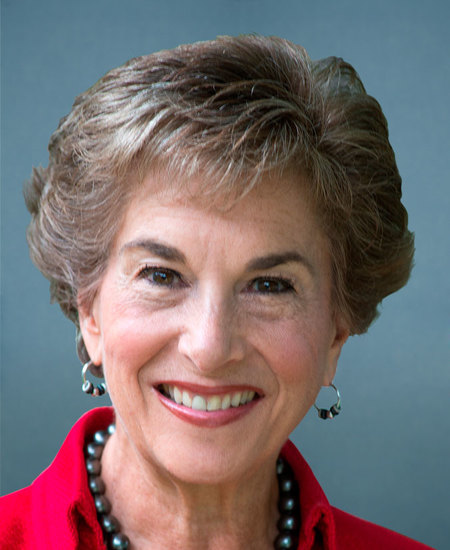
Rep. Janice D. Schakowsky
Sponsored bills
Maddy summaryThis bill establishes the John Lewis Civil Rights Fellowship Program within the Fulbright exchange system to honor civil rights leader John Lewis and advance U.S. foreign policy through global civil rights education. It creates a new fellowship for U.S. early- to mid-career professionals, selecting at least 25 annually for 10-month programs to conduct research or intern with approved organizations in countries participating in Fulbright exchanges. Fellows must complete a work plan, attend an orientation in Washington, DC, and present findings at an annual summit, with the State Department covering costs for travel, lodging, and expenses. The program requires annual reports on participant demographics and program effectiveness, and expires seven years after enactment.
Maddy summaryThe Equality Act (HR 15) would amend federal civil rights laws to explicitly prohibit discrimination based on sexual orientation and gender identity in public accommodations, housing, employment, credit, and jury service. It amends the Civil Rights Act of 1964 to include sexual orientation and gender identity as protected characteristics under existing sex discrimination provisions. The bill would require businesses, housing providers, employers, and government entities to provide equal access and services without regard to a person's sexual orientation or gender identity. It includes specific definitions for gender identity and sexual orientation to clarify protections across all covered areas. The law would apply to all entities covered by the Civil Rights Act of 1964, including those receiving federal funding.
Maddy summaryThis symbolic House Resolution (HRES 526) reaffirms U.S. commitment to refugee safety and well-being, introduced around World Refugee Day (June 20, 2023). It cites UNHCR data showing over 108 million displaced people globally and highlights historically low U.S. refugee admissions (11,411 in FY2021, 25,465 in FY2022). The resolution calls on U.S. officials to restore asylum protections, meet robust refugee admissions goals, support host countries, and advance refugee rights through international partnerships. It does not create new law but expresses bipartisan support for strengthening U.S. leadership in refugee protection.
Multiple Firearm Sales Reporting Modernization Act of 2023 This bill expands reporting requirements with respect to sales or dispositions of multiple firearms. Currently, a federal firearms licensee (e.g., a gun dealer) must report multiple sales or dispositions of pistols or revolvers to the same person within five business days. This bill requires a federal firearms licensee to report multiple sales or dispositions of any firearms to the same person within five business days.
Maddy summaryHR 4121, the Right to Contraception Act, establishes a federal statutory right for individuals to access contraceptives and contraception services without government restriction or coercion, directly affecting all people seeking reproductive care and health care providers. The bill prohibits state or federal laws that limit access to contraceptives (defined broadly to include devices, drugs, and fertility methods), prevent individuals from obtaining or using them, or allow providers to refuse services based on personal beliefs. It preempts conflicting state laws, requires any restrictions to be justified by "clear and convincing evidence" of advancing access with no less restrictive alternative, and allows private lawsuits to challenge violations. The Act applies nationwide to all health care providers and individuals, protecting access regardless of factors like race, income, or location.
Maddy summaryThis bill expands Medicaid programs' requirement to monitor antipsychotic medication use to cover all Medicaid beneficiaries, not just children. It removes age restrictions by adding seniors (65+), individuals receiving home and community-based services, and those in institutional care (like nursing homes) to the monitoring scope, effective January 1, 2024. States will now need to track antipsychotic use for these new groups under existing Medicaid rules. The change directly affects all Medicaid enrollees, including previously excluded adults and seniors.
This resolution expresses the sense of the House of Representatives that the federal government should begin a large-scale effort to reduce incarceration rates and reshape the American legal system by consulting with communities and individuals directly impacted by the justice system; decriminalizing certain behaviors, increasing diversion opportunities, revising sentencing laws, and reducing practices that contribute to recidivism; ending practices that advantage the wealthy and prohibiting private companies from profiting from the criminal justice system; and ending militarized policing practices, investing in other safety services, and implementing policies that address the needs of communities most affected by high rates of incarceration.
Maddy summaryThe Senior Legal Hotline Act of 2023 creates a federal grant program to fund statewide legal assistance hotlines for older adults. It authorizes $10 million annually (2024-2028) for competitive grants to nonprofit organizations or partnerships that establish free legal hotlines providing telephone-based counseling, referrals, and advocacy to seniors. These hotlines must prioritize older individuals with the greatest economic and social need, coordinate with state agencies and other legal aid providers, and ensure trained staff/volunteers serve all areas of the state. The bill directly affects seniors across all 50 states through expanded access to no-cost legal help for civil issues like housing, benefits, and elder abuse.
Lady Liberty Act of 2023 This bill sets a floor of 125,000 for the maximum number of refugees who may be admitted into the United States each fiscal year. Under current law, the President sets the annual cap on refugee admissions at the beginning of each fiscal year. (The cap for FY2023 was 125,000, but in some years it had been lower. For example, the cap for FY2021 was 15,000.)