

Maddy summaryHR 3505, the Barriers to Suicide Act of 2025, creates a federal grant program administered by the Department of Transportation to fund the installation of proven safety barriers and nets on specific high-risk structures. The program provides competitive grants (up to 80% federal funding) to states, local governments, or other eligible entities for projects installing suicide deterrents on bridges, buildings, parking garages, highway-rail crossings, or rail stations. It prioritizes areas with high suicide rates and mandates a study by the Comptroller General to evaluate effective deterrents for non-bridge structures and their costs, with a report due within one year of enactment. The bill authorizes $10 million annually from 2026-2030 for this initiative.
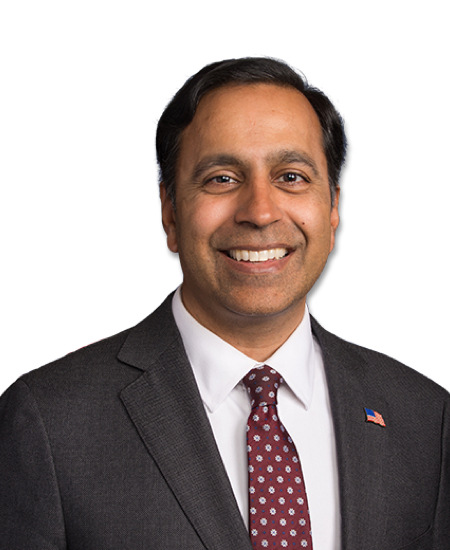
Rep. Raja Krishnamoorthi
Sponsored bills
Maddy summaryThis non-binding resolution (HRES 424) supports designating May 16, 2025, as "National Honor Our LGBT Elders Day." It encourages federal, state, local governments, nonprofits, schools, and healthcare providers to observe the day through programs addressing health disparities and unique challenges faced by LGBTQ+ older adults. The resolution specifically urges culturally competent healthcare for this community and prioritization of their health rights in government programs and aid efforts. It does not create new laws or funding but formally recognizes the need for greater awareness and support.
Maddy summaryThe Forest Conservation Easement Program Act of 2025 establishes a new federal program to conserve forest land through easements. The program provides cost-share assistance (50-75% of fair market value) for eligible entities to purchase forest land easements or for the Secretary to purchase forest reserve easements directly. It requires forest management plans for enrolled land, prioritizes protection of endangered species habitat, and sets aside 10% of annual funding for beginning, socially disadvantaged, veteran, and limited resource forest landowners. The program replaces the Healthy Forests Reserve Program and allocates $100 million annually from 2026-2030 for implementation.
Maddy summaryHR 3397, the Pacific Ready Coast Guard Act, establishes a new Center of Expertise in Indo-Pacific Maritime Governance within the Coast Guard to provide education, training, and research on maritime governance best practices, particularly focused on building partner capacity in the Indo-Pacific region. The bill requires the Coast Guard Commandant to submit annual plans (by December 31) and budget displays (by February 15) to specific congressional committees detailing Pacific operations, resource needs, and projected demand for Coast Guard engagement. It also mandates three additional reports within specific timeframes: feasibility of a standing Indo-Pacific maritime group, a plan for forward operating bases, and an assessment of Coast Guard attaché staffing in the region. These provisions aim to enhance coordination with the State and Defense Departments and improve the Coast Guard’s operational planning and resource allocation in the Pacific.
Stronger Communities through Better Transit Act This bill requires the Department of Transportation (DOT) to establish a grant program to support operating projects for public transportation and related service improvements, particularly in underserved communities and areas of persistent poverty. Specifically, the bill requires DOT to allocate funding under the program for urbanized areas, states, and Indian tribes that are recipients of funds under either the Federal Transit Administration's (FTA's) Urbanized Area Formula Funding program or Formula Grants for Rural Areas program. Eligible recipients may use funding for operating costs associated with projects that improve public transportation service for transit-dependent populations and support increased transit ridership (e.g., service expansion, information technology enhancements, and workforce development). DOT must apportion the funding so that recipients receive funds that are proportional to their share of operating costs. The bill also provides for an increased federal cost share for operating assistance for projects or programs carried out in areas of persistent poverty or underserved communities. DOT must set up a multimodal access measurement interface for public agencies to aid transit agencies in determining and reporting on access to jobs and essential services. A grant recipient must (1) report specific information to the FTA for inclusion in the National Transit Database, and (2) survey transit riders and non-riding residents regarding transit service improvements. Further, the bill expands the purposes of the public transportation programs to include supporting public transportation's role in combating climate change through growing/retaining transit ridership.
Maddy summaryHRES 419 designates May 17, 2025, as "DIPG Awareness Day" to raise public awareness about diffuse intrinsic pontine glioma (DIPG), a fatal pediatric brain cancer with a median survival of 9 months and less than 1% 5-year survival rate. The resolution encourages public and private funding sources to prioritize research for DIPG and other pediatric cancers by considering mortality rates and life-years lost when allocating grants. It does not create new laws but symbolically urges greater attention to this unmet medical need.
Maddy summaryHR 3452, the "Six Assurances to Taiwan Act," formally codifies six longstanding U.S. policy commitments regarding Taiwan that were established in 1982. It reaffirms that the U.S. has never agreed to set a date for ending arms sales to Taiwan, consult with China on such sales, mediate between Taiwan and China, revise the Taiwan Relations Act, take a position on Taiwan's sovereignty, or pressure Taiwan to negotiate with China. The bill’s key mechanism requires the President to notify Congress before taking any action that could alter these assurances, giving Congress 30 days (or 60 days during a specific period) to review proposals through a joint resolution process. This applies to actions like pausing arms sales, negotiating with China on arms, or changing U.S. policy on Taiwan’s status. The bill directly affects U.S. executive branch decisions on Taiwan policy and Congressional oversight authority.
Maddy summaryThe HEADs UP Act of 2025 would improve healthcare access for people with developmental disabilities by adding them to the list of medically underserved populations that health centers must serve. It authorizes $15 million annually from 2026 to 2030 to fund new primary care and specialized dental services through health centers in underserved areas. Health centers receiving these grants must use the funds to supplement, not replace, existing services for this population. The bill directly affects health centers serving underserved communities and the people with developmental disabilities who face barriers to healthcare.
Maddy summaryHR 3418, the Historic Preservation Fund Reauthorization Act, extends the federal Historic Preservation Fund through 2035 and increases its annual funding from $150 million to $250 million. This bill directly affects historic preservation programs nationwide, including state and local grants for protecting historic sites and buildings. The key provision updates the funding levels and duration in existing law (54 U.S. Code § 303102), ensuring continued support for preservation efforts. The change maintains current program operations without creating new requirements or altering eligibility.
Maddy summaryThis bill establishes minimum nurse-to-patient ratios for hospital units across the country, requiring hospitals to maintain specific staffing levels (such as 1:1 in trauma units, 2:1 in critical care units, and 3:1 in emergency rooms) to improve patient safety and quality of care. Hospitals must develop transparent staffing plans that account for patient acuity, involve direct care nurses in planning, and document actual staffing levels for each shift. The bill includes strong whistleblower protections for nurses who object to unsafe staffing levels and prohibits hospitals from retaliating against nurses who report violations. It requires hospitals to comply with these standards as a condition for receiving Medicare and Medicaid payments, with enforcement through audits and civil penalties of up to $50,000 for repeated violations. The bill also includes provisions to support nurse recruitment and retention through workforce initiatives and training programs.