

Maddy summaryThe COMPOST Act (HR 651) makes composting a recognized conservation practice under federal farm programs, directly affecting farmers, local governments, and community organizations. It creates a new $200 million annual grant and loan program (2024-2033) to fund projects like composting facility construction, food waste collection systems, and onsite composting programs. Priority is given to projects serving low-income communities, supporting minority-owned businesses, and using distributed infrastructure (e.g., home, farm, or community-scale composting). The bill requires projects to demonstrate waste processing capacity, high-quality compost production, and environmental justice considerations.
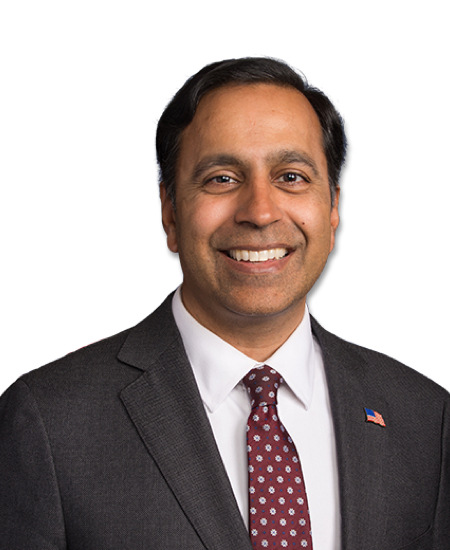
Rep. Raja Krishnamoorthi
Sponsored bills
Maddy summaryHR 724, the Arctic Refuge Protection Act, repeals the existing oil and gas program for the Arctic National Wildlife Refuge in Alaska and designates approximately 1.56 million acres of the refuge's coastal plain as federal wilderness. This bill directly affects the Arctic Refuge by permanently prohibiting oil and gas leasing and development in that specific area. The key mechanism is adding the designated land to the National Wilderness Preservation System under the Wilderness Act, requiring it to be managed for its natural conditions. This change legally protects the area from future fossil fuel extraction activities.
Maddy summaryThis resolution (HRES 99) is a non-binding statement supporting National Black HIV/AIDS Awareness Day, observed annually on February 7. It directly addresses the disproportionate impact of HIV/AIDS on Black communities in the U.S., citing data showing Black Americans face higher diagnosis rates, later care access, and greater mortality compared to other groups. The resolution encourages state/local governments and health agencies to promote HIV testing and awareness, supports the National HIV/AIDS Strategy, and advocates for culturally competent care and the "U=U" (Undetectable equals Untransmittable) messaging. It does not create new laws or allocate funding but urges recognition of existing disparities and community-led solutions.
Maddy summaryHR 1088, the Shirley Chisholm Congressional Gold Medal Act, authorizes a posthumous Congressional Gold Medal to honor Congresswoman Shirley Chisholm, the first African-American woman elected to Congress (1968) and the first Black candidate for a major party's presidential nomination (1972). The bill directs the Treasury Secretary to design and strike a gold medal featuring Chisholm's image, which will be presented by Congress and then permanently displayed at the Smithsonian Institution. Duplicate bronze medals may be sold to the public to cover production costs, with proceeds deposited into the U.S. Mint fund. This bill commemorates Chisholm's legacy and achievements without creating new laws or affecting any current policies.
Maddy summaryHR 1081, the ANTI-SOCIAL CCP Act, would prohibit U.S. transactions with social media companies linked to "countries of concern" like China, Russia, or Iran. It specifically targets companies such as TikTok and ByteDance (owner of TikTok), blocking all U.S. financial dealings with them unless the President certifies they no longer meet the criteria. The bill uses existing economic powers under the International Emergency Economic Powers Act to freeze assets and ban commercial operations in the U.S. for covered platforms. It defines "social media companies" as those with over 1 million monthly users that enable user-generated content sharing, excluding review sites or emergency services.
Maddy summaryHR 1078, the Veteran Education Empowerment Act, establishes a federal grant program to help colleges and universities create or improve dedicated Student Veteran Centers. The bill authorizes up to $500,000 per institution over four years for centers providing lounge space, benefits counseling, academic support, and peer mentorship specifically for veterans, active-duty service members, and their families. Eligible institutions must serve a significant veteran population and demonstrate long-term sustainability. The program requires annual reporting on center usage, veteran demographics, and outcomes like degree completion, with the Department of Education mandated to share best practices via a public website. This directly supports veterans navigating higher education challenges like transition difficulties and isolation.
Maddy summaryThe Energy Resilient Communities Act creates a federal grant program to fund clean energy microgrids that keep critical community services running during climate disasters like wildfires or floods. Eligible entities - including local governments, nonprofits, and Tribal agencies - can apply for grants covering up to 90% of costs in environmental justice communities (defined as areas with high populations of people of color, low-income residents, or Tribal communities) to build microgrids supporting hospitals, schools, or medical baseline customers (e.g., those relying on life-saving medical devices). Priority is given to projects that reduce pollution, lower energy costs, create local jobs, and use U.S.-made materials, while requiring fair wages and community-focused hiring. The program mandates annual reports to Congress tracking grant use, environmental benefits, and job creation.
Maddy summaryThe HELP Copays Act (HR 830) changes how health insurance plans calculate patient cost-sharing. It requires that payments made by third parties (like pharmacies, charities, or discount programs) toward medical costs count toward a patient's deductible, copay, or out-of-pocket limit. This directly affects insured individuals who receive financial assistance, discounts, or product vouchers for healthcare expenses. The law ensures these external payments reduce the patient's actual out-of-pocket costs more quickly, aligning with existing Affordable Care Act and Public Health Service Act requirements.
Aviation-Impacted Communities Act This bill addresses noise mitigation for aviation-impacted communities. ( Aviation-impacted community is defined as a community that is located not more than one mile from any point at which a commercial or cargo jet route is 3,000 feet or less above ground level.) Specifically, the bill expands Airport Improvement Program noise mitigation program funding for aviation-impacted communities that are not currently within the 65 day-night average sound level (DNL) standard; requires the Federal Aviation Administration (FAA) to enter into an agreement with the National Academy of Sciences to conduct a study that summarizes the relevant literature and studies done on aviation impacts worldwide and focuses on large hub commercial airports and surrounding communities, including communities currently outside of the 65 DNL contour; directs the FAA to conduct outreach to aviation-impacted communities to inform them of the opportunity to be a designated community; requires the FAA to devise an action plan that alleviates or addresses the concerns of a designated community; and provides grants for necessary noise mitigation in a designated community for residences, hospitals, nursing homes, adult or child day care centers, schools, and places of worship.
Maddy summaryThis bill expands health care coverage under TRICARE for military dependents. It eliminates a separate premium for young adults aged 21-26 enrolled in the TRICARE Young Adult Program, meaning they will no longer pay an extra fee for coverage. The bill also removes an eligibility restriction that previously limited coverage for some dependents in this age group. These changes directly affect military service members' adult children and spouses who rely on TRICARE Young Adult coverage. The policy update simplifies enrollment and reduces out-of-pocket costs for these beneficiaries.