

Maddy summaryHRES 1002 is a symbolic House resolution recognizing the cultural and historical significance of Lunar New Year (celebrated as the Year of the Dragon in 2024). It acknowledges the holiday's 4,000-year history in China, its celebration across Asia (including Seollal and Tết), and its significance to Asian Americans and others in the U.S. The resolution expresses respect for those observing the holiday and wishes them a happy new year, but it does not create new laws, policies, or funding. As a ceremonial resolution, it has no direct effect on legislation or constituents.
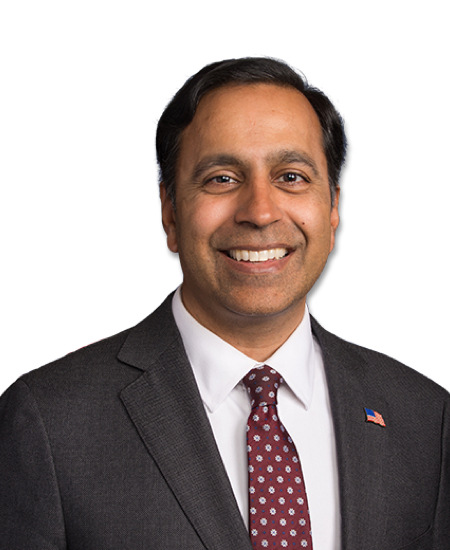
Rep. Raja Krishnamoorthi
Sponsored bills
Maddy summaryThe VISITOR Act redirects specific visa-related fees - such as those from Diplomatic Programs and Fraud Prevention accounts - to fund consular services aimed at reducing visa processing times. It requires the State Department to transfer unobligated fee balances to the Consular and Border Security Programs account to support these services. The bill sets a concrete goal: ensuring 80% of nonimmigrant visa applicants receive interviews within three weeks of applying, while allowing exceptions for security or resource constraints. This directly affects nonimmigrant visa applicants (e.g., tourists, business travelers) by potentially speeding up their processing. The policy change focuses on reallocating existing fee collections, not creating new visa categories or altering eligibility.
Maddy summaryThis bill requires Medicaid, the Children’s Health Insurance Program (CHIP), and private health plans to cover human milk fortifier - a nutritional supplement made from donor breast milk - at no cost for eligible premature infants. It directly affects infants under one year old who were born at 34 weeks or less gestation, have a birth weight under 1,800 grams, or have specific medical conditions requiring this fortifier, as determined by a qualified healthcare provider. The law mandates coverage without deductibles, copays, or cost-sharing starting January 1, 2025, for all these programs. This policy change ensures families of premature infants cannot face out-of-pocket costs for this critical nutrition support.
Maddy summaryHRES 993 is a non-binding congressional resolution designating February as "Career and Technical Education (CTE) Month" to celebrate CTE programs nationwide. It supports CTE as a pathway preparing students for high-demand, skilled careers in fields like infrastructure and technology, recognizing that over 12 million students currently participate in CTE programs across high schools and colleges. The resolution encourages educators, counselors, and parents to promote CTE as a respected educational option, highlighting its role in reducing high school dropout rates and aligning student skills with workforce needs. It does not create new laws or allocate funding, but symbolically affirms bipartisan support for CTE, referencing the 1917 Smith-Hughes Act as foundational to current efforts.
Maddy summaryThis symbolic resolution (HRES 989) urges the U.S. House of Representatives to recognize January as "Muslim-American Heritage Month" to honor the contributions of Muslim Americans. It highlights their historical and contemporary roles in U.S. society across fields like business, science, sports, and public service. The resolution calls for public observance through ceremonies and programs but has no legal effect or policy changes. It does not allocate funding, alter laws, or directly affect any specific group beyond raising awareness of Muslim-American heritage.
Maddy summaryThe Credit for Caring Act of 2024 creates a new federal tax credit for family caregivers. It allows eligible caregivers to claim a credit equal to 30% of qualified caregiving expenses (like home modifications, medical supplies, or respite care) exceeding $2,000 per year, capped at $5,000 annually. To qualify, caregivers must earn over $7,500 in income and provide care for a relative (like a spouse or parent) certified by a healthcare provider as needing long-term care for at least 180 days. The credit phases out for higher earners, with a $75,000 income threshold for single filers and $150,000 for joint returns.
Maddy summaryHR 7132 creates a federal grant program to help state and local governments, tribes, and Native Hawaiian organizations develop and implement housing plans. Grants fund both planning (creating strategies) and implementation (putting strategies into action) to increase housing supply and affordability while avoiding displacement of current residents. At least 10% of funds must support rural communities, and recipients must report annually on progress and submit final evaluations after three years. The program requires comprehensive plans addressing housing needs, land use reforms, and community engagement to expand housing options.
Maddy summaryHR 7127, the FAIR Act, establishes pay adjustments for federal employees in 2025. It increases base pay by 4% for most federal workers under statutory pay systems and for "prevailing rate" employees (like those in specific geographic areas), while raising locality pay rates by 3.4%. The bill directly affects all federal employees receiving pay under these systems, as it modifies their 2025 salary calculations. These changes are based on statutory formulas under Title 5 of the U.S. Code, with no new policy mechanisms beyond the specified percentage increases. The adjustments apply to pay rates in effect as of the end of fiscal year 2024.
Maddy summaryHR 7108, the Expanding Access to Mental Health Services in Schools Act of 2024, authorizes federal grants to help high-need public schools hire and retain mental health staff. It targets schools that meet specific criteria: being in the top 15% of need (based on student poverty or other metrics) and failing to meet minimum staffing ratios for counselors, psychologists, or social workers. Grants fund recruitment (through salary stipends or loan repayment), retention (via professional development or incentives), and evidence-based mental health services, with grantees required to contribute 25% matching funds and report annually on provider numbers, demographics, and student-to-provider ratios. The program runs through 2029 and requires all services to comply with privacy laws like FERPA.
Maddy summaryHR 7125, the "No Funds for Forced Labor Act," directs the U.S. Treasury to instruct American representatives at international financial institutions (like the World Bank) to oppose loans for projects that use or risk using forced labor, particularly those linked to Xinjiang. It requires these institutions to vet projects for forced labor risks, detail mitigation efforts, and report annually to Congress on implementation. The bill specifically targets projects involving state-owned entities in Xinjiang or those with credible forced labor allegations, as cited in congressional reports. This policy change aims to prevent U.S.-aligned funding from supporting forced labor practices globally.