

Upward Mobility Enhancement Act This bill increases the amount of the tax exclusion for employer-paid educational assistance programs. It also expands the exclusion to include amounts paid for education-related tools and technology (e.g., hand tools, computers, software, licensure fees).
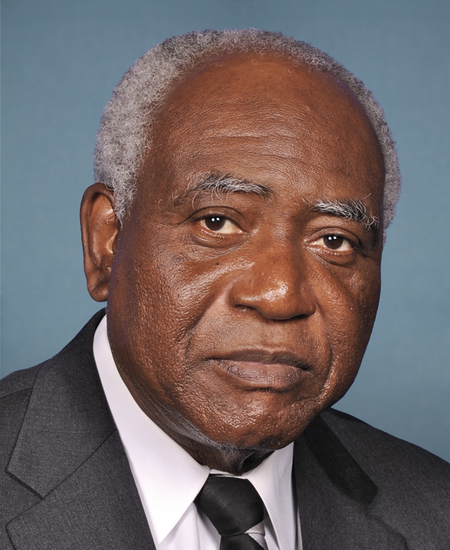
Rep. Danny K. Davis
Sponsored bills
Maddy summaryThis bill closes loopholes that allow domestic violence abusers to keep or buy firearms while under restraining orders. It requires courts to issue "firearm surrender orders" when domestic violence restraining orders are issued, mandating that abusers surrender all firearms within 24 hours. The law expands the definition of "intimate partner" to include dating partners and requires law enforcement to remove firearms if abusers don't comply. It also creates a federal grant program to help states implement these policies, directly affecting domestic violence survivors and abusers subject to restraining orders.
Maddy summaryHR 6404, the Disarming Cartels Act, requires the Department of Homeland Security to enhance border security efforts to disrupt the smuggling of U.S.-sourced firearms and related munitions into Mexico. Key provisions mandate increased collaboration between U.S. Customs and Border Protection, Immigration and Customs Enforcement, and Mexican authorities; establishing information-sharing mechanisms for firearm interdictions; analyzing recovered firearms in Mexico to trace U.S. sources; and expanding outbound inspections at the U.S.-Mexico border. The bill also requires annual reports to Congress detailing implementation progress, joint operations, and performance metrics for these efforts. This legislation directly affects DHS agencies, Mexican government partners, and aims to address cross-border firearm trafficking through concrete operational changes.
This concurrent resolution recognizes the difficult challenges Black veterans faced when returning home after serving in the Armed Forces, their heroic military sacrifices, and their patriotism in fighting for equal rights and for the dignity of a people and a nation. The concurrent resolution also recognizes the need for the Department of Veterans Affairs to continue to work to eliminate any health and benefit disparities for minority veterans.
Maddy summaryHR 6121, the Filipino Veterans Fairness Act of 2023, expands U.S. veterans benefits for individuals who served in the Philippine Army, Philippine Scouts, or recognized guerrilla forces during World War II. It directly affects Filipino veterans who previously faced challenges proving service due to limited documentation. The bill allows the Secretary of Veterans Affairs to consider alternative records beyond the National Personnel Records Center rosters when determining eligibility, requires annual reports to Congress on applications and approvals, and clarifies that the Filipino Veterans Equity Compensation Fund does not apply to these veterans. These changes aim to streamline access to benefits for this specific group of veterans.
Maddy summaryThis resolution symbolically designates November 8, 2023, as "National First-Generation College Celebration Day" to honor first-generation college students (those whose parents didn't earn bachelor's degrees). It urges all U.S. residents to recognize these students' contributions to the workforce and celebrate the 1965 Higher Education Act, which established key support programs like TRIO and Pell Grants. The resolution has no legal force or funding provisions - it solely expresses support through symbolic recognition. It directly affects educational communities, institutions, and the public by encouraging annual observance of this day.
Maddy summaryHR 6293, the Fair Wages for Incarcerated Workers Act of 2023, would extend the Fair Labor Standards Act (FLSA) to require that incarcerated workers in public or privately operated correctional facilities receive fair wages. The bill directly affects individuals working in prisons or related programs (like UNICOR or work release) by prohibiting deductions for board, lodging, or court-imposed fees from their wages. Key provisions amend the FLSA to define "incarcerated worker" and explicitly state that such workers must be paid at least the minimum wage, with costs for facilities and court fees excluded from their earnings. This would ensure incarcerated workers keep more of their earnings from prison labor programs.
Maddy summaryThis bill increases monthly stipend payments for students in the TRIO Upward Bound program, which helps low-income, first-generation, and disadvantaged high school students prepare for college. For fiscal year 2024, it raises stipends from $60 to $180 per month (for some students), $300 to $900 per month, and $40 to $120 per month, with veterans in specialized projects receiving up to $300 monthly. Starting in fiscal year 2025, stipend amounts will automatically adjust annually based on the Consumer Price Index to account for inflation. The bill directly affects students enrolled in Upward Bound projects funded under the Higher Education Act, providing increased financial support for their program participation.
Maddy summaryThis bill creates a new program of "basic" and "emergency" grants to help college students in the student support services program cover living expenses during their first undergraduate year. Basic grants cover expected costs like housing and food, while emergency grants address unexpected costs that could force a student to leave school, such as sudden medical bills or transportation issues. Emergency grants are capped at $500 for the 2024-2025 academic year (with future increases tied to inflation) and can cover expenses beyond standard financial aid, including dependent care, transportation, and personal items. The grants cannot push a student's total financial aid above their cost of attendance by more than $500, and institutions must ensure these funds supplement, not replace, existing non-Federal support.
Maddy summaryHR 5976, the Youth Mental Health Research Act, establishes a new NIH research initiative led by the National Institute of Mental Health. The bill directs collaboration between three NIH institutes to coordinate research on youth mental health, focusing specifically on building community resilience for at-risk youth and improving how mental health services reach young people in schools, communities, and other settings where they live and work. It authorizes $100 million annually for fiscal years 2024 through 2028 to fund this research. The bill does not create direct services but aims to generate evidence to inform future mental health support strategies for young people.