

Maddy summaryThe FAAN Act (HR 7266) authorizes $1 billion in federal grants to schools of nursing in underserved areas to address nursing workforce shortages. It directly affects nursing schools in medically underserved communities, rural regions, and areas with health professional shortages, prioritizing institutions serving underrepresented racial/ethnic groups, rural populations, and low-income students. Key provisions include funding for faculty hiring (especially from underrepresented groups), modernizing classrooms with technology like simulation labs, expanding student support programs, and creating clinical partnerships with healthcare facilities. Schools receiving grants must report annually on student demographics, faculty diversity, and program outcomes, with a comprehensive report to Congress after five years. The bill aims to strengthen nursing education capacity and improve national readiness for public health emergencies.
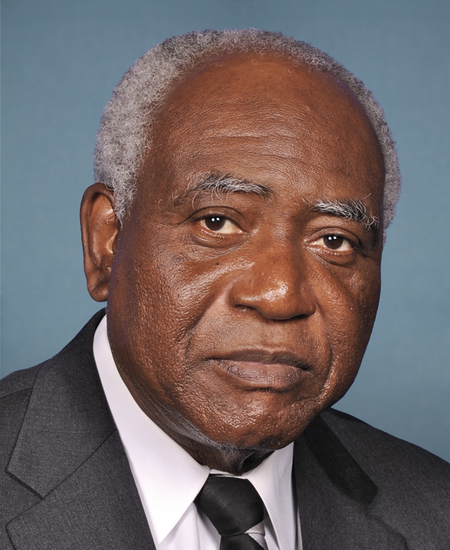
Rep. Danny K. Davis
Sponsored bills
Maddy summaryThe Automatic IRA Act of 2024 would require most employers (with more than 10 employees) to automatically enroll workers in retirement savings plans with default contribution rates starting at 6% and increasing to 10% over time. The bill establishes default investment options that protect principal and requires employers to provide clear notice about the retirement plan options to employees. Employers who fail to implement these automatic retirement plans would face a $10 daily penalty, while small employers would receive a $500 annual tax credit for the first three years of offering these plans. The law would apply to plan years beginning after December 31, 2026, with the tax credit effective for taxable years beginning after December 31, 2024.
Housing for Homeless Students Act of 2024 This bill extends eligibility for the low-income housing tax credit to homeless youth and veterans who are full-time students during a specified time period.
Maddy summaryHR 7261, the Reimagining Inclusive Arts Education Act, creates a federal grant program to improve arts education access for children with disabilities in K-12 schools. The bill authorizes $15 million over five years (2025-2029) to fund competitive grants for eligible entities like school districts, state agencies, or partnerships with colleges/nonprofits. Grant recipients must use funds to adapt arts curricula, provide professional development for arts educators, and incorporate creative arts therapies (like music or dance) to increase inclusion and accessibility for students with disabilities. Priority is given to schools receiving Title I funding, and grants last up to three years with possible renewal based on program success.
Maddy summaryHR 7244, the "End Tax Breaks for Dark Money Act," eliminates tax exemptions for political groups and certain nonprofits when they receive property that has increased in value (like stocks or real estate). It targets organizations that accept anonymous donations ("dark money") by removing their ability to avoid capital gains tax on such property transfers. The bill amends the tax code to require these groups to pay tax on the appreciated value when receiving property, rather than allowing them to bypass capital gains tax. This change directly affects political organizations under Section 527 and specific nonprofits under Section 501(c), applying to transfers after the bill's enactment.
Maddy summaryHR 7252, the Child and Dependent Care Tax Credit Enhancement Act of 2024, increases the maximum credit amounts for child and dependent care expenses to $8,000 for one child and $16,000 for two or more children. It adjusts income thresholds so the credit begins phasing out at $125,000 of adjusted gross income and slows the phaseout rate above $400,000. The bill also makes the credit refundable for eligible taxpayers (allowing refunds even if no tax is owed) and adds automatic annual inflation adjustments to the credit limits starting in 2025. These changes directly affect families paying for childcare or dependent care to work or seek employment.
Maddy summaryThis symbolic resolution designates February 5-9, 2024, as "National School Counseling Week" to recognize school counselors' roles in supporting students' academic, social-emotional, and career development. It highlights counselors' contributions to student success - such as addressing mental health, bullying, and college/career readiness - while noting current challenges like the national average student-to-counselor ratio of 408:1 (exceeding recommended standards). The resolution encourages public awareness activities but does not create new laws, funding, or obligations.
Maddy summaryThis resolution condemns violence, oppression, and abuse against ethnic minorities in eastern Democratic Republic of the Congo (DRC), particularly targeting Rwandophones like the Banyamulenge and Congolese Tutsi communities. It urges the DRC government to investigate security forces and armed groups (including the M23 rebel group) for human rights abuses, hold perpetrators accountable, and improve protections for displaced civilians. The resolution also calls for U.S. actions such as appointing a special envoy for the Great Lakes region, prioritizing refugee access for affected groups, and coordinating sanctions against human rights abusers - though it is a symbolic statement, not a binding law.
Maddy summaryThis symbolic resolution (HRES 989) urges the U.S. House of Representatives to recognize January as "Muslim-American Heritage Month" to honor the contributions of Muslim Americans. It highlights their historical and contemporary roles in U.S. society across fields like business, science, sports, and public service. The resolution calls for public observance through ceremonies and programs but has no legal effect or policy changes. It does not allocate funding, alter laws, or directly affect any specific group beyond raising awareness of Muslim-American heritage.
Maddy summaryHRES 990 is a non-binding resolution expressing the House of Representatives' support for fair treatment of paraprofessionals (like instructional assistants) and education support staff (such as clerical, custodial, and food service workers) in schools. It states these over 3 million frontline workers deserve livable wages, affordable health care, job security, paid leave, professional development, and safe working conditions. The resolution lists specific recommendations, including eligibility for family medical leave and protections against retaliation for reporting workplace issues. It does not create new laws but formally recognizes these staff as essential to school success and calls for policies addressing their current challenges.