

Maddy summaryHRES 1093 is a symbolic resolution recognizing the contributions of social workers across the U.S. It supports Social Work Month and World Social Work Day without creating new laws or funding. The resolution acknowledges social workers' roles in mental health, veteran support, disaster response, community well-being, and addressing systemic barriers like poverty and discrimination. It encourages public awareness activities but does not change policies or affect specific groups through new regulations. This is a non-binding expression of support from the House of Representatives.
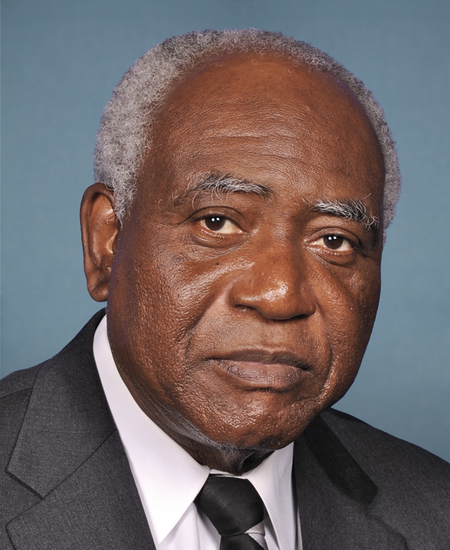
Rep. Danny K. Davis
Sponsored bills
Maddy summaryHCONRES 99 is a symbolic congressional resolution honoring Wadee Alfayoumi, a 6-year-old Palestinian-American boy murdered in a hate crime on October 14, 2023, after being stabbed 26 times by a perpetrator who made anti-Muslim and anti-Palestinian remarks. The resolution recognizes Congress's condemnation of hate crimes, Islamophobia, and anti-Palestinian discrimination, while affirming the United States' "zero tolerance" for such violence. As a procedural resolution (not a law), it does not create new policies but formally honors Wadee and his family, emphasizing the need to reject dehumanizing rhetoric targeting religious or ethnic groups.
Maddy summaryHR 7634, the Plastic Pellet Free Waters Act, prohibits plastic pellets and pre-production plastic materials from being discharged into water through wastewater, spills, or runoff from specific facilities. It directly affects plastic polymer production facilities, plastic molding and forming facilities, and any point source (like packaging or transport operations) handling plastic pellets. The bill requires the EPA to issue a final rule within 60 days of enactment banning these discharges and updating all relevant wastewater, stormwater, and performance standards in permits and regulations. This creates a legal requirement for facilities to prevent plastic pellet pollution in waterways, targeting a major source of ocean plastic pollution.
Maddy summaryThis concurrent resolution (HCONRES 97) recognizes the gender wage gap, noting that women working full-time earn 84 cents for every dollar earned by men. It highlights racial disparities (e.g., Latinas earn 57 cents, Black women 69 cents) and the economic impact of the gap, including $965 billion in annual lost wages for women. As a symbolic resolution, it does not create new laws or policies but formally acknowledges the issue and reaffirms Congress’s commitment to addressing wage inequality.
Maddy summaryHRES 1074 is a symbolic House resolution reaffirming congressional support for a two-state solution to the Israel-Palestine conflict. It explicitly states the House supports Israel's right to exist as a Jewish, democratic state and recognizes Palestinians' right to sovereignty through a separate state. The resolution identifies a two-state solution as the best path to lasting peace and condemns efforts opposing this approach. As a non-binding resolution, it does not create new law or policy but formally expresses the House's position on this issue. It was introduced by multiple House members on March 12, 2024.
Maddy summaryThis bill establishes the Dr. Percy and Dr. Anna Julian Home in Oak Park, Illinois, as a National Historic Site within the National Park System. It requires the Secretary of the Interior to finalize an agreement with the Julian Home for public access, interpretation, and maintenance before designation, and mandates a map of the site boundaries. The site aims to preserve and interpret the Julian family's achievements in chemistry and medicine, their history of overcoming racial discrimination, and their home's resilience against firebomb attempts. The National Park Service will manage the site under existing park system laws, with a management plan due within one year of funding. This designation directly affects the Julian Home property and future visitors, not policy or citizens.
Maddy summaryThis bill requires states to immediately stop Medicaid recovery claims against beneficiaries' estates. Specifically, it mandates that states withdraw all existing liens within 90 days of enactment and notify affected individuals or their estates about the withdrawal. The law also prohibits states from initiating, maintaining, or collecting any future Medicaid recovery claims for benefits correctly paid. It directly affects Medicaid recipients and their heirs who were previously subject to state recovery efforts. The key mechanism is the 90-day deadline for states to remove existing liens and cease all new recovery actions.
Maddy summaryThe PACE Act creates a federal grant program to fund state, tribal, and local efforts preventing adverse childhood experiences (ACEs) and promoting positive childhood experiences for children under 18. It requires grant recipients to use data-driven strategies, coordinate multi-sector partnerships, and prioritize populations with high ACE burdens, including communities disproportionately affected by historical trauma. The bill also mandates CDC research on ACEs and positive experiences, including longitudinal studies and analysis of factors like trauma exposure and community conditions. Annual reports to Congress will track program performance, with priority given to tribal organizations and entities with prior ACE prevention experience.
Maddy summaryThis resolution (HRES 1050) designates March 2024 as National Colorectal Cancer Awareness Month. It symbolically supports existing public awareness efforts around colorectal cancer prevention, screening, and early detection, without creating new requirements or funding. The resolution encourages the public to observe the month with educational activities, aligning with ongoing annual campaigns. It directly affects public awareness efforts but has no binding policy impact.
Maddy summaryHRES 1040 is a ceremonial House resolution recognizing February as Black History Month. It formally acknowledges the achievements of Black Americans throughout U.S. history and encourages continued celebration of this observance. The resolution highlights the cultural and artistic contributions of Black Americans, including historical figures and movements like the Harlem Renaissance and hip-hop. As a non-binding resolution, it does not create new programs or affect any specific group, but serves to affirm the importance of commemorating Black history.