

Maddy summaryThe EITC for Older Workers Act of 2024 removes the age 65 limit for the Earned Income Tax Credit (EITC), expanding eligibility to older workers. Currently, the EITC excludes individuals who have reached age 65, but this bill amends the tax code to eliminate that restriction. The change applies to tax years beginning after December 31, 2024, meaning low- and moderate-income workers aged 65 and older will become eligible for this refundable tax credit. This policy shift directly affects older workers who previously could not access the EITC despite meeting income requirements.
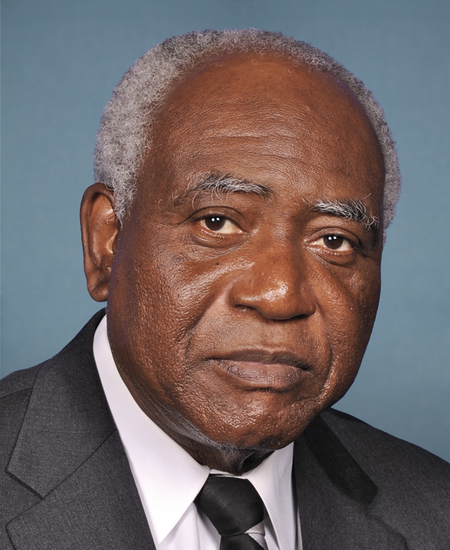
Rep. Danny K. Davis
Sponsored bills
Maddy summaryThis non-binding House resolution expresses the House's support for keeping guns out of schools by stating federal funds should not be used to arm school personnel or provide them firearm training. It references existing laws like the STOP School Violence Act (2018) and research showing arming staff does not improve safety, citing data on failed interventions and disproportionate impacts on students of color. The resolution affirms current policy guidance without creating new legal requirements. It serves as a formal statement of the House's position based on evidence and existing legislative frameworks.
Maddy summaryThis bill amends Section 1983 of federal law (42 U.S.C. 1983) to explicitly allow lawsuits against federal officials for violating constitutional rights. It directly affects federal employees or agents who act under federal authority, expanding the current Bivens doctrine which previously only covered state actors. The key mechanism is a simple textual change inserting "of the United States" before "of any State" in the statute, enabling civil actions against federal officials for constitutional violations. This is a procedural amendment to existing law, not a new policy.
Maddy summaryThe NO BAN Act (HR 9244) prohibits U.S. immigration authorities from denying visas or entry based on national origin, religion, or sex. It amends immigration law to explicitly ban such discrimination in visa decisions and tightens restrictions on the president’s power to suspend entry of certain groups under Section 212(f). The bill requires specific evidence, narrow tailoring, time limits, and congressional notification for any entry restriction, while mandating public reports on visa denials and waivers. It directly affects nonimmigrant visa applicants (e.g., students, workers) and federal agencies administering immigration policy.
Maddy summaryHRES 1394 is a non-binding resolution celebrating the U.S.-India partnership based on shared democratic values, religious pluralism, and human rights, while highlighting the contributions of the Indian diaspora in the United States. It specifically recognizes the 50th anniversary of BAPS Swaminarayan Sanstha's community work, including its spiritual centers (mandirs) and volunteer efforts across the country. The resolution does not create legal obligations but formally acknowledges these ties and achievements.
Maddy summaryThis bill permanently removes a 2026 expiration date for a tax exclusion allowing employers to pay employees' student loans through educational assistance programs without those payments being counted as taxable income. It directly affects employees who receive employer-sponsored student loan repayment assistance and employers offering such programs. The key provision amends the Internal Revenue Code to make this tax exclusion permanent, applying to all future payments made after the bill's enactment. This change simplifies the tax treatment for both employers and employees participating in these student loan repayment programs.
Maddy summaryH.J. Res. 193 proposes a constitutional amendment to eliminate legal immunity for federal officials, including the President, from criminal prosecution for actions taken while performing official duties. It also prohibits the President from granting a pardon to themselves. The amendment would apply to all federal officers (such as the President, Vice President, and members of Congress) except for Congress members acting in their legislative role as defined in the Constitution. If ratified by 38 states, this change would become part of the U.S. Constitution, requiring no further congressional action.
Maddy summaryHRES 1381 is a symbolic resolution that commemorates the United States Olympic and Paralympic Teams' historical achievements, including over 5,300 total medals across past Games. It expresses congressional support for U.S. athletes competing in the 2024 Summer Olympics and Paralympics in Paris, France, and commends the Government of France for hosting the events. The resolution also commits to ensuring a safe environment for the 2028 Los Angeles Olympic and Paralympic Games. As a non-binding expression of support, it does not create new laws or allocate funds.
Maddy summaryHR 6362, the Protecting Benefits for Disabled Veterans Act of 2023, allows the VA to assign a total disability rating to veterans with service-connected disabilities who cannot work due to those conditions. It specifies that veterans qualify if they have one disability rated at least 60% or multiple disabilities totaling 70% (with at least one at 40%), and the VA must consider certain disability combinations as a single condition. The bill prohibits the VA from considering a veteran’s age or Social Security benefits when making this determination, and clarifies that veterans maintaining marginal employment (below the poverty threshold) may still qualify for total disability. This change directly affects disabled veterans seeking full benefits by providing clearer pathways to qualify for total disability ratings based on employment impact.
Maddy summaryThe Revitalizing Downtowns and Main Streets Act creates a 20% tax credit for converting non-residential buildings into affordable housing. To qualify, buildings must be at least 20 years old and nonresidential, with conversion costs exceeding 50% of the building's adjusted basis or $100,000. The converted housing must be rent-restricted for 30 years for residents earning 80% or less of area median income (60% in certain designated areas), with a $12 billion national credit limit. Special provisions apply for economically distressed areas and rural historic preservation projects, primarily affecting developers who convert vacant commercial buildings in downtown or main street areas into affordable housing.