

Maddy summaryThis bill amends the International Emergency Economic Powers Act to explicitly prohibit the President from using emergency powers to impose import taxes (tariffs), tariff-rate quotas, or other import quotas. It directly affects the President's authority under this law, removing a potential tool for trade restrictions during emergencies. The key provision inserts a new subsection (c) clarifying that the President cannot impose such import barriers through emergency authority. This is a procedural change to existing law, not a new policy affecting specific industries or individuals.
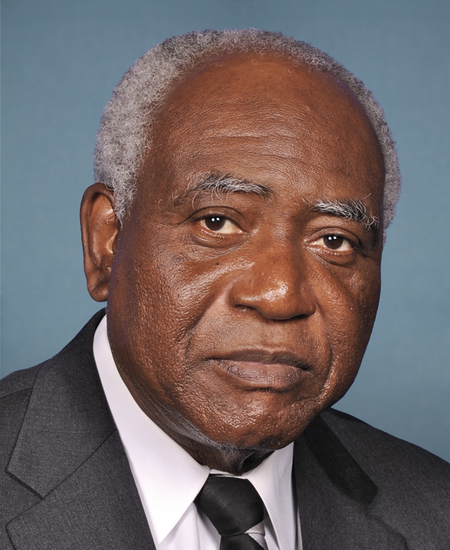
Rep. Danny K. Davis
Sponsored bills
Maddy summaryThis bill changes Medicare payment rules for specific high-cost surgical procedures performed in physicians' offices (not ambulatory surgical centers) starting in 2025. It requires Medicare to pay 90% of the amount it would pay for the same procedure in an ambulatory surgical center, rather than the current lower rate for office settings. The bill also caps patient coinsurance for these procedures at the inpatient hospital deductible amount and defines "specified high supply cost surgical procedures" based on HCPCS codes for surgeries involving medical supplies costing over $500. These changes directly affect physician offices performing qualifying procedures and Medicare beneficiaries receiving such care.
Maddy summaryHR 9061 increases federal funding to support child welfare caseworkers by raising the annual appropriation under the Social Security Act from $345 million to $385 million. It specifically boosts the reserved amount for caseworker recruitment, retention, and training from $20 million to $60 million annually, and adds a requirement to include worker safety and well-being in these efforts. The bill directly affects state child welfare agencies and their caseworkers by providing more resources to address staffing challenges. The changes take effect in the first fiscal year after enactment.
Maddy summaryHR 9063, the Legal Guardianship Inclusion Act, amends the Social Security Act to explicitly include legal guardianships within existing definitions related to foster care and support services. It updates Section 431(a)(8) by inserting "legal guardianships" before key terms like "out of the foster care system," "promote," and "processes," ensuring legal guardianship arrangements are treated equivalently to foster care placements under federal programs. This change directly affects individuals under legal guardianship who may now qualify for the same Social Security benefits and services previously only accessible through foster care systems. The bill makes a technical, definitional adjustment to clarify eligibility without creating new programs or altering benefit amounts.
Maddy summaryThis bill reauthorizes federal grants for state programs that provide family-centered substance use disorder treatment to families with children in or at risk of entering the child welfare system. It extends funding through 2029 (previously expired in 2023) and requires states to report on current/future funding sources and partnerships with treatment providers. Key changes include expanding approved evidence-based services, updating terminology from "substance abuse" to "substance use disorder" throughout the law, and adding new requirements for program evaluations and reporting on outcomes. The bill directly affects state child welfare agencies, treatment providers, and families navigating both child welfare and substance use challenges.
Maddy summaryThis bill creates federal grants to support partnerships between child welfare agencies, substance use disorder treatment providers, courts, and other community services to better serve families where parents have substance use disorders. The grants require collaborative planning and implementation to improve child safety, parental recovery, and family stability, with minimum funding of $250,000 annually for planning and $500,000-$750,000 for implementation phases. The bill allocates $60 million annually from 2024-2029 ($30 million for regional grants, $30 million for statewide grants) and establishes performance metrics focused on safety, permanency, recovery, and family well-being. It also requires states to establish protocols coordinating child welfare and substance use disorder services, with implementation beginning in 2025. The bill aims to reduce out-of-home placements for children and improve outcomes for families affected by parental substance use disorders.
Maddy summaryHR 8796, the "Stop Comstock Act," removes outdated restrictions from federal law that previously banned the distribution of materials related to contraception and abortion as "obscene" or "indecent." The bill amends Title 18 and the Tariff Act by deleting references to "indecent," "immoral," "unlawful abortion," and "procuring abortion" from provisions governing obscene materials. It clarifies that the law only prohibits "obscene materials" in commerce, eliminating broad restrictions on reproductive health information. This directly affects internet platforms, healthcare providers, and individuals sharing reproductive health resources by removing legal barriers to their distribution.
Maddy summaryThe PARENT Act of 2024 creates a federal grant program to help foster children maintain relationships with incarcerated parents. It authorizes up to $35 million annually (2026-2029) for states to develop programs supporting at least nine days of in-person visits and weekly communication between foster children and their incarcerated parents. Key requirements include revising policies to involve parents in case planning, training staff on family engagement, and covering costs for communication and visitation. The program directly affects foster children with at least one incarcerated parent and requires state child welfare and corrections agencies to partner in implementing these services.
Maddy summaryThis bill requires Medicare Advantage plans to implement electronic prior authorization systems by 2027 and publish detailed data on their approval and denial rates for medical services by 2026. It directly affects Medicare Advantage plans (private insurers offering Medicare coverage) and their enrollees (seniors 65+), mandating transparency about prior authorization decisions, processing times, and appeal outcomes. Key provisions include requiring plans to report annual statistics on request approvals/denials, average processing times, and use of technology, with this data published publicly by the Centers for Medicare & Medicaid Services. The bill also sets timelines for plan responses to prior authorization requests and mandates reports to Congress on implementation and impacts.
Maddy summaryThis bill creates a new TANF Program Integrity Unit at the Administration for Children & Families to monitor state use of Temporary Assistance for Needy Families (TANF) funds, with $10 million in annual funding added to support its operations. If a state intentionally misuses TANF funds, the unit would require the state to repay the misused amount by providing direct cash assistance to families earning below 100% of the federal poverty line. The law applies directly to states administering TANF programs, mandating stricter oversight of fund usage and repayment of misused funds. It also requires the unit to submit annual reports to Congress on its activities.