

Maddy summaryHJRES 32 is a symbolic congressional resolution expressing support for designating February 3-7, 2025, as "National School Counseling Week." It does not create new laws or funding but honors school counselors' roles in supporting students' academic, social-emotional, and career development. The resolution encourages public recognition of counselors' contributions, including helping students navigate challenges like mental health, bullying, and college readiness. It specifically references the American School Counselor Association's designation of this week and aims to raise awareness about the importance of school counseling services. The resolution has no binding effect on schools or budgets.
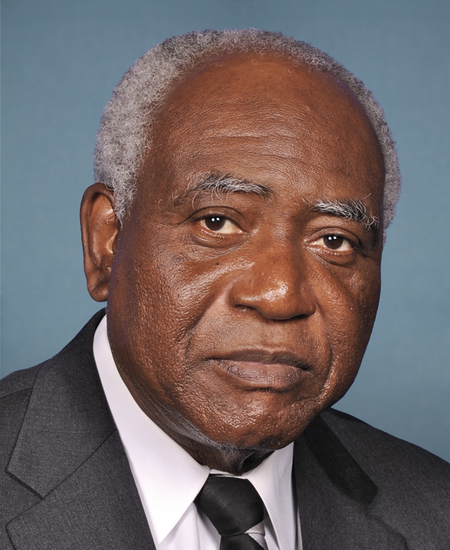
Rep. Danny K. Davis
Sponsored bills
Maddy summaryHRES 81 is a symbolic House resolution commending the Global Polio Eradication Initiative (GPEI) for reducing wild poliovirus cases by over 99.9% since 1988, from 350,000 annual cases to only Afghanistan and Pakistan currently reporting transmission as of 2024. The resolution highlights GPEI’s work protecting vulnerable children globally, including in conflict zones, and notes that polio eradication would make it only the second human disease (after smallpox) to be eliminated worldwide. It urges continued U.S. funding for GPEI and international support to achieve full global eradication, emphasizing that polio remains a threat until transmission stops everywhere.
Maddy summaryHRES 88 is a symbolic House resolution designating January 31, 2025, as "Earned Income Tax Credit Awareness Day." It supports raising public awareness about the EITC - a refundable federal tax credit for low- and moderate-income workers - and calls on government agencies, nonprofits, and employers to promote access to the credit and free tax filing assistance. The resolution does not create new law or change eligibility; it solely aims to encourage more eligible workers to claim the credit they qualify for. Approximately 20% of eligible individuals currently do not claim the EITC, per the resolution’s background statements.
Stop Antiabortion Disinformation Act or the SAD Act This bill prohibits deceptive advertising for reproductive health services. Specifically, the bill makes it unlawful for a person (i.e., individual, partnership, corporation, association, or organization) to deceptively advertise the reproductive health services they offer, including by misrepresenting that the person (1) offers or provides contraception or abortion services (or referrals for such contraception or abortion services), or (2) employs or offers access to licensed medical personnel. The bill provides for enforcement by the Federal Trade Commission. In addition to any other penalty, violations are subject to a civil penalty that may not exceed the greater of $100,000 (adjusted annually for inflation) or 50% of the revenue earned during the preceding 12-month period by the ultimate parent entity of the person who violated the bill.
Maddy summaryHR 869, the Keep Our PACT Act, mandates specific annual funding levels for two key education programs: Title I of the Elementary and Secondary Education Act (ESEA) and the Individuals with Disabilities Education Act (IDEA). For Title I, it requires funding in fiscal years 2026-2035 that equals the difference between the 2025 funding level and set annual dollar targets (e.g., $20.5 billion for 2026). For IDEA, it sets mandatory annual funding levels that gradually increase to reach 40% of the national average per-pupil expenditure for students with disabilities by 2035. The bill directly affects public school districts and students, particularly those with disabilities, by guaranteeing these funding levels rather than relying on annual appropriations.
Maddy summaryHR 844, the "Black History is American History Act," amends the Elementary and Secondary Education Act to require that Black history be included in all American history and civics education programs for K-12 students. The bill specifically adds "which shall include Black history" to multiple provisions, ensuring it becomes a standard part of curriculum standards, teacher training, and national assessments like the National Assessment of Educational Progress. This policy change directly affects public school curricula, educators, and students across the U.S. by mandating historically accurate instruction on African American contributions as integral to American history. The bill references the National Museum of African American History and Culture as a resource provider for educators implementing these changes.
Maddy summaryHCONRES 4 is a symbolic resolution expressing Congress's support for tax-exempt fraternal benefit societies (like mutual aid organizations). It recognizes these groups, which have over 7 million members nationwide, as historically and currently providing critical community benefits - including life/health insurance, charitable work, and volunteer services - valued at over $3.8 billion annually. The resolution affirms that their tax-exempt status under Section 501(c)(8) of the Internal Revenue Code remains beneficial and should continue to be promoted. This is a non-binding expression of congressional sentiment, not a policy change.
Maddy summaryThis resolution expresses the House of Representatives' position that Congress should take steps to prevent the privatization of the United States Postal Service (USPS), ensuring it remains a federal independent agency. It highlights USPS’s constitutional role, self-sustaining nature (relying on service revenue, not taxpayer funds), and critical functions - serving 168 million addresses daily, supporting rural communities, and underpinning e-commerce. The resolution opposes privatization, noting it would raise prices, reduce services, and harm the $1.9 trillion mailing industry. As a non-binding resolution, it reflects the House’s stance but does not create new law or policy.
Maddy summaryHR 764, the Global Health, Empowerment and Rights Act, removes two barriers for foreign nongovernmental organizations (NGOs) seeking U.S. foreign assistance. It ensures these organizations cannot be denied funding solely because they provide health services (like counseling and referrals) using non-U.S. government funds, as long as those services comply with local laws. The bill also requires that foreign NGOs face the same rules on using non-U.S. funds for advocacy and lobbying as U.S. NGOs receiving similar aid. This directly affects international health-focused NGOs working in countries where U.S. aid is provided.
Mentoring to Succeed Act of 2025 This bill establishes grants to support mentoring programs for eligible youth (e.g., in-school youth, out-of-school youth, or youth who are failing academically or who meet specified criteria). Specifically, the bill directs the Department of Labor to award competitive grants for certain community-based organizations or partnerships involving community-based organizations to (1) establish, expand, or support mentoring programs; (2) assist eligible youth enrolled in secondary schools in developing cognitive and social-emotional skills; and (3) prepare eligible youth for success in high school, postsecondary education, and the workforce. Additionally, Labor must work with the Department of Justice's Office of Juvenile Justice and Delinquency Prevention and the Department of Education to (1) refer grant recipients to the National Mentoring Resource Center to obtain mentoring resources, and (2) provide grant recipients with information regarding transitional services for eligible youth returning from correctional facilities and transition services for students with disabilities. The bill also requires Labor's Chief Evaluation Office to study and report on mentoring programs.