

Maddy summaryThis bill amends Section 287(g) of immigration law to restrict immigration enforcement authority exclusively to U.S. Immigration and Customs Enforcement (ICE) officers and DHS employees. It removes state and local law enforcement agencies' ability to verify immigration status, investigate, or arrest individuals for immigration violations under current 287(g) agreements. The change directly affects local police departments that previously participated in immigration enforcement through federal partnerships. The bill does not create new policies but alters existing authority to limit enforcement to federal officers only.
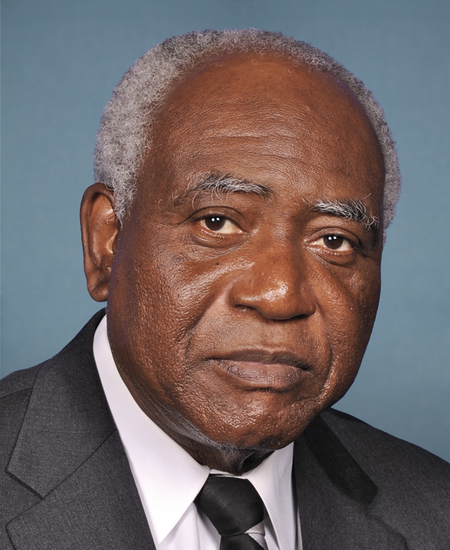
Rep. Danny K. Davis
Sponsored bills
Maddy summaryThis bill amends the Servicemembers Civil Relief Act to create a new 6% interest rate cap for student loan consolidation or refinancing. Specifically, it limits interest to 6% on loans consolidated or refinanced during military service to cover student debt incurred *before* service (not new debt during service). This applies to active-duty servicemembers (or jointly with their spouse) who refinance pre-service loans while serving. The change affects how military members manage existing student debt during their service, without altering interest rates on other loans or providing debt forgiveness.
Maddy summaryHRES 955 is a symbolic House resolution recognizing the importance of maintaining U.S. leadership in ending pediatric HIV/AIDS globally. It affirms support for existing programs like PEPFAR and the Global Fund, which provide critical prevention services (e.g., antiretroviral prophylaxis for pregnant women) and treatment for children. The resolution specifically calls for continued commitment to closing the treatment gap for children, expanding access to long-acting prevention methods, and advancing the Global Alliance to End AIDS in Children by 2030. As a recognition measure, it does not create new laws or allocate funding but underscores ongoing U.S. efforts to prevent mother-to-child transmission and improve pediatric HIV outcomes.
Maddy summaryThe Schedules That Work Act would require employers in retail, food service, hospitality, cleaning, and warehouse sectors to provide workers with 14 days' advance notice of their schedules and pay predictability wages for last-minute changes. It allows employees to request schedule changes related to caregiving responsibilities, health conditions, education, or other jobs, with employers required to engage in good-faith discussions about such requests. The bill prohibits retaliation against employees who request schedule changes and mandates written notice of schedule changes and predictability pay. It applies to employers with 15 or more employees in covered sectors, aiming to address widespread issues with unpredictable schedules that negatively impact workers' ability to care for family members, maintain housing stability, and access health care.
Maddy summaryThe Calumet National Heritage Area Act designates a specific region in Indiana and Illinois (including parts of three Indiana counties and portions of two Illinois counties) as a National Heritage Area to preserve its cultural, historical, and natural resources. This designation directly affects local communities, organizations like the Calumet Heritage Partnership (which will coordinate efforts), and federal agencies managing the program. The bill requires the local entity to create a management plan within three years and authorizes federal assistance for up to 15 years to support conservation, education, and tourism initiatives. It focuses on protecting the area’s industrial heritage, ecological sites like Indiana Dunes National Park, and immigrant cultural history without creating new federal funding or regulatory requirements.
Essential Caregivers Act of 2025 This bill prohibits certain health care facilities from limiting the access of essential caregivers to residents of those facilities, including during designated emergency periods. Specifically, the bill generally prohibits Medicare skilled nursing facilities, Medicaid nursing facilities, Medicaid intermediate care facilities, and associated inpatient rehabilitation facilities from restricting the access of essential caregivers to residents of the facilities, including during emergency periods in which visitation rights are otherwise restricted. During emergency periods, facilities may restrict access for an initial period of up to seven days and for one additional maximum seven-day period (if the additional period is approved by the state health department). Facilities may restrict access for a total of 7 days (or 14 days with the approval of the state health department) during an emergency period. Essential caregivers must agree to comply with any safety protocols set by the facility, which may be no more stringent for caregivers compared to those for staff. Caregivers who fail to comply with these requirements may be denied access, subject to an appeals process.
Maddy summaryThis bill amends a section of federal law to change the reference from "the White House" to "the People's White House" in a specific legal citation (Section 307104 of Title 54, U.S. Code). It is a purely procedural change to the text of the law, not a substantive policy shift. The bill does not alter historic preservation standards, protections, or funding for the White House grounds. It simply updates the formal name used within the legal code.
Maddy summaryThe UPLIFT Act creates a new federal tax credit for households with high residential energy costs. It allows individuals to claim up to $1,200 (or $2,400 for joint returns) annually for electricity, natural gas, or propane used in their primary U.S. home, but only when average energy prices exceed 102% of the prior year's level. The credit phases out for taxpayers earning over $75,000 (single) or $150,000 (joint), and refunds won't count as income for means-tested programs like SNAP. This directly affects renters and homeowners with qualifying energy expenses in their primary residence.
Maddy summaryHR 6769 establishes a federal grant program to fund the complete destruction of firearms by state, tribal, and local governments. Eligible entities must submit applications detailing how they will fully destroy all firearm parts (including frames, barrels, and accessories) and maintain records, with grants covering equipment, contracted services, and staff training. The program allocates $15 million annually from 2026-2031, requiring grantees to use no more than 10% of funds for administration and reserving one-third of funding for small urban or rural areas. All grant recipients must provide documented proof of destruction through written policies and verified records. This is a direct funding mechanism for firearm disposal, not a crime-reduction measure.
Maddy summaryThis bill establishes a framework for automatic retirement savings plans, requiring most employers to automatically enroll employees in Individual Retirement Arrangements (IRAs) with the option to opt out. Employees would be automatically enrolled at 6% of their salary in the first year, increasing to 10% over time, with employers making contributions and providing default investment options. Employers who fail to implement these plans would face a $10 daily penalty per employee, though small businesses with fewer than 10 employees are exempt. The bill also creates a $500 annual tax credit for small employers to help offset implementation costs during the first three years of participation.