

Maddy summaryHR 5658, the Child Care for Every Community Act, establishes a federal framework to create universal, high-quality child care and early learning programs available to all young children not yet required to attend school. The bill requires that covered children (children below compulsory school age) be entitled to participate in these programs, with no fees for low-income families and sliding-scale fees for others based on family income. Key provisions include requiring full-working-day, full-calendar-year care; setting national quality standards for staff qualifications and facilities; mandating comprehensive services including health, nutrition, and family support; and requiring coordination with schools to support children's transitions to kindergarten. The bill directly affects families seeking child care, child care providers, and local communities that would administer these programs through designated "prime sponsors."
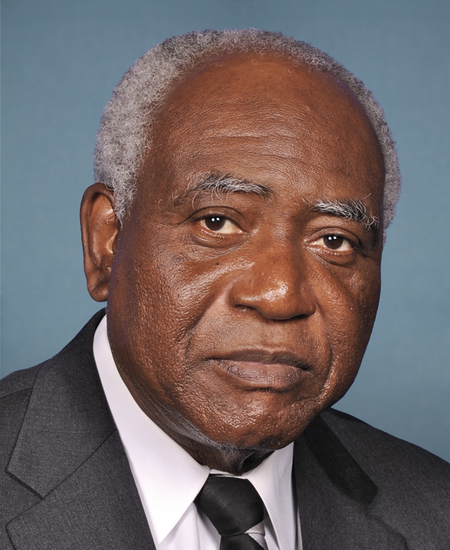
Rep. Danny K. Davis
Sponsored bills
Maddy summaryThis bill amends federal energy conservation law to require federal agencies to consider mechanical insulation as a standard energy-saving measure during building evaluations. It defines "mechanical insulation property" as materials that reduce energy loss in mechanical systems while meeting ASHRAE 90.1 standards, including insulation placed in service with those systems. The law adds mechanical insulation to the list of measures agencies must evaluate for potential installation in federal buildings as part of their required energy and water assessments. This directly affects federal agencies managing buildings, ensuring they formally assess this specific efficiency measure during routine evaluations.
Maddy summaryThis bill creates a tax exclusion for certain disaster mitigation payments received by property owners. It allows individuals to exclude from gross income funds paid by state programs (or approved entities) to make improvements that reduce damage from windstorms, earthquakes, or wildfires. The exclusion applies to payments made for specific property upgrades like storm shutters or fire-resistant roofing. The change takes effect for 2021+ tax years and includes a retroactive option for taxpayers to amend prior returns. It directly affects homeowners participating in qualifying state disaster resilience programs.
Maddy summaryThis symbolic resolution honors school counselors' contributions and encourages Americans to observe National School Counseling Week (February 2-6, 2026) through public activities. It has no funding or policy changes - it simply expresses congressional support for recognizing school counselors' role in student development. The resolution acknowledges their work in academic, social-emotional, and career guidance but does not alter any existing laws or resources. It directly affects public awareness, not school counseling programs or budgets.
Maddy summaryHRES 973 is a House resolution stating that redesignating the John F. Kennedy Center for the Performing Arts as the "Donald J. Trump and the John F. Kennedy Memorial Center" violates the 1964 John F. Kennedy Center Act, which prohibits additional memorials at the site and designates it as the sole national memorial to President Kennedy. The resolution demands the restoration of the original signage and requires President Trump-appointed board members to resign, citing the lack of congressional authorization for the name change. It directly addresses the Kennedy Center's Board of Trustees and the Trump administration's actions, referencing the specific legal prohibition in Public Law 88-260. The resolution expresses the House's position but does not impose legal requirements.
Maddy summaryHJRES 144 is a congressional disapproval resolution targeting a specific rule issued by the Department of Veterans Affairs (VA) on December 31, 2025, which addressed "Reproductive Health Services" (90 Fed. Reg. 61310). This resolution directs Congress to disapprove the VA rule under Chapter 8 of Title 5, U.S. Code, meaning the rule would have no legal effect if passed. The bill directly affects the VA's implementation of reproductive health services for veterans, as it seeks to nullify the agency's existing policy. This is a procedural measure, not a substantive policy change, aimed solely at blocking the VA's rule through congressional action.
Maddy summaryHR 7238 establishes a Commission to investigate historical discrimination against LGBTQ+ service members in the military, including policies that led to discharges and denied benefits. The Commission will gather testimonies from affected veterans and servicemembers, study impacts on mental health, benefits access, and force readiness, and recommend remedies like record corrections and compensation. This bill directly affects LGBTQ+ veterans and current service members who faced discharge or denial of care due to their sexual orientation or gender identity. The Commission must submit a final report to Congress within one year, outlining findings and proposed actions.
Maddy summaryHCONRES 68 would require the President to remove U.S. military forces from Venezuela unless Congress has explicitly authorized their use through a declaration of war or a specific law. This applies to any U.S. Armed Forces currently stationed in Venezuela without such authorization. The resolution is based on the War Powers Resolution, which mandates congressional oversight of military deployments. It directs the immediate withdrawal of unapproved forces without adding new time limits or conditions.
Maddy summaryThe Language Access for All Act of 2026 requires federal agencies to ensure meaningful access to government services for people with limited English proficiency (LEP). Agencies must translate vital documents into languages commonly spoken in the U.S. (based on Census data), provide multilingual digital tools, interpretation services, and use bilingual staff as an alternative to professional interpreters. Each agency must create a language access plan within one year, detailing how it will serve LEP populations - including during emergencies - and annually certify compliance with technical standards. Noncompliance is treated as discrimination under civil rights law, with enforcement by the Department of Justice.
Maddy summaryHR 7190 would end immigration detention and electronic monitoring by requiring the immediate release of all detained noncitizens on their own recognizance within six months and repealing all federal laws authorizing detention. It prohibits using federal funds for detention facilities, ankle monitors, or immigration enforcement activities after specific deadlines (six months for monitors, two years for detention contracts). Instead, it establishes a new grant program to fund community-based wrap-around services - including housing, healthcare, mental health support, legal aid, and job training - provided voluntarily by non-profit organizations without surveillance or data sharing with federal agencies. The bill directly affects noncitizens currently held in detention or under electronic monitoring.