

Patriotic Corporations of America Act of 2021 This bill establishes new requirements for federal contracts, including Department of Defense contracts, with respect to issues of labor, environmental sustainability, taxes, and private equity firms. Specifically, the bill prohibits an executive agency from awarding a contract unless the offeror, among other requirements pays employees wages that meet certain minimums; agrees to sign a neutrality agreement with respect to efforts to form a labor organization and an agreement not to hire replacement workers in any strike; submits to the agency an actionable plan to address natural disasters and health crises, including policies and plans for paid family and medical leave and for whistleblower protections; and submits to the agency an actionable plan to recruit and promote people of color, women, LGBTQ+ people, people with disabilities, and veterans. The bill sets forth additional provisions to assure that the offeror meets specified requirements with respect to the payment of environmental penalties, federal income tax liability and financial performance, and a controlling private equity firm meeting certain labor and environmental requirements. The bill establishes specified contract preferences (e.g., in favor of an offeror that does not outsource jobs outside the United States and that has a collective bargaining agreement with employees).
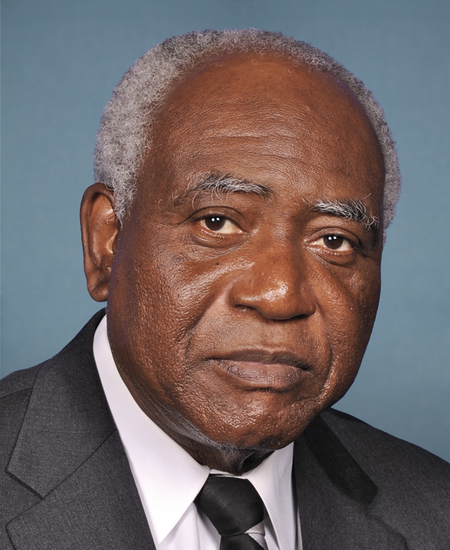
Rep. Danny K. Davis
Sponsored bills
Expand American Educational Opportunity Act of 2021 This bill replaces the Hope Scholarship and Lifetime Learning tax credits with a modified American Opportunity Tax Credit that (1) allows an income tax credit of up to $2,500 of the qualified tuition and related expenses of a student who is carrying at least one half of a normal course load, (2) allows a lifetime dollar limitation for the credit of $15,000 for all taxable years, and (3) increases the refundable portion of the credit to a maximum of $1,500. The bill defines qualified tuition and related expenses as tuition, fees, computer or peripheral equipment, child and dependent care expenses, and course materials for the taxpayer, the taxpayer's spouse, and dependents at certain postsecondary educational institutions. The bill also allows an exclusion from gross income, for income tax purposes, of any amount received as a Federal Pell Grant.
Better Care Better Jobs Act This bill establishes programs and provides funds for state Medicaid programs to improve home- and community-based services (HCBS), such as home health care, personal care, case management, and rehabilitative services. Specifically, the bill provides funds for the Centers for Medicare & Medicaid Services to award planning grants, develop quality measures, and provide technical assistance to states regarding specified HCBS improvements, particularly with respect to access, utilization, and the associated workforce. The bill also increases the Federal Medical Assistance Percentage (i.e., federal matching rate) for HCBS in states that develop plans and meet specified benchmarks for improvements. The bill also makes permanent (1) the Money Follows the Person Rebalancing Demonstration Program (a grant program to help states increase the use of HCBS for long-term care and decrease the use of institutional care), and (2) certain provisions regarding Medicaid eligibility that protect against spousal impoverishment for recipients of HCBS.
Developing an Innovative Strategy for Antimicrobial Resistant Microorganisms Act of 2021 or the DISARM Act of 2021 This bill requires additional payment under Medicare's inpatient prospective payment system for services that involve certain antimicrobial drugs, in accordance with specified limitations. Additionally, the Government Accountability Office must report on the barriers to developing such antimicrobial drugs and must recommend ways to address such barriers.
Therapeutic Fraud Prevention Act of 20 21 This bill prohibits commercial conversion therapy, which is a practice or treatment designed to change a person's sexual orientation or gender identity or otherwise change behaviors, thoughts, or expressions related to gender or sexual attraction. This prohibition does not apply to treatment that assists an individual undergoing a gender transition or facilitates identity exploration and development.
Insulin Access for All Act of 2021 This bill prohibits cost-sharing (e.g., copayments) under Medicaid and the Medicare prescription drug benefit for insulin and associated medical supplies.
This resolution recognizes the challenges posed by sickle cell trait and sickle cell disease and encourages relevant screening, research, and surveillance. Sickle cell disease is a group of inherited disorders that cause abnormally shaped red blood cells.
This resolution expresses support for the goals and ideals of Sickle Cell Disease Awareness Month. Sickle cell disease is an inherited blood disorder than can lead to pain, anemia, infections, and stroke.
Know Your Social Security Act This bill requires the Social Security Administration to provide Social Security account statements by mail to each individual who is 25 or older and who is eligible for, but not currently receiving, Social Security retirement benefits. Individuals may choose to receive their account statements electronically.
Promotion and Expansion of Private Employee Ownership Act of 2021 This bill expands tax incentives and federal assistance for employee stock ownership plans (ESOPs) that are sponsored by S corporations. The bill provides additional tax incentives for ESOPs by (1) extending to all domestic corporations, including S corporations, provisions allowing deferral of tax on gain from the sale of employer securities to an ESOP; and (2) allowing a tax deduction for 50% of the interest received by a bank on loans to S corporation-sponsored ESOPs for the purchase of employer securities. The Department of the Treasury must establish the S Corporation Employee Ownership Assistance Office to foster increased employee ownership of S corporations. The bill defines an ESOP business concern for purposes of the Small Business Act as a business concern that was eligible for a loan, preference, or other program under such Act before more than 49% of the business concern was acquired by an ESOP.