

This concurrent resolution declares that Congress should not impose any new performance fee, tax, royalty, or other charge relating to the public performance of sound recordings on a local radio station for broadcasting sound recordings over the air, or on any business for such public performance of sound recordings.
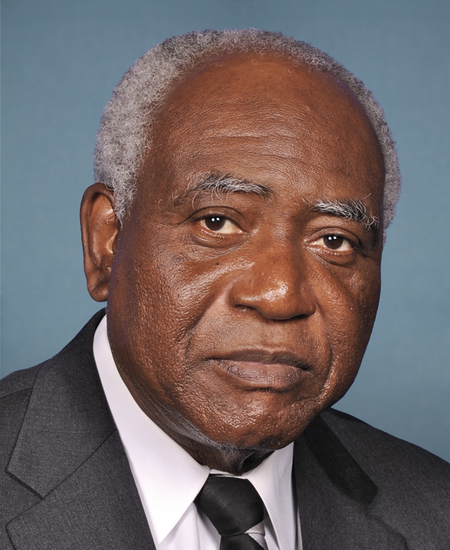
Rep. Danny K. Davis
Sponsored bills
Maddy summaryHRES 785 is a symbolic resolution designating November 8, 2021, as "National First-Generation College Celebration Day." It urges all Americans to celebrate this day, recognize the contributions of first-generation college students (those whose parents did not earn bachelor's degrees), and honor the Higher Education Act of 1965. The resolution highlights existing federal programs like TRIO and Pell Grants that support underrepresented students but does not create new laws or funding. As a non-binding resolution, it has no direct policy impact but aims to raise awareness about first-generation students' challenges and achievements.
Early Childhood Nutrition Improvement Act This bill makes various changes to the Child and Adult Care Food Program, which reimburses child care centers, day care homes, and other sites for meals and snacks provided to low-income individuals. Among these changes, the bill authorizes reimbursements for an additional meal or snack provided to children who are in care for at least eight hours, allows certain child care centers to certify their eligibility on an annual (rather than a monthly) basis, and establishes an advisory committee to make recommendations to reduce unnecessary recordkeeping requirements for program participants.
Sarah Keys Evans Congressional Gold Medal Act This bill provides for the award of a Congressional Gold Medal to Sarah Keys Evans in recognition of her achievements relating to the desegregation of passengers on interstate buses in the 1950s.
Honoring Our Promises through Expedition for Afghan SIVs Act of 2021 or the HOPE for Afghan SIVs Act of 2021 This bill authorizes the Department of State and the Department of Homeland Security (DHS) to postpone the medical exam requirement for qualifying citizens or nationals of Afghanistan seeking entry into the United States as special immigrants. Specifically, this bill applies to an existing program that provides special immigrant status to an individual (or the spouse or child of such an individual) who (1) faithfully performed sensitive and trusted duties for the U.S. government or the International Security Assistance Force in Afghanistan on or after October 7, 2001, and (2) has experienced or is experiencing an ongoing serious threat due to the performance of those duties. Under this bill, the State Department and DHS may jointly issue a blanket waiver of any requirement for such individuals to undergo a medical exam before admission into the United States. DHS shall ensure, to the greatest extent practicable, that individuals admitted under such a waiver undergo medical exams no later than 30 days after admission into the United States. Such an individual shall be admitted as a conditional permanent resident. DHS shall remove the conditions once the individual receives and passes a medical examination.
Untraceable Firearms Act of 2021 This bill establishes a federal statutory framework to regulate the manufacture, sale, offer to sell, transfer, purchase, and receipt of ghost guns (i.e., guns without serial numbers). Additionally, the bill revises the federal statutory framework regulating the manufacture, possession, sale, import, shipment, delivery, receipt, and transfer of undetectable firearms. Among the revisions, the bill defines undetectable firearm as a firearm without a major component wholly made of detectable material.
Raise the Age Act This bill establishes new restrictions on the sale or transfer of certain semiautomatic firearms to individuals under 21 years of age. Specifically, this bill makes it unlawful for a licensed gun dealer, importer, manufacturer, or collector to sell or deliver a semiautomatic center-fire rifle that has (or has the capacity to accept) an ammunition feeding device with a capacity of more than five rounds to an individual who the licensee knows or has reasonable cause to believe is under age 21. The prohibition does not apply if the individual under age 21 is a full-time law enforcement officer or active-duty member of the Armed Forces. The bill also requires the Federal Bureau of Investigation to report on the operation of its public access line, including a description of information sharing protocols and recommendations for improving such protocols.
Student Loan Borrower Safety Net Act of 2021 This bill requires the Department of Education (ED) to carry out a program to notify borrowers that normal payment obligations on their federal student loans will resume. Not later than 60 days before payment obligations are no longer suspended (as determined by ED), ED must provide at least six notices to borrowers indicating that their payment obligations will resume. These notices must also indicate the options for (1) enrolling in income-driven repayment plans, and (2) rehabilitating or consolidating loans. ED must provide priority notification to certain borrowers, including those who missed a payment in the first three months of entering repayment on a loan. The bill allows borrowers to (1) submit an application or reapplication for an income-contingent or income-based repayment plan and self-certify their income and family size, (2) change their repayment plan without a fee, and (3) apply for an economic hardship deferment. If a borrower misses a payment or payments on a loan during the 60 days after the payment suspension ends, then the loan must be held in administrative forbearance for 90 days.
Rural Health Fairness in Competition Act This bill requires the Centers for Medicare & Medicaid Services (CMS) to establish a Medicare Rural Health Clinic Value-Based Care Program that exempts certain rural health clinics (e.g., those participating in Medicare quality programs) from payment limitations if they meet reporting requirements relating to quality measures and performance standards, as set by the CMS.
Protection of Social Security Benefits Restoration Act This bill prohibits the application of, and repeals authority for, administrative offsets to Social Security, railroad retirement, and black lung benefits. (An administrative offset is the withholding of funds payable by or held by the United States to satisfy a debt.)