

Presidential Tax Filings and Audit Transparency Act of 2022 This bill requires the Internal Revenue Service (IRS) to conduct an examination to determine the correctness of a Presidential income tax return as rapidly as practicable after it is filed. The IRS must disclose and make publicly available (on the internet) an initial report, periodic reports, and a final report on the examination of such tax returns. The final report must include the date on which the IRS examination of the return was completed, a list of audit materials, and a description of each proposed adjustment to a return and any controversy relating to its examination. This disclosure of tax return information is an exception to the general rule of confidentiality of taxpayer returns. The bill provides criteria for approving a request for an extension of the filing of a tax return and for failing to file a return within the required time period. The bill defines Presidential income tax return as any relevant income tax return of (1) a president while the president is in office, (2) the spouse of a president, (3) a corporation or partnership controlled by a president or a president's spouse, and (4) the estate of a president or a president's spouse.
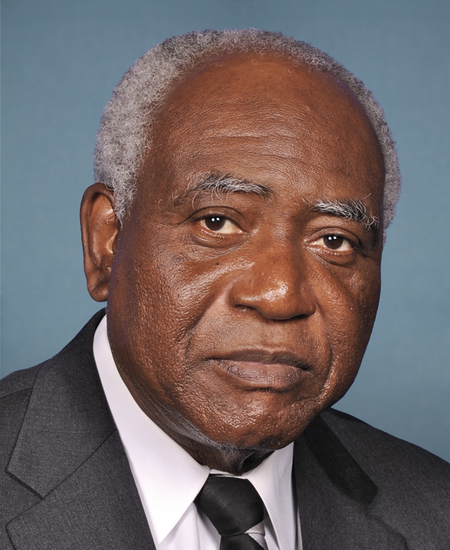
Rep. Danny K. Davis
Sponsored bills
Earl N. Williams, Sr., First Chance Act This bill expands the TRIO Student Support Services Program to include grants to students at institutions of higher education for basic and emergency supplemental living assistance.
Protecting Foster Youth Resources to Promote Self-Sufficiency Act This bill addresses matters concerning Social Security benefit and Supplemental Security Income (SSI) payments for children in foster care, including by (1) prohibiting states from using payments that are received on behalf of a child in foster care to recoup or recover costs associated with the child's foster care, and (2) excluding any support received by a child in foster care from income calculations for purposes of SSI.
Expanding the Voluntary Opportunities for Translations in Elections Act or the Expanding the VOTE Act This bill expands access to voting materials for individuals with limited proficiency in the English language, including by establishing incentive grants for states and political subdivisions to provide translated voting materials. Additionally, the bill directs the Government Accountability Office to study the impact of (1) reducing the threshold requirement under Section 203 of the Voting Rights Act of 1965, and (2) expanding the definition of language minorities to include native speakers of additional languages.
Real Courts, Rule of Law Act of 2022 This bill establishes the U.S. Immigration Courts, a system of courts to be independent of the executive branch. The bill also transfers all functions of the Executive Office for Immigration Review (EOIR) to the Immigration Courts, with some exceptions. (Currently, the EOIR, located in the Department of Justice, has authority to adjudicate immigration cases.) The trial division of the Immigration Courts shall have jurisdiction over various immigration-related matters, including (1) removal proceedings, (2) reviews of rescissions of lawful permanent resident status, and (3) reviews of credible fear determinations in applications for refugee status. The appellate division shall have jurisdiction over appeals of decisions by the trial division and certain Department of Homeland Security determinations. The bill establishes various requirements and authorities relating to the Immigration Courts, including qualifications, length of term in office, and mandatory retirement age for judges. Each appellate division judge must be appointed by the President with the advice and consent of the Senate, and the appellate division shall appoint the trial division judges.
Big Cat Public Safety Act This act revises requirements governing the trade of big cats (i.e., species of lion, tiger, leopard, cheetah, jaguar, or cougar or any hybrid of such species) under the Lacey Act to limit the possession, breeding, and exhibition of big cats. The Lacey Act prohibits any person from importing, exporting, buying, selling, transporting, receiving, or acquiring big cats across state lines or the U.S. border. However, some exemptions are provided for certain entities, such as universities and wildlife sanctuaries. (Sec. 3) The act expands the Lacey Act prohibitions to include a prohibition on possessing or breeding big cats. Breeding means facilitating propagation or reproduction (whether intentionally or negligently), or failing to prevent propagation or reproduction. Owners of big cats that were born before this act's enactment may keep their big cats, but the owners must register them with the U.S. Fish and Wildlife Service. The act modifies the list of entities that are exempt from prohibitions to export, buy, sell, transport, receive, acquire, possess, or breed big cats. The modified list includes exemptions for entities or facilities exhibiting animals to the public if they (1) hold a Class C license in good standing under the Animal Welfare Act, and (2) do not allow individuals to come into direct physical contact with big cats. However, direct contact is allowed if the individual is a trained professional, a veterinarian, or directly supporting conservation programs that do not involve commercial activities and meet other specified restrictions. (Sec. 4) A person who knowingly violates the act must be fined not more than $20,000, or imprisoned for no more than five years, or both. The act considers each violation to be a separate offense. The offense must be deemed to have been committed not only in the district where the violation first occurred, but also in any district in which the defendant may have taken or been in possession of the prohibited wildlife species. (Sec. 5) The act extends forfeiture provisions to fish, wildlife, or plants that are bred or possessed; thus, big cats bred or possessed in violation of the act are subject to forfeiture. (Sec. 6) The Department of the Interior must issue regulations to implement this act.
This act designates the facility of the United States Postal Service located at 303 East Mississippi Avenue in Elwood, Illinois, as the Lawrence M. "Larry" Walsh Sr. Post Office.
Rebuild America's Schools Act of 2022 This bill provides support for long-term improvements to public elementary and secondary school facilities. First, the bill sets forth allocations to states and establishes a need-based grant program for local educational agencies (LEAs) to improve school facilities. Further, the bill specifies allowable uses of grant funds, including carrying out major repairs, improving indoor air quality, and making facilities accessible to disabled individuals. Additionally, the bill requires LEAs that receive funds for new construction, modernization, or renovation projects to comply with hazard-resistance building codes and performance criteria under the WaterSense program of the Environmental Protection Agency. Further, the bill requires such LEAs to adopt certain green practices (environmental standards) and requires the use of iron, steel, and manufactured products that are made in the United States (Buy America). The bill restores school infrastructure tax credit bonds. The bill also sets forth reporting requirements, including annual reports on grant program projects and a report by the Government Accountability Office that requires a study of the geographic distribution of projects, the impact of selected projects on student and staff health and safety, and the accessibility of projects to high-poverty schools. The bill also establishes the Office of School Infrastructure and Sustainability within the Department of Education. Next, the bill extends through FY2027 the Impact Aid Construction program. Finally, the bill establishes a grant program to assist LEAs with repairing or replacing concrete foundations affected by pyrrhotite (an iron sulfide material linked to crumbling foundations).
Maddy summaryHRES 1525 is a non-binding House resolution condemning antisemitism spread by public figures, celebrities, and officials on social media. It cites the Anti-Defamation League’s report of 2,717 antisemitic incidents in 2021 (a 34% increase from 2020) and urges influential people to use their platforms to speak out against antisemitism. The resolution calls for unity with Jewish communities and emphasizes the need for Holocaust education to combat rising hate. As a symbolic measure, it does not create new laws or penalties but formally expresses the House’s stance against antisemitic rhetoric.
Resilience Investment, Support, and Expansion from Trauma Act or the RISE from Trauma Act This bill establishes and extends various programs to support infants, children, youth, and families who have experienced, or may experience, trauma. Specifically, the bill allows federal agencies to use specified discretionary funds to implement pilot projects to improve outcomes for children experiencing trauma. It also requires the Department of Health and Human Services to provide tool kits and other guidance to train frontline service providers and certain community members about trauma, toxic stress, and resilience. In addition, the Department of Justice (DOJ) must establish a national center to disseminate to law enforcement agencies best practices and other assistance to enhance interactions with infants, children, youth, and families who are exposed to violence and trauma. Furthermore, the bill establishes grants for multi-sector demonstration projects to prevent and mitigate trauma and toxic stress; interventions to improve outcomes for hospital patients who experience drug overdoses, suicide attempts, or violent injury; and clinical training in infant and early childhood mental health. The bill also authorizes DOJ grants to reduce violence and substance use by preventing children's trauma from exposure to violence and substance use. Additionally, it incorporates trauma-informed practices and otherwise addresses trauma in programs for health care professional education, increasing access to health services, and training for educators.