

Maddy summaryThe WIC for Kids Act expands eligibility for the Special Supplemental Nutrition Program for Women, Infants, and Children (WIC) by adding new qualifying pathways. It allows children to qualify if they live in households where someone receives Head Start, Indian reservation food assistance, or Puerto Rico/Northern Mariana Islands nutrition block grants, and streamlines documentation by permitting states to use existing records. The bill extends certification periods for children from one to two years and automatically enrolls infants born to current WIC participants. This directly affects low-income families with children who qualify for related assistance programs but previously faced barriers to WIC access.
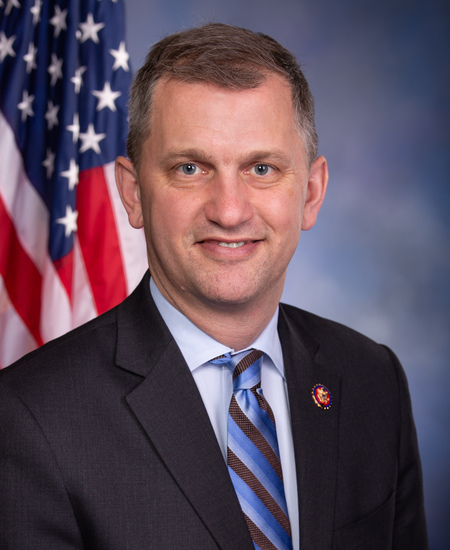
Rep. Sean Casten
Sponsored bills
Maddy summaryThis bill requires federal financial regulators (like the Fed and Consumer Bureau) to create guidance for banks within 180 days of enactment. The guidance directs banks to help consumers and businesses affected by government shutdowns - including furloughed federal workers, DC employees without pay, and contractors with reduced income - by adjusting loan terms, preventing payment hardships, and stopping negative credit reporting during temporary financial difficulties. Banks must also immediately notify regulators, consumers, and businesses if a shutdown begins. After a shutdown ends, regulators must report to Congress on the guidance's effectiveness and update it within 180 days if needed.
Maddy summaryHR 5097 establishes new federal funding programs to support the development of alternative proteins - foods that mimic animal meat using plants, cell cultivation, or fermentation. It allocates $15 million annually (2024-2028) for Centers of Excellence focused on research and workforce training, $10 million for USDA research, $50 million for manufacturing grants to U.S. companies and institutions, and $25 million for workforce development programs. The bill requires the USDA to create a national strategy coordinating multiple federal agencies to advance this sector. These provisions directly affect U.S. businesses, universities, and workers in the alternative protein industry by providing targeted funding for research, production, and job training.
Maddy summaryThis bill amends the Higher Education Act to require all U.S. colleges and universities receiving federal financial aid to create detailed anti-harassment policies covering physical, online, and institution-sponsored settings. It mandates policies prohibiting harassment based on race, sex (including sexual orientation and gender identity), disability, religion, and other protected characteristics, including harassment via institutional email, computers, or electronic messaging. The bill also establishes a $50 million annual grant program to fund colleges developing prevention programs, victim support services, and training for students and staff on recognizing and addressing harassment. These policies and grants must comply with existing civil rights laws like Title IX but add specific requirements for reporting and prevention.
Maddy summaryHRES 718 is a symbolic resolution supporting the designation of September 23, 2023, as "Bruce Springsteen Day" to honor the musician's contributions. It does not create new laws or affect any individuals or groups, as it is a non-binding expression of congressional support. The resolution highlights Springsteen's career, his connection to New Jersey (where he was born), and his impact on American music and culture. It specifically recognizes his birthday as the designated day and his work addressing themes like working-class life and national unity. This is a ceremonial gesture with no legal or policy consequences.
Maddy summaryHR 5364, the TREES Act, requires the Forest Service to install fences and barriers around old-growth trees within 10 feet of the Joyce Kilmer Memorial Trail in the Joyce Kilmer-Slickrock Wilderness Area within 180 days of enactment. The law mandates these barriers be designed to minimize disruption to wildlife and wilderness character while requiring minimal maintenance. It directly affects the Joyce Kilmer-Slickrock Wilderness Area by altering trail access near specific trees. The bill does not change broader forest management policies but creates a targeted physical barrier requirement for a defined area.
Maddy summaryHR 5610 establishes a 15-member Commission to examine historical discrimination against LGBTQ+ service members and veterans. The Commission will document policies targeting LGBTQ+ individuals in the military since WWII, gather testimonies from affected veterans, and analyze impacts on mental health, benefits access, and financial stability. It must hold public hearings, examine how discrimination affected racial minorities and women within the military, and recommend solutions like record corrections, improved benefits for LGBTQ+ veterans, and better diversity training. The Commission will submit a final report to Congress within one year, proposing concrete steps to address past harms and improve inclusion in the military.
Maddy summaryThe Better CARE for Animals Act of 2023 amends the Animal Welfare Act to strengthen enforcement of animal welfare standards. It gives the Attorney General authority to bring civil cases for violations, including seeking penalties up to $10,000 per day per violation and injunctions to remove or relocate animals. The bill also requires the Secretary of Agriculture and Attorney General to coordinate through a new Memorandum of Understanding, focusing on repeat violators. These changes directly affect dealers, exhibitors, and enforcement agencies by expanding civil enforcement tools and clarifying jurisdiction over rule violations.
Maddy summaryThe Healthy Soils Healthy Climate Act of 2023 (HR 5043) creates federal incentive payments for farmers to adopt soil health practices - such as cover cropping, crop rotation, and improved soil management - that increase soil organic carbon levels. It prioritizes payments for small producers, rural farmers, and socially disadvantaged farmers, requiring the Department of Agriculture to establish region-specific protocols for measuring soil health improvements and carbon sequestration. The bill allocates $100 million annually for these payments and mandates biennial studies to evaluate the impact of these practices on soil carbon, crop resilience, and data collection challenges across different regions. Additionally, it funds research at land-grant universities to study soil health science, including how practices affect crop yields and carbon storage permanence.
Maddy summaryThis bill extends existing programs that provide payments to counties and states with federal land, primarily to support local schools and communities. It updates key deadlines, extending secure payments through 2026, special project authorities through 2029, and county fund expenditure authority through 2028. A new pilot program allows regional foresters to appoint resource advisory committee members directly, with this authority ending October 1, 2028. These changes directly affect rural counties and states managing federal lands, maintaining current funding mechanisms without altering eligibility or payment amounts.